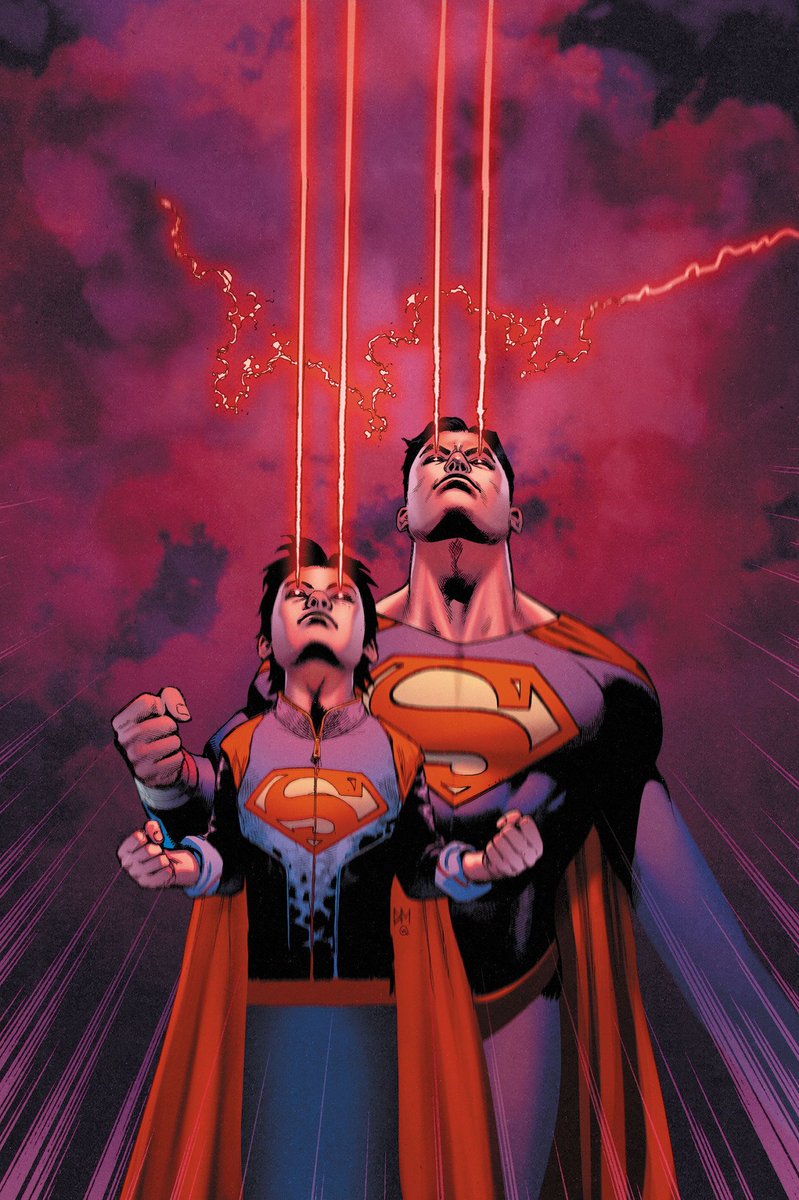
Aging Jon Kent Was a Mistake

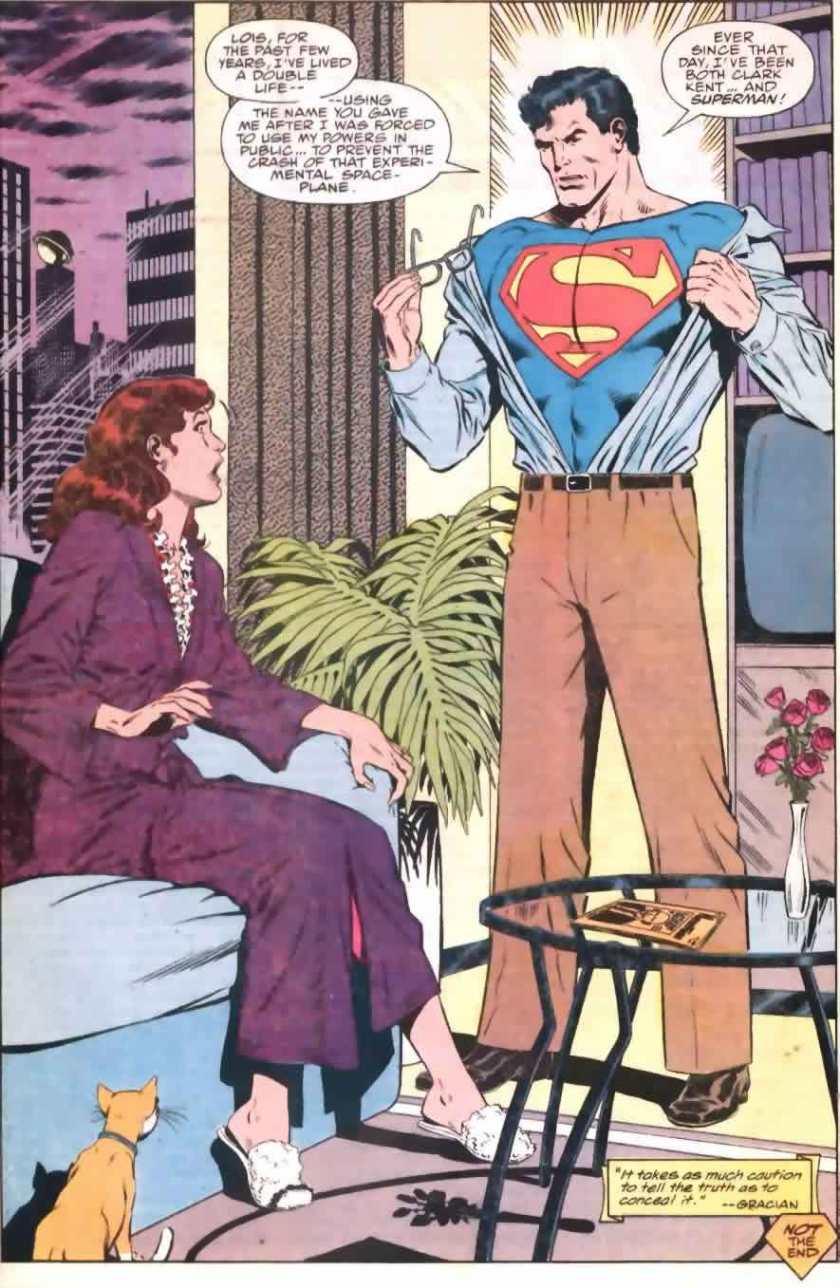
Let me start with three opinions:

1. Super Sons (Jon Kent and Damian Wayne) was fantastic and I miss both the series and the relationship that those two characters had. I loved that imaginary stories from decades earlier suddenly became real in the DCU.

2. The actual story that aged Jon was bad. It made no sense that Clark and Lois would let him go off with Jor-El even if Lois was going with him (which made no sense, either) and Lois certainly wouldn’t have left Jon with Jor-El by himself. The whole thing made no sense, but that’s often how Bendis writers: he has a point A and a point B and he forces a line in from one to the other, even if it doesn’t work.

3. I love the Legion of Superheroes, so if points 1 and 2 were necessary for 3, I figured I could get over it.

The problem is that it’s become clear that 1 and 2 weren’t remotely necessary for 3. And, honestly, 1 and 2 have made 3 worse.
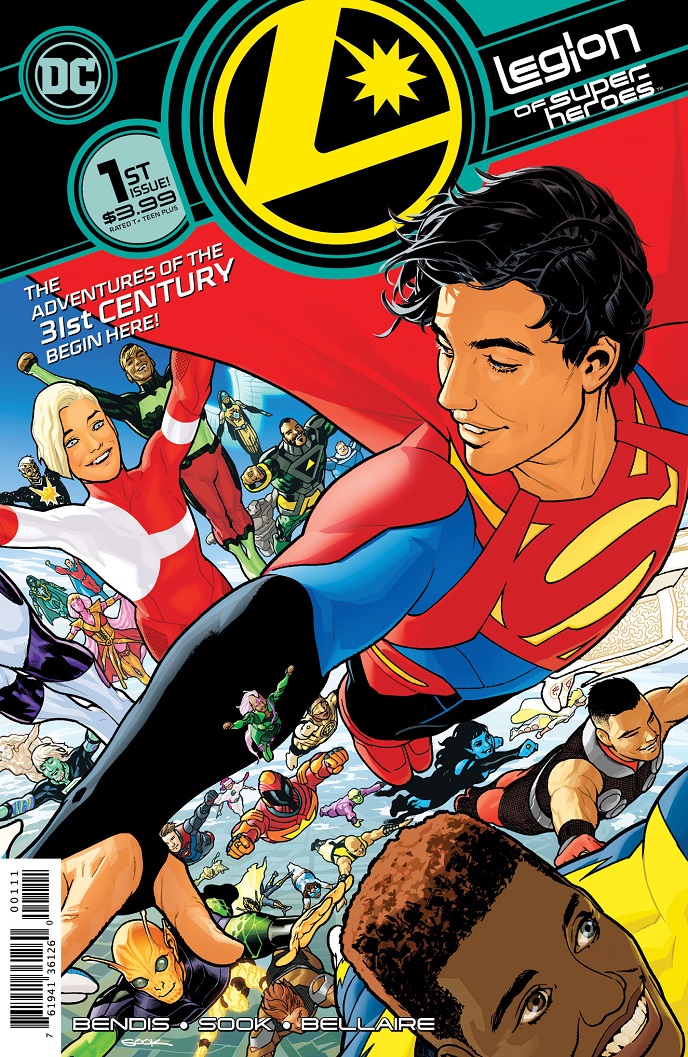
Who Is Jon Kent?

Part of the problem is that teenage Jon Kent hasn’t been developed at all. The extent of his development has been that he’s less childish than he was before, I guess?
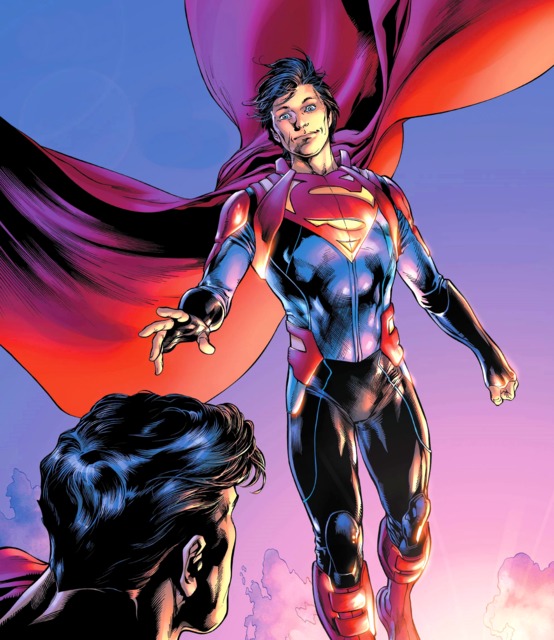
The idea that Jon is responsible for the United Planets is a bit of a stretch and completely unearned. Superman doing it? Yes, totally makes sense. It makes so much sense, in fact, that the story of the UP forming had to eventually focus on Superman. Scores of other alien races would ultimately ignore Jon’s involvement when they tell the story, because who the hell is Jon? But everyone knows Superman.

But somehow the story of Jon inspiring the UP lasts until the far future, so the Legion comes to get him. Jon goes to the future and…does nothing. So far in the Legion series he has done nothing at all, other than break a rule by going to get Damian and bringing him to the future.

Jon is there for exposition, for backstory. But even that has taken forever. And, again, it’s unnecessary. He’s not acting as a POV character because he’s freaking Superboy. And hundreds if not thousands of comics have managed to give the backstory of superhero teams without a supposed POV character.

Honestly, the series would probably be covering more ground if it weren’t for Jon’s involvement.

Superboy and the Legion of Super-heroes

When Geoff Johns brought the “original” Legion back in 2008, he made a few changes to limit some of the elements of the team that required fixing every few years.  The biggest and best change he made was how Superboy was a member.

When the Legion first appeared, Superboy was, well, Superboy. Clark Kent flew around Smallville having adventures as the Boy of Steel. When he grew up, he’d be Superman and fly around Metropolis as the Man of Steel and somehow no one put the two together and figured out who he was.

That’s not really the kind of thing that would have worked in modern comics, so post-Crisis Superboy went away and Superman never put the tights on until he was in Metropolis.

This was a problem for the Legion, given that their history was so intertwined with Superboy, their inspiration. The Superboy they knew wasn’t the real Superboy, or at least not the Clark Kent who would grow up to the Superman in the main DCU reality. It’s a story that the Legion would revisit multiple times in order to provide more clarity and make it more urgent.

Reboots would point to the adult Superman as inspiration for the team, but it didn’t have the same feeling. Whether it made sense or not, Legion is and will always be connected to Superboy.

So when Johns brought back the “original” team, he made some changes (thus putting “original” in quotes). One of those changes was to address the Superboy issue. He did so in a surprisingly simply and poignant way.

Clark Kent had met them when he was a teenager, just as the original story went. But he wasn’t Superboy at the time. He went with them into the future and had adventures, but did none of that in our time. This allowed him to maintain his secret identity.

Honestly, you could make the case that he used the Superboy costume in the future and just kept it hidden in the present until he was an adult. It wouldn’t be that much of a stretch.

The idea of lonely teenage Clark Kent finally finding some friends who all had superpowers is fantastic. Emo Superman is a characterization that writers go back to again and again and it always feels at odds with who Clark Kent is. So why not explain why the lone survivor of another planet who could barely touch people without hurting them didn’t become an anti-social outcast?

What About the Story?

What does a teenage Jon Kent do for the comics? What doors does he open up, what stories does he introduce that could not have existed before?

As noted above, he wasn’t necessary for the Legion and he shouldn’t have been necessary for the formation of the United Planets.

What about all those stories about Lois and Clark dealing with a teenage son? That’s easy: what stories? Not long after aging Jon up, he was sent to the future and for some reason hasn’t returned, even though it’s time travel and he could literally return the moment after he left.

I suppose we needed a POV character to meet the Legion of Superheroes, but has that even mattered so far? Did we need Jon Kent for exposition? Origin stories are revealed all the time over the course of a story without the need for a single character to be taught everything.

But the Super Sons? The Super Sons are unique. The concept itself was formerly set in the “imaginary story” reality of the DCU. But it was suddenly real! Or, as real as they can be in a fictional universe.

Robin was Batman’s actual son! Superboy was Superman’s actual son! And they were both crazy dangerous kids and even more extreme opposites than their dads! It’s such an awesome concept and it actually happened.

I would say that Lois and Clark would never let their pre-teen son run off to the future alone, but the awful story which sent Jon off with Jor-El proved that wrong. I mean, logically they would never let that happen, but what do I know? I actually think everyone should have different speech patterns, too.

So what, exactly, did we get out of aging Jon Kent up? A teenage Superboy? Here’s the funny thing: Kon-El is back. So there are now two teenaged Superboys, so aging Jon makes even less sense.

Legacy?

Apparently, Jon is supposed to be the next Superman at some point and will surpass his father as the Superman. There is nothing about any of that that I like.

But it’s not really a big deal since it will never happen. This is comics we’re talking about. More specifically, this is corporately owned superhero comics we’re talking about.

This couldn’t have been done for Jon to take over his father’s role, then, even if that was some kind of a vague plan before Dan Didio left DC. I don’t care how much upheaval there is at Warner Brothers these days, no way they start their own streaming service and ax their most popular IPs at the same time.

The Super Sons are a great IP themselves, although Warner Brothers still owns that, of course. There are so many things they could do with that comic and those characters.

Even better, Superman and Batman being fathers created one of the best dynamics DC Comics has seen in years. There was so much potential there and we got to see so little of it.

Aging Jon Kent up on its own has meant very little, but when you add in the fact that it ended the Super Sons it makes the decision all the more unfortunate.

There has to be more to The Magicians’ season 4 finale

I was left with two possibilities, then: Quentin was really gone, which carried its own issues, or the creators of the show were going to extreme measures to make us all think he’s gone.

Where to even begin?

I cried. I cried even though I “knew” that Quentin Coldwater’s death would not be permanent. Alice came back from the dead. Penny died and he’s still on the show. Quentin would be back.

The signs were there, too. There were bits and pieces throughout the finale that suggested Quentin would return.

Then I went online.

I went online and saw interview after interview with the producers of the show and Jason Ralph himself in which they claimed that Quentin was really dead and that Jason was leaving the show. This had been in the works all year, they said, but they’d kept it a secret even from the other actors.

I was left with two possibilities, then: Quentin was really gone, which carried its own issues, or the creators of the show were going to extreme measures to make us all think he’s gone.

Why It Didn’t Work

I’ll start with the former since the latter could be entirely off the mark.

So was Quentin’s death a problem? Why were people so upset beyond seeing a character they loved (and related to) die?

The White Guy

Show creators Sera Gamble and John McNamara have said that Quentin’s death flips the traditional idea of fantasy stories having white male protagonists. They are right that white men are usually the stars of these stories, although honestly they’ve historically been the stars of most stories that get distributed to the masses. But they’re not right that Quentin’s death is a response to that.

Even if you ignore the fact that Quentin has done very little all season, there’s the simple fact that they’re leaving off a descriptor with regards to the traditional protagonist: straight. The lead is almost always a straight white male.

That wasn’t Quentin.

All they’ve done is kill of another gay character, which is also a horrible trope in sci-fi/fantasy stories.

The Arc

Gamble and McNamara also indicated that Quentin’s death was a good end for his arc as a character. But, again, that doesn’t really hold up.

There have been two defining stories for Quentin throughout the series: his battle with depression and his love of the Fillory books.

Let’s look at the latter one first.

Quentin doesn’t die saving Fillory or rescuing Elliot or bringing back magic. He dies stopping a librarian from getting the power to become a god. Thematically, it absolutely does not connect to Quentin in any way. He had no connection to Everett. He had no experience with the mirror world. Even his specialty of repairing minor objects doesn’t resonate. Would anyone have questioned his ability to mend the mirror if he hadnt been told his specialty?

Hell, did anyone even remember that he never found one?

Then there’s the bigger issue: Quentin’s depression and his history of attempted suicide.

This is particularly awful.

After Q dies and ends up in the underworld, he asks Penny “Did I do something brave to save my friends? Or did I finally find a way to kill myself?”

On its own, this is a hell of a thing. But it gets worse.

To answer Q’s question, Penny takes him to see his friends, who are in mourning. He gets his answer from seeing how much his friends loved him. Clearly, he did something brave to save his friends…

…what?

Flip that. If seeing that his friends loved and missed him meant he hadn’t committed suicide, then the way he could tell that he had committed suicide would be….if they didn’t love or miss him.

That is unbelievable. It’s so awful that I can’t believe it made it on the screen.

You can see the machinations that got them to that point. They really wanted Quentin to see his friends grieving his death and seemed to think they need a reason for Penny to take him there. That reason was answering his question.

But this is Penny. Why would he need a reason? Why couldn’t he have just taken Quentin to see his friends for closure?

Hell, the fact that Quentin is even asking Penny that question would suggest that his arc isn’t anywhere close to being done.

Reasons It Won’t Stick

The Metro Pass

This was the most glaring to me. Per Sylvia in s3e10, the card “takes you wherever you need to go next.” Wherever you NEED to go next, not wherever you’re sent. It’s not like people need to go to hell, they’re sent there.

You also only get a metro pass after revealing a secret that was taken to the grave, which Quentin doesn’t do. Instead he just gets a card from Penny. And remember that when Penny was first sent to the underworld he tried to get a pass so he could escape.

The Seam

The Seam plays a major role in the finale, yet this episode is also the first time we’ve ever heard about it. You would think that we would have come across it given how much we’ve seen of the Mirror World in the past two years. The fact that Quentin and Josh figured out what it was in such an unnatural way doesn’t help make its inclusion seem any more organic.

What is The Seam? It’s the space between this universe and the anti-verse “where everything’s all dead.” The Mirror World was created from a leak between the living world and the dead one.

In other words, Quentin died in the space between the land of the living and the land of the dead.

Reunion with Alice

From a storytelling standpoint, Quentin reconciling with Alice before he died doesn’t work particularly well.

The fact that they got back together at all was a point of contention for many fans given that Quentin had asked Elliot to be with him. What many forgot, however, is that while we knew that Elliot regretted saying no, Quentin did not. He still believed that Elliot was unwilling to be in a relationship with him. And Q obviously still had feelings for Alice, so…

The question, though, is what did their reconciliation add to the story?

What it added was the potential drama of Elliot’s return, when he was ready to finally give it a go with Quentin only to find Q back with Alice, to find that he might have missed his window. So does he tell Quentin that he realized he made a mistake even though he knows that will put Q in a horrible position? Or does he keep it to himself? Knowing Elliot, probably the latter. Regardless, it would have made for great, heart wrenching drama.

But now that will never come to pass, not if Q’s death sticks.

Did Quentin and Alice need to be back together for her to be that upset when he died? Not at all. We already knew how she felt about him.

Would Quentin not have sacrificed himself if they weren’t back together? Yes, he would have, because he didn’t sacrifice himself to save her, specifically.

Then what was the point? To mess with the audience?

Even worse, what if it was to complete Quentin’s arc, as they said — that being with Alice somehow “cured” his depression. Because that is a horrible idea.

No, if we’re looking at story reasons for their reunion, then Quentin has to return.

Where and When

At this point, I honestly think we won’t see Quentin until the end of next season. I think he really will be gone, or so it will seem. I also think that the place he needs to go will end up being Fillory. Part of me thinks this will be tied in to the new ruler of Fillory and a part of that part of me thinks that maybe the Dark King is actually Quentin.

Regardless, it would make for one hell of a season finale, I just don’t know how many people will still be watching after this one.

Superman: The Triangle Years, Part 2 – Out of the Closet

More from the Triangle Years:
Part One: Embrace Continuity

A month before the Triangle Years begins, Clark Kent proposes to Lois Lane.

She still doesn’t know he’s Superman.

This is, of course, a total dick move on Superman’s part, but it’s something that’s rectified just a few months into the Triangle Years.  The Triangle Years start off with a fairly important change to the Superman mythology.

When DC decided to reboot their entire universe with the New 52 and eliminate Lois and Clark as a couple, they had been either engaged or married for over TWENTY YEARS.  And yet apparently there are no stories to tell about married people.  It’s also interesting to note that how quickly the relationship between Lois and Clark had progressed in just four years after Crisis.  Can you imagine anything like that happening today?

Fortunately, the New 52 mistake has been rectified, and right now DC are publishing some fantastic stories featuring not just a married Lois and Clark, but Lois and Clark as parents, too.

4s1tme.jpg

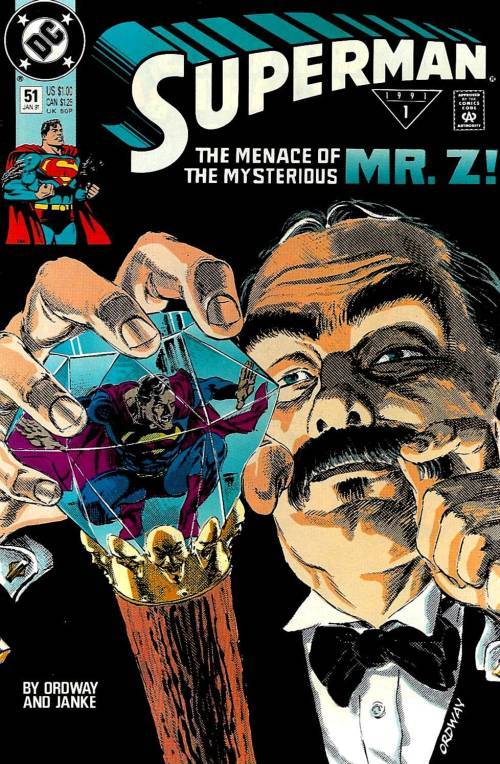
The Triangle Years officially begin with Superman v2 #51, which features the first appearance of Mr. Z.  If you’ve never heard of him, don’t worry, because he’s not what you would call a classic villain in the making, but his appearance right off the bat establishes the new world order pretty quickly, as Mr. Z’s storyline will play an important roll not just throughout the first year, but for years to come.  There was clearly a Superman summit back before creative summits were all the rage.

The Creators

This is a good spot to talk about the creative teams on each Superman title.  When the Triangle Years begin, Superman is being written and penciled by Jerry Ordway, with inks by Dennis Janke.  The two of them would eventually jump over to Adventures of Superman when they’re joined by penciler Tom Grummet.  Dan Jurgens, who was writing and penciling Adventures of Superman, completes the swap and moves over to Superman.  By this point, Brett Breeding has joined Jurgens on finished art, which suggests he was doing more than the average inker.  While it looks good, I thought Jurgens work with previous finisher Art Thibert was better, but Thibert was already being called on to start penciling, as his style fit with the trend going on during the 90s.  The three books were rounded out by the Action Comics creative team of Roger Stern, Bob McLeod, and Dennis Rodier.

All three teams were more than capable of telling solid Superman stories. None of them were going to be accused of writing anything “extreme” or “dark.”  At times, the writing could take a turn for the schmaltzy.  But the storytelling was excellent.  It was like a text book on how to produce a regular superhero comic book, which was a problem for comics in the 90s.

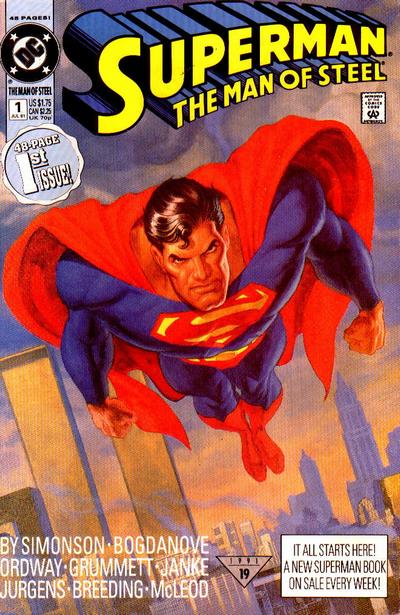
But Carlin didn’t just mix things up in the Triangle Years by moving Ordway and Jurgens.  He also launched a 4th monthly Superman book and brought in a creative team from Marvel. Writer Louise Simonson was joined by long time Power Pack and X-Factor partner Jon Bogdanove for Man of Steel.  While the other Superman books focused on the titular character, Simonson and Bogdanove expanded the view to include the people of Metropolis. They also introduced Keith, a young boy living at an orphanage.  Keith makes an excellent “kid on the street” character, the kind of thing that we’ll see more of as the Triangle Years continue.

Superman_Man_of_Steel_Vol_1_1.jpg

Luthor

Up until now, every subplot in a Superman book was in some way related to the main plot.  The three books were careful not to introduce anything that seemed to be unrelated to the story at hand.  That concern went out the window.  The pretense of appeasing the casual or new reader went out the window.  These books were numbered now, after all, and readers shouldn’t expect a book with a number 22 on it to be a jumping on point.  It’s hard to imagine a comic from either of the Big Two trying something like this today. And I’m sure this would have made Jim Shooter’s head explode.

One of the more nuanced story lines running through the first year is the aftermath of the death of Lex Luthor.  While Luthor may have been a villain all this time, he still owned a substantial portion of Metropolis, and his death and lack of an heir sends the city into economic ruin.  People lose their jobs, crime goes up, unions go on strike, and Metropolis’ main criminal element, Intergang, tries to take advantage of the situation.

Superman’s response to all of this is perfectly naive; Luthor was a bad guy, so how is it that his absence is causing so many problems?  The falling economy is an excellent gateway to focus on the rest of Superman’s world.  Perry White takes a leave of absence; he and his wife go an a cruise and end up across the hall from Ma and Pa Kent (this was actually arranged by Clark, don’t worry).  In his absence, Sam Foswell takes over and is forced to lay off much of the Daily Planet’s work force, including Jimmy Olsen.

Things eventually settle down with the arrival of Lex’s heretofore unknown son, Lex, Jr.  Lex’s heir is actually Lex in a new, cloned body.  He faked his death and had his brain transplanted into a new body because his old one was dying.  Comics!

Supergirl

Besides Lois learning Clark’s big secret, there are two other important developments in the first two Triangle Years.  The first is the return of Supergirl.

So let’s jump into it, because this is surely going to make your eyes roll.  This, post-Crisis version of Supergirl is Matrix, a protoplasmic creation of Alexander Luthor, the good Lex Luthor from a pocket dimension.  He creates Matrix in order to fend off Zod, who has escaped the Phantom Zone and is destroying the pocket dimension’s earth.  When Supergirl is defeated, Alex sends her to the mainstream DCU for help.  She finds Superman and he returns with her, but it’s too late, as her earth has been devastated.  She comes back with Superman and goes to live with Ma and Pa Kent.

All of that happens in the second year of Superman stories after Crisis on Infinite Earths, the series that was meant to unify the DCU into a single universe.  Why would they introduce another earth less than two years after destroying a whole bunch of them in an effort to streamline their continuity?  I have on idea.  They couldn’t say no to John Byrne, I guess.

Anyway, “Mae,” as they call her, starts doing weird things like impersonating Clark (not only does she have Superman’s powers, she can also shape shift and turn invisible.  She decides the best thing to do would be to take off to outer space to figure some things out.

Matrix is eventually located by Brainiac, who involves her in his attempted invasion of Earth.  In the end, she returns to Metropolis and ends up dating our Lex Luthor, who is young and attractive thanks to the aforementioned body swap.

The return of Supergirl is the first example of the expansion of the Superman brand, something we’d see a lot of in the coming years.

Beginning of the End

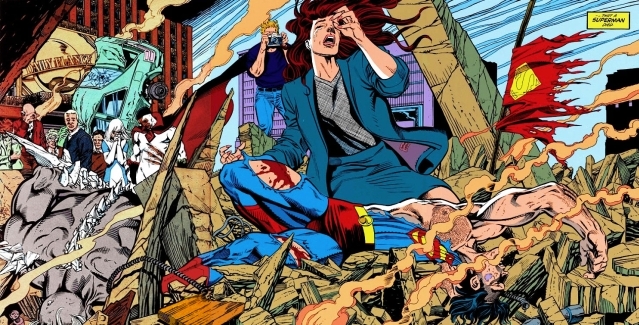
The second year of the Triangle Years closed out with the majority of the Death of Superman story line. Doomsday, the creature that would eventually kill Superman, first appears in Man of Steel #17 in November of 1992.

I liked Doomsday, which I think puts me in the minority.  At the time, I remember fans being turned off by the fact that a new character was responsible for killing Superman.  We knew nothing about Doomsday.  Many fans thought that if Superman was going to be killed off, one of his long time villains should do it.  Luthor got mentioned a lot.

supes_3.jpg

But the reason Doomsday works is because there is no explanation.  That level of destruction can have no rational explanation, which is what makes it work.  Doomsday doesn’t have some kind of vendetta against Superman, it’s just a mindless creature bent on destroying everything.  Superman becomes involved not because he’s connected to the creature, but because he’s the only one who can stop it.

(Note that everything I just wrote would later be undone when Doomsday’s origin was revealed.  To this day I have real issues with Doomsday’s shoe horned history.)

Besides, Superman’s regular villains can’t win.  That’s the whole point.  He doesn’t lose to them.  Making any of them the cause of his death changes the dynamic completely.

This is how year two of the Triangle Years ended: the beginning of the end of Superman and the media firestorm that would come with it.

Superman: The Triangle Years, Part 1 – Embrace Continuity

Bold statement: Superman’s glory days happened during the Triangle Years in the ’90s.

I can understand if that sounds insane, particularly since I’m making the above statement as someone who loves the hell out of Silver Age Superman.  If you’ve never read Superman stories from the Silver Age, you really should.  They are bat shit insane.  Seriously.  They make absolutely no sense, and as a result are wonderfully creative.  There’s not even a germ of characterization to be found, either.

But, like I said, the ’90s are where it all came together for the Man of Steel.  Yes, it was a decade full of dark, gritty, extreme superheroes, but that’s part of the reason why Superman thrived; he was the antithesis to all of that, even when he was running around in a black suit armed with automatic weapons (that only happened in a few panels).  The Triangle Years emphasized the things that made Superman a singular character, although it was a work in progress, one with its fair share of missteps.

Superman_v.2_51.jpg
Superman #51 cover by Jerry Ordway

The first “triangle” issue

Some context: the Triangle Years refers to the main Superman comics published from January 1991 to January 2002, all of which (as well as a few one shots) featured a triangle emblem on the cover.  That emblem held a number which indicated the order in which the Superman family of titles should be read.  There were only 3 Superman books when the Triangle Years began (Superman, Adventures of Superman, and Action Comics). Within the first year a fourth title, Man of Steel, would be added, and eventually Man of Tomorrow was introduced as a quarterly book to fill the 4 weeks a year that would have otherwise been Superman-less.

In the narrative sense, the Triangle Years were set up a year earlier, in 1990.  The three Superman titles were becoming more and more interconnected.  The last six months of Superman comics in 1990 featured 4 crossovers, so the average fan already had to read every title as it was.  Superman editor Mike Carlin’s decision to add numbers to the covers to help readers follow along just made sense.

But the Triangle Years would become something more than just a simple numbering system.  The narrative changed not long after it started. The focus evolved.

Much of this was a result of what the Superman titles had been doing over the previous few years.  After DC’s big Crisis, Superman was relaunched by John Byrne, who set out Marvelizing — um, humanizing the Man of Steel.  This is something of a reoccurring problem for Superman, as every few years someone decides they need to make him more relatable.  More often than not, the outsider angle is the one that’s used, to varying degrees of success.

I’m not saying you can’t humanize Superman.  I think, in small doses by talented creators, humanizing Superman can be great.  But I think in many ways it misses the point of the character.

Superman is meant to be aspirational.  What happens to Superman, what happens to Clark Kent, is only half the story.  Equally as important is what happens to those who are influenced by him.  Superman is and always will be just as much a presence as a person.  He’s an icon, and bringing him down to our level removes a lot of what’s great about the concept.

Now, whether Carlin and his chosen teams of writers and artists just weren’t able to get a handle on Superman as a regular guy or whether they decided that was a bad direction to go in, I don’t know.  But that’s ultimately how it worked out, and the Superman titles were the better for it.

The Superman offices were going to create (then) 88 pages of comics every month, 1,144 pages a year, not including specials and annuals. They were able to keep these stories interesting by exploring Superman’s supporting cast. This included paying special attention to the two most important people in his life: Lois Lane and Lex Luthor. Lois grew into a powerful force in her own right, while Luthor experienced perhaps more ups and downs over the course of the 90s than ever before.

The Triangle Years were just as much about the impact Superman had on those around him as they were about the man himself.  In this respect underscored what makes Superman a singular character in all of comics.

NEXT: It begins.

I had a really great conversation about Jesus

I suppose it’s rare in this day and age to have enlightening, intellectually stimulating conversations with people who hold different beliefs than you. But it happened. And it has stuck with me.

The person I was talking to is a Christian, a liberal Christian, who was raised in the faith and who has built her life around it. She is the real deal. She was talking to me about how she got through some hard times in her life.

She mentioned that, for her, Jesus is the embodiment of God’s love, and since fear is the opposite of love, living in fear means moving away from God. Since she wanted to live with God, she regularly chooses to reject fear and embrace love.

Her roommate in college was a religious studies major and she kind of implied something even more interesting: that Jesus was the idea of love, a concept given physical form.

This fascinates me.

I’m not Christian and, for the record, I don’t think Jesus ever existed. The few documents that would “verify” such a thing were very clearly written well after Christianity was established, inserted into older texts in an effort to legitimize what the Roman government was trying to install.

But what if that didn’t matter?

Let’s consider Jesus as the idea of love, an idea that is often too abstract for people to grasp, so someone, somewhere, decided to create an embodiment of love, a person for those who have trouble with the idea of love. He’s an avatar. He’s only real in the sense that some people need him to be real to translate a language that is normally foreign to them — that language being love.

Love isn’t exactly an easy concept to accept or even understand, particularly these days. It’s not a priority, not for the majority of us. I can’t imagine it’s ever been, given that humans have been fighting for centuries just to survive. What good is love when you’re struggling to get by? Can you eat it? Can it buy you a warm bed? Will it protect you from bullets?

Hell, I have lived an incredibly privileged life and for most of that love was for hippies and people who didn’t know any better. The idea of love as a powerful force in the universe that could alter our entire reality? Smoke another bowl, hippie.

But it’s true. I realize that love still doesn’t help people who are hungry or homeless or bombarded by bombs. But it would if it convinced others to love. Love would help them if the rest of society took care of each other, if we stopped making war and started building a world. And that’s the thing with love; its impact isn’t always direct, so it’s often easy to dismiss.

Love is an abstract concept, yet we all have an idea of what it is. It is often not the same idea and that can be a problem.

And so we have Jesus, ostensibly created not just to give people a manifestation of love that they can believe in, but to also create a universal definition for love.

I think that’s great.

I have no problems with people choosing to believe in something that I don’t. I am the last person who will ever question belief, who will ever condemn faith. My entire life has revolved around having blind faith in myself, even when I shouldn’t.

I have my concerns about the foundations of Christianity and I have many, many issues with how it currently operates, but I am all for a central concept of love that is actually love. I’m all for people being able to embrace that even if it requires a magical being.

I just wish that concept of universal love was actually universal.

I Hate Short Stories (or Do I Love Them)

I was looking at my laptop, browsing books, ready to order something. Our older son asked me what I was doing. I told him I was going to order a book that would hopefully arrive in a few days.

“But you don’t read books,” he said.

I managed to hold back my tears.

Our kids see me reading all the time, they just don’t know that’s what I’m doing because I’m doing it on a tablet, which they equate with games.

Given that I am, you know, a writer, I figured I should start reading some physical books ASAP. Like any good reader, I have overflowing bookshelves filled with books that I have never opened. I could read actual, physical books for the next few years with just the ones I already own.

One of the books waiting for me is short story collection.  Since I do, in theory, write short stories and I did, in practice, go to graduate school to learn how to write them, I try to read as many as I can.  I subscribe to a few literary journals (chock full o’ short stories) and I buy various collections like this one.

But something about it is holding me back. Something about short stories is rubbing me the wrong way.

What’s the deal with short stories, anyway?

Short stories are perhaps the most pretentious of literary formats.  There is a very specific window for a good short story, a very specific line that has to be walked, which makes a good short story extremely hard to write.  What’s worse is that everyone writing short stories knows this, and the simple fact that they do makes it all the more pretentious, as if there’s a secret decoder ring for short stories that not everyone gets in their Cracker Jack box.

The problem is that short stories can easily go one way or the other: too much or not enough.  Too much and it destroys the beauty of the format.  And, unlike poetry which is smart enough to engage the audience to the point where they are filling in any blanks, short stories that are too vague fail at what they’re doing.  Poetry, at least, has a certain clarity to its vagueness.  Short stories do not.

There’s a code, some kind of combination of chromosomes that make up a good short story. It’s a balance, 3 people on a life raft made for 2.  One bad sentence can sink a short story.

Short stories exist in their own, self-perpetuating reality.  The majority of people reading short stories are people who write short stories.  The majority of people who edit literary magazines are also people who write short stories.  The people teaching short stories are, yet again, the people who are writing short stories.  It seems like the only people who really care about short stories are the ones who write them. Imagine if they stopped.

Why are short stories problematic?  They’re supposed to be easier to write than, say, a novel, right?  They are shorter after all.  But that’s the problem.  Because they’re shorter, every single word matters.  Think about that.  This is a format that is taunting a group of people who are already, by and large, neurotic to write something in which every single word can be scrutinized over and over again.  Short stories are the finger print on a glass sliding door.  They’re the tall book in a row of short books on your book shelf.  They are an endless well of doubt and revision.

Why does anyone do this to themselves, particularly if the audience is so insulated?  Is it the challenge?  Is it the fact that so many writers take classes on writing at some point, and those classes place emphasis on the short story?  Because we are trained that we only have a few months to complete a story?  Because books are for the masses, the plebes, and literary journals filled with short stories are for the chosen few?

Or maybe all of these questions is what makes them cool and writing them — writing them well — makes you nearly as cool.

Short stories aren’t singles

Why DO people choose much, much longer books over short stories?  Record companies are able to make money producing nothing but compilations.  Why doesn’t this theory also apply towards short story anthologies?

The simplest answer I can give is this: stopping.  It would seem odd that someone would be more likely to commit to a three hundred page novel than a fifteen page short story.  But that’s the case.  It’s the case because the reader wants to be in control, at least to a certain extent.  And with a novel, you can pick and choose where you stop and where you start.  Yes, there are those who prefer to stop at chapter breaks, but there’s no sense of urgency to get to that chapter break, there’s no feeling that you’ll lose something if you don’t get that far.  A novel is so long that you aren’t going to read it in one sitting, so you don’t worry about whether or not reading it in multiple sittings will ruin the experience.

The same cannot be said for short stories.  A short story demands it be read in one sitting.  For that matter, it demands you pay close attention to it.  A short story is difficult reading.  Sure, it can be extremely rewarding reading for that very fact, but it still requires effort, it requires flexing brain muscles that most people aren’t interested in flexing while they read.  Reading short stories is work.

Perhaps that’s the main problem: short stories have been examined and scrutinized to the point that they no longer contain the simple joys of reading, the simple joys of writing.  You can examine a novel to death, too, but ultimately it’s so large and wide reaching that people are going to take from it what they want.  For that matter, the market for novels is much larger.  A book about wizards and a book about spies and a book about war and a book about politics can all co-exist, can all find space on a bookshelf at a store, while short stories seem so limited, or, at the very least, segregated by genre.

Hyperbole aside, I do like writing short stories, at least initially.  The constant examination that comes after the first few drafts, however, tends to suck all the joy away.

But I recently submitted a short story to a contest that is, in my not remotely objective opinion, the best short story I’ve ever written (a claim supported at least somewhat by my wife, who is actually a harsh critic).  The high I felt after “finishing” it was incredible, and I guess it’s the reason why lunatics continue to write in this masochistic format.  Because reading it and writing short stories isn’t for everyone, and doing either makes us feel special.

We’re also pretentious and crazy, but the short stories didn’t do that on their own.

Faith No More’s “Angel Dust” is Gloriously Adolescent

I don’t mean that the album is transitional, I mean that the album is the perfect encapsulation of being a teenager, perhaps more specifically a white boy not living in a city.

I would love to think that my teen years were grunge, but that’s probably more the romanticized view than anything else. The reality is that no single record portrayed the overall creep factor of raging hormones than “Angel Dust.” No other album dipped into the inner and outer turmoil the same way, to the same degree. This wasn’t just “I’m lonely and sad and no one will ever love me.” This was “here are all the fucked up things going through my head.”

“Land of Sunshine” comes off as this horrible double edged sword of “congrats, grad!” and “you might be right, you might be insane.” They seem to be such disparate ideas, yet it’s exactly how any weird teenager feels. On one hand, you’re focused on a theoretical future where you might actually feel good about yourself. On the other hand, you regularly feel horrible and you’re pretty sure you shouldn’t, but you can’t help yourself.

Follow that up with “Caffeine” which, among other potent lines, includes: “Relax. It’s just a phase. You’ll grow out of it.” It’s like a fucked up user manual of reassurance. Yes, you are a freak, but it’s cool.

The beauty of “Midlife Crisis” is that it’s exactly the kind of song someone terrified of a theoretical midlife crisis would write. I can remember being a teenager and being terrified that I would end up like my parents who, at the time, were probably experiencing their midlife crisis. In some ways this was the greatest fear that a white kid in the suburbs could have: becoming another suburban parent.

And this leads beautifully into “RV.”

When I listened to this in high school, I thought it was fun, a cool song that was making fun of sad, white trash. Listening to it now, though, I realize how poignant it is, how complex the song is not just lyrically, but musically. What starts off as a caricature becomes a real person by the end, particularly with that last line. It some ways, this is a cautionary tale, a warning that listening to your parents isn’t necessarily a good idea.

While “Smaller and Smaller” instantly conjures images of bugs that will not die, the song itself is something of a rural anthem, a musical take on the plight of the farmer who is slowly being beaten down by the modern world. Again, this record isn’t about the city folk, it’s about those of us in the suburbs and the country.

“Everything’s Ruined” comes back to the idea of family being an investment and parents looking at their children as a way to increase the status of the family name, not to mention the the family fortune. Again, for a kid in the suburbs whose life has been mapped out, this was like heroin. Th song is telling us that if we don’t turn out the way our parents want, they will consider the whole ordeal to have been a waste.

Is “Malpractice” about how horrible it is to try to appeal to the masses? Maybe?

“Kindergarten” is clearly about a kid who is held back in kindergarten, but in this case it seems as if he will never get past kindergarten no matter how old he gets. This is stunted adolescence taken to the next level; this is perpetual childhood, but not in a good way. This is the story of a person who needs to grow up, who wants to grow up, but is unable to move forward. This could very easily be about a teenager, but setting it in a kindergarten makes it substantially more resonant.

Faith No More’s greatest accomplishment could be getting straight teenage boys across the country to sing “I swallow” at the top of their lungs. “Be Aggressive” might be about more than blowjobs, but it would take a better person than I to dig into it.

I played soccer in high school. I was pretty good at it, too. Every year my school had an awards banquet for the sports that played in the fall, which was usually dominated by football. But after the main banquet, the individual sports had their own awards ceremonies. I remember that my brother, who was the assistant coach at the time, told me in confidence that the MVP voting had been a tie between me and another guy, and that we’d likely have to vote again. But that never happened and the head coach gave it to the other guy, apparently because he felt like it. Had I just voted for myself, it would not have been an issue.

Anyway, on my way home that night I listened to “A Small Victory.” At the time, it was mostly for the vague references to sports and competition. Listening to it now, I see that it’s about someone who just cannot win, but at the same time questions why competition is something that drives us. My reading is that, in the end, the continual loser is the one who realizes that this competition is meaningless, but the winner won’t listen to reason.

Sounds about right.

As near as I can tell, “Crack Hitler” is about a drug lord. The lyrics paint a pretty good picture, from setting the song in Miami to the briefcase, the high speed chase, to evil lurking in every person’s heart. Calling the song “Crack Hitler” is certainly sensational, as crack was still destroying communities like the plague and, well, Hitler is Hitler. So if we’re looking for a crossroads of awful both near and far, this is a good one.

The brilliance of “Jizzlobber,” aside from the name, is that it encompasses the entire album.  Again, this is teen angst delivered with a different type of self-loathing that we got from other bands of this time. This is a dirty song with a dirty title and dirty lyrics and we all felt dirty all the damn time when we were teenagers. And this song was Faith No More looking over the 11 other songs on this album and saying “you are disgusting, but we get it.”

Closing the album with a instrumental piece called “Midnight Cowboy” is just about perfect. Aside from the fact that it’s the perfect come down after such an intense album, the reference to “Midnight Cowboy” hammers home a lot of what this album was about. The layered, heavy music over top of the kind of simple melody you would expect to find being performed at a quaint, old world restaurant summarizes the album nicely: we are following a pattern that has always existed and it really is more fucked up than ever.

“Angel Dust” is the perfect teen angst record for a specific demographic and it was more telling than I realized at the time. It’s not the way I wanted to feel or even how I thought I felt, but what I actually experienced every day. And it transforms me back into a teenager every time I hear it.

My Awkward Association with Punk Rock Part 1

My brother versus Top 40

Like most kids, I grew up listening to Top 40.  I listened to Casey Kasem’s (and later, Rick Dees’) countdown show every Sunday, if I could.  My parents listened to a lot of ABBA and Neil Diamond, so that was always in the peripheral.  That was pretty much how it was through the 5th grade, aside from one blip: some small time college band called R.E.M.

My brother introduced me to R.E.M. for one reason and one reason only: they had a song about Superman.  It would be years before I even realized the song was a cover.

For some reason, once I reached middle school, I started borrowing tapes from my brother (yes, tapes). This would have been the late 80s, so perhaps I’d gotten my fill of hair metal and pop music. The songs that were topping the charts just weren’t enough for me; they didn’t speak to me. 

My brother had this cassette rack that must have been made from balsa wood or whatever the next step up in wood was. I remember when I eventually got one, how glorious it was to see this giant wall of tapes. I remember opening a space on the rack when I got a new tape so I can keep them in alphabetical order.

My brother was ahead of his time when it came to music. Like me, he was a white kid from the suburbs, yet my brother had a handful of hip hop albums in his collection, more than anyone else I knew. He got really annoyed when I played him a Vanilla Ice song because Vanilla had swiped a line from Big Daddy Kane (possibly one of the lower offenses Vanilla Ice is guilty of).

The majority of my brother’s collection, though, fell squarely in the “progressive” category. There was more R.E.M., of course.  The B-52s.  Depeche Mode.  The Sundays.  They Might Be Giants.  Nine Inch Nails.  Jane’s Addiction. There were a lot of bands that would be relabeled “alternative” when a similar sound hit the mainstream.

I remember my friends at the time thought everything I listened to was weird. I don’t know that that was part of the draw, but I did like the fact that I didn’t know anyone else that was listening to that kind of music.

Weirdness and angst

I entered high school in the fall of 1990, multiple mix tapes of weird music in hand. I had a lot of thoughts in my head and “progressive” music seemed to be made by people with the same issue. They also played a lot of sad and thoughtful songs, a mood that occupied much of a my time. My angst wasn’t just sadness, though, as I had plenty of anger, and that anger would find a soundtrack with the arrival of grunge.

For a solid two years, the majority of what I listened to was either grunge or grunge adjacent. I was a melodramatic teenager who knew nothing of the various chemical reactions happening (and not happening) in my brain, I just knew that I felt different and the people making grunge music seemed to understand that.

In the winter of ’93, I joined a band.  We called ourselves oral groove (yes, lower case).  Our biggest influence was probably Ned’s Atomic Dustbin, although I was clearly trying to be Eddie Vedder, at least for the first year.

Being in a band exposed me to more music (like the aforementioned Ned’s).  Aside from the flavor of the day, we each liked different rock music, from metal to hair bands to hippie jam bands.  None of us really listened to anything that might have been called punk rock, not really, not then.  But we did seem to push each other to find new bands outside the growing alternative mainstream.  The Afghan Whigs and Quicksand were two notable finds.

Grunge was the first cultural phenomenon I got on board with early on, and the first one I watched expand like crazy and ultimately become co-opted.  I’m not saying I wasn’t part of that, but it was strange to watch.  As grunge became alternative, it was watered down, and very quickly third and fourth generation bands were mimicking a sound that barely resembled the original.

Alternative music also lacked the angst that grunge had.  It veered into hippie territory.  I was far too disgruntled for that, so I had to look elsewhere.

I can still remember sitting in my parents living room watching the video for “Unsung” on MTV.  Helmet were four dorky guys with short hair playing heavy music and I broke my cassette of their second album, “Meantime” I played it so much.  The last part of my senior year, Helmet had unseated many of the grunge bands.

And then I graduated.

Turntable Exiles

Two bands happened to me the fall of my freshman year of college that completely changed the way that I thought about music.  Those bands were Jawbox and Sunny Day Real Estate.

I also started playing guitar.  Suddenly I was much more involved in creating music, and if mainstream music had turned me off before, it was even worse now.  The lack of integrity in mainstream music became very apparent when I started creating my own.

The final element of my musical awakening, if you will, came from a discovery that was, funny enough, facilitated by the internet.  Back then the internet was, for me, mostly about BBS forums and record label web sites; there were no such things as MP3s.  But the internet gave me the information I needed for something very important: mail order records.

It’s impossible to overstate the significance of the mail order business back then, just as it’s probably impossible to explain it to anyone who wasn’t alive then.

You would look over every listing by every record label. They had to sell you in a just a few sentences and the easiest way to do that was by referencing bands you already knew and liked. You’d mark the ones that you wanted, then added up the damage.

Then you’d have to start cutting because you always marked a done of records and you never had enough money. Then finally you’d mail your order form and a check (a check!) or money order and you would wait four to six weeks to get your records.

You had to force yourself to forget that you even ordered them.

But, man, when you got them, it was everything. Indie labels back then had limited ways of promoting themselves. They’re weren’t going to make commercials for TV or radio because that was simply too much money. But they were generous with the freebees. I think most of the music related stickers I ever owned came for free with records I ordered.

So armed with distribution catalogs and a record player I’d had for at least a decade, I began my submersion into the world of underground music. 

More on my punk rock journey in part 2.