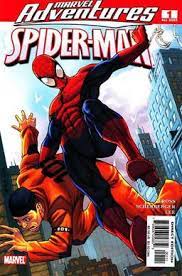
Marvel Adventures Spider-man Spec Script

All characters are obviously copyright Marvel Comics.

I wrote this years ago because I was so in love with the Marvel Adventures line. All ages, self-contained superhero stories featuring the Fantastic Four, the Avengers (with one of the greatest line-ups of all time), and Spider-man.

Marvel Adventures Spider-man

“Bear Necessities”

By Kyle Garret

PAGE ONE

Big splash page of Spider-man fighting the Gibbon.  Grizzly is in the background looking ominous – we’re shouldn’t be able to tell exactly whose side he’s on, but the reader will most likely assume he’s a bad guy.  He should be towards the upper left corner while in the lower right we have the astral form of Dr. Strange.

Caption #1: Who are these ferocious new characters?

Caption #2: Will Spidey be able to save the day alone?

Caption #3: Will he be able to tell the good guy from the bad?

Caption #4 (maybe an arrow caption pointing at Dr. Strange): And what’s Dr. Strange doing here?

Caption #5: More importantly, just how quickly can we start making bad puns?

Caption #6: All this and more in a story we HAD to call

TITLE: “Bear Necessities”

CREDITS

PAGE TWO

Page Two, Panel One

Shot of a rather innocuous looking building in the middle of New York.  It should look fairly old, like a residential building or maybe one of those old college buildings.  It should not look like a modern business.

Caption: Mid-town Manhattan, midnight

Page Two, Panel Two

We open up with this shot.  It’s a man dressed as an animal – something like a wolf or a badger – sitting on the floor, a bowl in front of him.  It should be gold and held up off the floor by a metal frame of the same color.  There’s smoke coming out of the bowl.

Unknown magician: Yes!  YES!!  Fill me with your power!!

Page Two, Panel Three

Close up shot of the man’s face, as he’s overjoyed with the fact that his spell appears to be working.

Unknown magician: Give me your power!!

Off panel (behind him): Excuse me…

Page Two, Panel Four

Enter: Dr. Strange, Master of the Mystic Arts, Sorcerer Supreme!  He should be floating right on through the wall, but make sure to distinguish this from his astral form.  Going through the wall should be the result of a spell he cast on said wall, so go for magical energies there, linking back to one of his hands.  The other should be readying an attack.

Dr. Strange: I don’t think I approved any such magical incantations in the city tonight.

PAGE THREE

Page Three, Panel One

Wide battle shot here, as Strange blasts our guy, who has foolishly tried to raise mystical shields.  Strange’s blasts should be breaking them like their glass or hard plastic.

Dr. Strange: Maybe we should talk.

Unknown magician: No!

Page Three, Panel Two

Shot of the unknown magicians being tied up in the Crimson Bands of Cyttorak.  Make sure that bands are going around his mouth.

Unknown magician: Guhmmmfmm!

Page Three, Panel Three

Shot of Dr. Strange looking around the room, trying to suss out what this guy was up to.  Keep unknown magician in the shot, floating behind Strange, still bound, but struggling to get free – specifically, to get his mouth free.

Dr. Strange: What, exactly, were you up to in here?

Page Three, Panel Four

Shot of unknown magician, his head looking up as he has managed to get his mouth above the bands.  It should look like he’s trying to get his head above water.

Unknown magician: Go!

Page Three, Panel Five

Pull back as we see a fireball launch out of the bowl from earlier.  Dr. Strange should be falling backwards, startled, although he manages to maintain his hold on the unknown magician.

Page Three, Panel Six

Small shot of the fireball flying out the window, into the night.

Page Three, Panel Seven

Close-up shot of Dr. Strange (perhaps with unknown magician still floating in the background to establish that he’s still captured, but it’s up to you on how much space you have).  He looks concerned.

Dr. Strange: That can’t be good…

PAGE FOUR

Page Four, Panel One

Establishing shot.  It’s the next day, which needs to be very clear in this shot (the fact that it’s no longer dark should be enough, I think).  We’re outside of a convention center and a large banner is telling us that today is a special event: “Superhero For A Day!!”

Page Four, Panel Two

We’re inside now and on our boy, Peter Parker.  There are people walking past him going both directions.  More important, he’s walking past a row of people in bright costumes, all standing and posing, trying to look their best as potential superheroes.  None of them look that impressive, as these are all the second stringers.  Peter is lost in thought, reading a book as he walks.

Caption: Now that’s interesting.  How would have —

Page Four, Panel Three

Shot of Peter looking directly at us, but clearly looking at something ahead of him that has finally gotten him to pay attention to his surroundings.

Peter:  –that??

Page Four, Panel Four

There’s a large group of people in front of Peter, all looking towards the would-be superheroes, all very excited for some reason.  In the group is Flash Thomas and some of his friends.

High School Kid: Max!  You’re the best Max!

Flash: Max, you rule!

Caption: Flash?

PAGE FIVE

Page Five, Panel One

This should be a fairly big reveal shot.  We see four people standing and posing, all of whom appear to be finalists for the contest.  Each one has their superhero name across their chest.  From left to right it goes White Rabbit (a woman), Gibbon (big guy), Grizzly (Max Markham, professional wrestler), and Cobra (a smaller man).  The crowd is focused on Grizzly, who is clearly well known for his wrestling career.  There should be one small kid – maybe 10 — standing in front of Gibbon.

Caption: It’s Max Markham!  He’s a big time wrestler – even I know who he is!

Grizzly: Thank you, thank you, everyone!  I can only hope that being a superhero won’t be as hard as taking on King Diamond every Sunday night on channel 14!

Page Five, Panel Two

Side view of Peter looking at Grizzly and the crowd, although his eyes are looking over at the kid in front of Gibbon.

Caption: Looks like everyone’s here for Max…

Caption: …or almost everyone.

Page Five, Panel Three

The kid is looking up and Gibbon who does NOT look happy about the attention that Grizzly is getting.

Kid: What’s a Gibbon?

Gibbon: It’s an ape.

Page Five, Panel Four

Close-up shot of the kid, looking unimpressed.

Kid: So why don’t you call yourself “Ape?”

Page Five, Panel Five

Close-up shot of Gibbon looking particularly angry with that remark, glaring at the kid.

PAGE SIX

Page Six, Panel One

Peter steps in to get the kid out of the way.  It’s not that he thinks Gibbon will attack the kid, he’s just not entirely sure one way or the other.

Parker: Heeeeyyy, there, buddy, maybe it’s time you go find your parents, I’m sure they’re worried sick about you, and you shouldn’t be talking to strangers, anyway.

Page Six, Panel Two

The kid storms off.

Kid: Whatever.

Page Six, Panel Three

Peter looks at Gibbon, who is glaring right back at him.

Page Six, Panel Four

Peter turns away, preparing to head off.

Caption: Oooookay, then.  Someone doesn’t play well with others.  I don’t know what the criteria to win “Superhero For A Day,” but I don’t think the Gibbon matches it.

Page Six, Panel Five

Peter is walking away from the rest of the crowd and at this point we can’t really see anyone else walking near him.  We should be looking at him as if we’re on the side with the would-be superheroes, so we can see that there’s a wall on the other side of Peter (his right side).

Caption:  Funny how everyone seems to be an animal of some sort.  I wonder if that’s because of me –

Page Six, Panel Six

Suddenly, the upper body of Dr. Strange pops out of the wall – this is his astral projection form, so he’s all white like a ghost.  Peter is clearly surprised by this (but, as Dr. Strange is a good guy, his spider sense remains quiet).

Peter: Meeyah!

Dr. Strange: Spider-man, I need your assistance!

PAGE SEVEN

Page Seven, Panel One

We should reverse the angle here so that we’re on the other side of them, this time with Dr. Strange on the left and Peter on the right.  Dr. Strange is still half in the wall, half out.

Caption: Doctor Strange, magician most magnificent and generally creepy guy.

Peter: Geez, Doc, tell everyone why don’t you!

Page Seven, Panel Two

Similar as the last panel, but now Peter is frantically looking around to see if anyone was within earshot as Dr. Strange looks on.

Caption: Please please please let no one have heard that!

Dr. Strange: Relax, Peter, my astral form is in tune to your aura alone.  You are the only one who can see or hear me.

Page Seven, Panel Three

Shot of the two of them talking, although Peter still looks confused.

Peter: So I’m the only one who can hear you?  And see you?  Thank god.  Wait, does that mean I look like I’m talking to myself right now?

Dr. Strange: I would imagine it looks like you’re talking to the wall.

Page Seven, Panel Four

Shot of Peter looking back the way he came and seeing a woman pulling her small daughter away.  The woman has a concerned look on her face as she looks at Peter like he’s crazy.

Page Seven, Panel Five

Full body shot of Peter, his face in his hand.  He looks exasperated.

Peter: Ohhhh, yeah, should have seen that coming.

Page Seven, Panel Six

Return to something similar to the first panel on this page.

Peter: How do you know who I am, anyway?

Dr. Strange: I’m the Master of the Mystic Arts, Peter.  It’s my job to know these things.

PAGE EIGHT

Page Eight, Panel One

Straight shot of Peter, now looking somewhat flabbergasted by the situation.

Peter: So are you here for a reason other than making my life that much more miserable?

Page Eight, Panel Two

Our POV switches to Peter, so we see Dr. Strange head on, as if he’s speaking to us.  He’s still half in the wall, half out.

Dr. Strange: Last night I apprehended a minor wizard – a man of little consequence, really – but I was unable to reach him before his spell went awry.  I traced it to this building.

Caption: Of course.

Dr. Strange: In fact, I believe he placed the spell on one of the costumes they are using.

Page Eight, Panel Three

Shot of the two of them, Dr. Strange on the left, Peter on the right.  Peter is looking concerned, clearly ready for the worst.

Peter: What does the spell do?

Dr. Strange: It will give the user the innate strengths of the costume they’re wearing.  Not unlike, I might add, someone wearing a spider costume.

Page Eight, Panel Four

Full shot of Peter, throwing his hands in the air and clearly beside himself.

Peter: Of course!  Of course that’s what’s happening!  Because I’m me and it’s today and this is my life!

Page Eight, Panel Five

Peter and Dr. Strange both look back the way Peter came, a look of concern on their faces.

Off panel: AAAHHHHH!!

Off panel: Help!!

Note: Feel free to add any additional sound effects describing mass chaos and destruction.

Page Eight, Panel Six

Peter runs around the corner as Dr. Strange looks on.

Dr. Strange: Shouldn’t we be headed towards the commotion?

Peter (around the corner): My costume might not be magical, doc, but it’s still necessary!

PAGE NINE

Page Nine, Panel One

We cut to Spidey in all his costumed glory, swinging into battle, the astral form of Dr. Strange by his side.  This panel should be inset in the upper left hand corner, as the next shot will be full page and the third panel will be inset bottom right.

Caption: Please not the cobra, please not the cobra, anything but the cobra…

Spider-man: You’re not going to be much help like that, are you?

Dr. Strange: I can advise.

Page Nine, Panel Two

Big shot of the Gibbon causing havoc, knocking over tables and chairs and what have.  People are running in terror, including the guy in the cobra costume.

Gibbon:  Grraaaaaahhhh!!!

Page Nine, Panel Three

Shot of Spidey and Dr. Strange looking at us, although clearly in their world they’re looking at the Gibbon.  Spidey should look concerned (as concerned as he can look with his famous moving giant eyes).  Dr. Strange looks relatively calm.

Spider-man: Then perhaps you could advise me on how you stop a gibbon?

Page Nine, Panel Four

We should be close on Gibbon now.  We need to see his face and probably his upper body as well.  He’s clearly off his rocker with rage.

Gibbon:  Gaaaaaahhhh!!

PAGE TEN

Page Ten, Panel One

Shot of Spider-man and Dr. Strange getting read to launch an attack.

Spider-man: What’s wrong with him?

Dr. Strange: The spell has likely driven him insane.

Spider-man: Greeeeaaaat.

Page Ten, Panel Two

Spidey swings in feet first, hitting Gibbon in the face.

Spider-man: It’s time for you to back off, monkey man!

Page Ten, Panel Three

Close-up shot of Gibbon’s hand closing around one of Spider-man’s legs.

Page Ten, Panel Four

Shot of Gibbon throwing Spider-man away from him.

Page Ten, Panel Five

Shot of Spider-man crashing into a table and chairs.

Caption: Ouchouchouchouchouch.

Page Ten, Panel Six

Shot of Spider-man looking up from the floor.  He’s got one hand behind his head, indicating that he’s sore all over.

Dr. Strange is also here, hovering above him.

Dr. Strange: A gibbon is an ape, actually, not a monkey.

Spider-man: That’s really helpful, doc.

PAGE ELEVEN

Page Eleven, Panel One

Spider-man is running back into the fight.  We see webs coming from his wrists as he runs.

Spider-man: Let’s see how he likes the ol’ webbing in the face move!

Page Eleven, Panel Two

Shot of the webbing splatting in Gibbons face

Page Eleven, Panel Three

Shot of Gibbon yanking the webbing off.  He looks even angrier than before.  His face should probably be red here, both from the webbing and because he’s so mad.

Page Eleven, Panel Four

Spider-man, still in his web shooting position, stunned by what Gibbon just did.  Dr. Strange is in the picture now.  If we’re seeing Spidey from the side, Dr. Strange should be on the other side of him, facing him so that we see him head on.

Dr. Strange: That only seemed to make him angry.

Spider-man: Are you Master of the Mystic Arts or Master of the Obvious?

Page Eleven, Panel Five

The Gibbon has raised his arms over his head, ready to pummel Spider-man, who is calmly looking up at him.

Page Eleven, Panel Six

Pull back so we get at least their upper bodies in frame as Gibbon smacks Spider-man to the side, sending him flying.  This should be similar to Page Nine, Panel One.  This whole page should be similar to Page Nine, in fact.

Page Eleven, Panel Seven

Shot of Spider-man yet again lying on the ground after being tossed aside by the Gibbon.  Dr. Strange is hovering over him.

Spider-man: Déjà vu.

PAGE TWELVE

Page Twelve, Panel One

Shot of Dr. Strange.  He’s addressing Spider-man, but we should be close on him so it almost seems like he’s addressing the reader.

Dr. Strange: Spider-man, we need to contain this threat.  The longer he rampages, the less likely there’s to be anything left of the man he once was.  If we don’t stop him soon, he could be a mindless beast for the rest of his life.

Page Twelve, Panel Two

Spidey’s up now, although he’s squatting in a typical Spider-man pose.  He’s ready for action.  He’s also pleading his case to Dr. Strange.

Spider-man: It’s not like I’m not trying here, Doc!  I just don’t know if brute force is going to do the job this time around.

Off panel: Back off, man!

Caption: Oh, no…

Page Twelve, Panel Three

There’s Max, in full Grizzly suit, standing in front of the rampaging Gibbon.  He has his hand up in front of him, as if that will stop him.

Caption: Max!  What is he doing??

Grizzly: Just relax before this gets out of hand!

Page Twelve, Panel Four

The Gibbon pulls his arms over his head, ready to bring them down on Grizzly.

Gibbon: Grraaaaahhhh!!

Page Twelve, Panel Five

Spider-man swings in and rescues Grizzly just as Gibbon takes a swing at him.

Spider-man: Bad monkey!  No banana for you!

Page Twelve, Panel Six

Close in on Spider-man swinging away with Grizzly.  We should be able to see both of their faces (as they were) clearly.  Grizzly is surprised by what has happened.

Grizzly: That did not go like I planned.

PAGE THIRTEEN

Page Thirteen, Panel One

Spider-man and Grizzly land away from Gibbon.

Page Thirteen, Panel Two

Shot of Spider-man and Grizzly standing face to face.  Grizzly is much bigger than our hero, so he should be looking down as Spidey is looking up.

Spider-man: Are you crazy?  Forget that he can smash you with a pinky finger, I just tried that!

Page Thirteen, Panel Three

Grizzly responds in kind, not used to being yelled at by someone smaller than him.

Grizzly: Well I had to do something!  He’s already hurt the other contestants and if someone doesn’t stop him soon he’ll kill someone!

Page Thirteen, Panel Four

Spider-man returns the same.  We should be able to see most of his body in this shot.  He’s got his thumbs out and he’s pointing back at himself.

Spider-man: Hello, card carrying member of the superhero community here!  What do you think I’m trying to do?

Page Thirteen, Panel Five

Grizzly and Spider-man should be face to face here, both looking very serious.

Grizzly: Trying and doing are two different things.

Spider-man: Gee, thanks, Obi-wan.

Off panel: *Ahem*

PAGE FOURTEEN

Page Fourteen, Panel One

Spider-man turns to face the astral form of Dr. Strange.  There should be a wall behind him.  This is key for later and should stick throughout the next few pages.

Spider-man: What??

Dr. Strange: We need to remove the suit.  I think that will stop him.

Page Fourteen, Panel Two

Spider-man has his arms crossed and he’s tapping his foot while looking at Dr. Stange.

Spider-man: Oh, NOW you tell me, after I’ve been thrown across the room not once, but TWICE!  I’m going to start calling you Dr. Strangely-Willing-To-Withhold-Information.

Page Fourteen, Panel Three

Full body shot of Dr. Strange.  This is exposition mode, so his floating form should telegraph as much.

Dr. Strange: The spell is on the suit, not the man inside it.  The suit is the source of his power.  All we need to do is contain him and get the suit off him.  Once we do that he should return to normal, assuming we freed him in time.

Page Fourteen, Panel Four

Shot of Spider-man and Dr. Strange face to face, in full on plan mode.

Spider-man: Containing him is easier said then done.

Dr. Strange: I’m afraid that trying to get the suit off while he’s rampaging throughout the convention center would be far more difficult.

Off panel: Excuse me?

Page Fourteen, Panel Five

Spider-man turns to face Grizzly, who’s looking very confused.

Grizzly: Are you talking to the wall?

PAGE FIFTEEN

Page Fifteen, Panel One

This shot is from Grizzly’s perspective.  He’s looking at Spider-man, who has turned to face him and is gesturing the where Dr. Strange would be standing were he visible.

Spider-man: “No—it’s—he’s invisible!

Page Fifteen, Panel Two

Close-up of Grizzly, kind of averting his eyes from Spider-man with that “let the crazy man believe what he wants” look on his face.

Grizzly: Oooookay

Page Fifteen, Panel Three

Spider-man throws his hands up in the air, clearly fed up with how things have gone for the last, oh, twelve pages or so.

Spider-man: Fine, yes, I’m talking to the wall and it’s talking back!  Not only am I unable to stop a man in a monkey suit, but I am also off my rocker!

Page Fifteen, Panel Four

We’re back to an omniscient POV now and we see Dr. Strange interjecting into Spider-man’s ranting.

Dr. Strange: Spider-man, please, we need to get that suit off of him and we need to do it quickly.

Page Fifteen, Panel Five

Spider-man addresses Dr. Strange.

Spider-man: Well, Doc, can you ghost on over to the Baxter Building and get the Fantastic Four?  Because I don’t think I’m going to be able to contain Gibbon AND get his suit off.  And aside from your peppy dialog, you’re not much help.

PAGE SIXTEEN

Page Sixteen, Panel One

Grizzly interjects.

Grizzly: I can help.

Page Sixteen, Panel Two

Spider-man spins to face Grizzly.

Spider-man: Oh no, no, way, man.

Grizzly: Why not?  You told the wall you need help!

Page Sixteen, Panel Three

Shot of Spider-man facing us.  His hand is outstretched and he’s counting off points on his fingers.  He has three fingers up.

Spider-man: First of all, you might be a famous wrestler, but the Gibbon is way stronger than you.  Second of all, I was talking to Dr. Strange, you just can’t see him.  And third, I barely saved you the last time!

Page Sixteen, Panel Four

Shot of the three of them standing (and hovering) there, blank looks on all their faces.

Page Sixteen, Panel Five

Same shot as the last panel.

Grizzly: Was that a pun?

Spider-man: I pun when I’m about to throw myself into danger.

Dr. Strange: We really could use his help.

Spider-man: Fine, but if he gets smooshed it’s your fault.

Grizzly: Why would the wall care if I get smooshed?

PAGE SEVENTEEN

Page Seventeen, Panel One

Close shot of Spider-man’s face.

Spider-man: Let’s do this.

Page Seventeen, Panel Two

This is a shot of the three of them, Spider-man in the center, astral form Dr. Strange to his right, and Grizzly to his left, charging into battle.

Spider-man (yelling): Time to quit monkeyin’ around!

Page Seventeen, Panel Three

We’re back to the convention floor.  It’s completely empty, save the remnants of the destruction that occurred.

Grizzly: Uhhh…

Page Seventeen, Panel Four

The guys turn as a roar comes from off panel.

Gibbon: Raaaaarrrr!

Dr. Strange and Grizzly at the same time: He’s outside!

Spider-man (whispering): You two should take your act on the road.

PAGE EIGHTEEN

Page Eighteen, Panel One

Shot of the Gibbon, holding a car over his head, mass destruction all around.  I mean, we should see walls destroyed, piles of rubble, street signs, cars, parts of buildings, you name it.  He’s been busy while they’ve been yakking.

Gibbon: Grrrraaaahhhh!!

Page Eighteen, Panel Two

Shot of the three of them, standing united together, Spider-man in the middle.

Spider-man (whispering): Max, I’ll distract him, then you grab his feet.

Grizzly (whispering): Grab his feet?

Spider-man (whispering): Grab his feet.

Spider-man (yelling): Hey, you big ape!

Page Eighteen, Panel Three

The Gibbon spots them and throws the table at them.

Page Eighteen, Panel Four

Similar shot as panel two, but this time Grizzly is jumping off panel to the side and Spider-man is jumping off panel up as the car that the Gibbon was holding comes flying at them.  It passes harmless through Dr. Strange.

PAGE NINETEEN

Page Nineteen, Panel One

Spider-man is swinging above the Gibbon, taunting him.

Spider-man: You missed me, missing link!  Is that the best you can do?

Page Nineteen, Panel Two

We should be looking up with the Gibbon now (we should still see him in the shot) as he shakes his fists in the air at Spider-man.

Gibbon: Grrraaahhh!!

Page Nineteen, Panel Three

Spider-man is now standing right in front of Gibbon, tempting him to attack.  We can see Grizzly sneaking up behind Gibbon.

Spider-man: Man, you are a broken record!  Your dialog is worse than mine!

Page Nineteen, Panel Four

Grizzly jumps out at Gibbon, lunging at his feet.

Grizzly: I’ve got him, Spidey!!

Page Nineteen, Panel Five

Shot of Spider-man spraying massive amounts of webbing all over the Gibbon as he leaps into the air.

Spider-man: It’s time to get you out of that —

PAGE TWENTY

Page Twenty, Panel One

Big shot of Spidey in the air, yanking up with all his might on his web line and pulling the gibbon costume clean off of Gibbon.

Spider-man: — monkey suit!!

Page Twenty, Panel Two

The Gibbon, now only in boxers and socks, collapses to the ground, Grizzly still holding on to his feet.

PAGE TWENTY-ONE

Page Twenty-One, Panel One

Shot of Dr. Strange and Spider-man.  Dr. Strange’s astral form is starting to dissipate.

Dr. Strange: Thank you, Spider-man.  Now that the Gibbon has been stopped, I can finally rest in peace…

Spider-man: What?

Page Twenty-One, Panel Two

Similar shot as the first one, but now Dr. Strange has disappeared.

Spider-man: Doc!  Doc!!

Page Twenty-One, Panel Three

Again, similar panel as the one before, but now Dr. Strange, still in astral form, has blinked back, fully formed (as his astral form, that is).

Dr. Strange: Just kidding.

Spider-man: You’re a bucket of yuks, Doc.

Page Twenty-One, Panel Four

Spider-man and Dr. Strange head over to Grizzly, who is now on his knees and looking down at the fallen Gibbon.

Dr. Strange: I should be getting back to my body soon, though.  It’s not always safe to be away this long.

Spider-man: Tell me about it.  I can feel a monumental grounding coming on.

Page Twenty-One, Panel Five

Dr. Strange and Spider-man join Grizzly, now standing, all looking down on the fallen Gibbon, who seems to be fine, aside from knocked out.

Dr. Strange: It would appear that we got to him in time.

Grizzly: Man, people shouldn’t have animal powers.

Spider-man *ahem*

Grizzly: Except you, of course.

PAGE TWENTY-TWO

Page Twenty-two, Panel One

Upper torso shot of the three of them, left to right Dr. Strange, Spider-man, and Grizzly.  Spider-man is looking at Grizzly.

Spider-man:  You know, Max, you made a pretty good superhero.  I could barely contain my excitement.

 Dr. Strange and Grizzly: *groan*

Page Twenty-two, Panel Two

Similar shot as before, but both Dr. Strange and Grizzly are turning around to leave.

Spider-man: Then again, I don’t know if I could bare the competition.

Page Twenty-two, Panel Three

Close-up shot of Spider-man, enthusiastic about his puns.  He could have a finger in the air, as if he was excited about something.

Spider-man: And that costume of yours is bear-y cool!

Page Twenty-two, Panel Four

Shot of Grizzly looking back at Spider-man.

Grizzly: Can I be invisible now, too?

THE END
Boys Are Rough, Right, Dada?

The other day my wife wasn’t feeling well so she stayed home from work. Our son noticed this, of course, and asked me about it. I told him that mama would be home when he got home from school, but that she wasn’t feeling well.

“I have to be gentle with her,” he said. “I’ll get all of my energy out at school so I only have slow energy when I come home.”

“Yes, always gentle with mama,” I said.

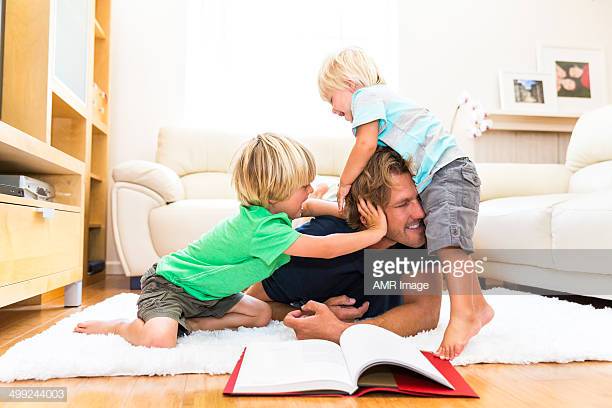
My son and I have established some boundaries with regards to rough housing. He’s four, after all, so he’s still figuring out the physicality of life. He wants to wrestle. He wants to run and jump and throw and hit. My wife is not a fan of this, but I love it. A big part of my relationship with my son involves physical interaction.

“I have to be gentle with mama,” he said, “but I can be rough with dada – because we’re boys, right dada? Boys are rough.”

It’s not often than you are aware of moments like this when they happen, but I knew this was important.

I would imagine that if I had said what my dad did when I was his age, the answer I would have gotten would have been “yes.”

I told my wife about it after the fact.

“Did you tell him that girls can be rough, too?” she said.

That’s a totally legitimate response and would have been a good answer.

That’s not what I opened with, though.

“You shouldn’t be rough with anyone unless they tell you it’s okay.”

That’s how I started.

“Daddy tells you it’s okay and mommy says it’s not. Boys and girls can both be rough, but only if they tell you they are okay with it.”

I decided to address consent first, which I suppose is the kind of thing that a guy would do. Maybe I should have started with sexism, but I felt like saying “girls can be rough, too” was letting a genie out of a bottle that I couldn’t pull back.

It would be like saying “you can burn lots of different things, but don’t do it!” I think it was important to establish that being rough with anyone without their consent was bad and then to point out that girls can be just as rough as boys.

Did I address the issue correctly? I have no idea. Will this one conversation with my four year old determine whether or not he respects boundaries as he grows up? Probably not. But it was good to lay the groundwork.

More importantly, it was good to introduce the subject, more so for me than for him, because it’s not going to go away.

Honestly, I’ve spent enough time around little kids to know that boys being rough is the rule, not the exception, while girls being rough is the exception, not the rule. But the goal is to consider everyone, not just rules and not just exceptions.

It was my first swing and I think I made decent contact. At the very least, it’s a start.

Top Secret #1: Writing is essential

This week I’ll be leading the very first meeting of The Top Secret Writing Club, an after school enrichment program for grades 4 through 8.

I try to learn from everything, which is actually not as great as it sounds, because sometimes you end up looking for meaning where there is none. But I know I’m going to get a lot out of this club as I’ve already gotten a lot out of it before it’s even met.

Writing is everywhere

One of the things I want to emphasis with the kids is how important writing is and how it is everywhere. Most of them probably only consider writing to be the books they have to read for class. How many of them realize that the movies, TV shows, and video games they consume are all written by people?

What I found interesting was that when I tried to search for a list of all the various different types of writing, I couldn’t find one! What I got was listed that included things like expository, descriptive, narrative, and persuasive.

Any search I did along those lines kept returning results that were academic and formal.

It’s no wonder kids thinking writing is boring and hard. The way that it’s framed, it is!

It’s not like they get to a point where someone says “hey, you know all those crazy worlds in Super Mario Bros? A writer helped come up with those! And that awesome Pixar movie you love? That was a writer, too!”

I understand that kids have to learn the basics of writing to so that they can communicate. I get that. But that’s generally as far as it goes unless there’s some spark in that kid that motivates them to go further.

Writing isn’t easy. But it doesn’t have to be so hard. And it can be fun!

Common Core

I’ve been helping our older son with his homework for a few years now; most of it is math, which is understandable. I don’t have a problem with that. It’s often nearly as hard for me as it is for him because it’s Common Core, which is a different way of teaching and learning math than existed when I was a kid.

I’d heard a lot of horror stories about Common Core. Most adults seem to think it’s unnecessarily complex and far worse than what we did.

It’s not. It’s much, much better.

As my son’s teacher pointed out, the kids are now learning the “why” of things. We just memorized numbers and regurgitated answers. Common Core shows them how the sausage is made. It sets them up to more easily handle advanced math down the line.

It’s great. And since these kids are learning it this way from the start, it makes sense to them.

There’s no version of Common Core for writing, though.

I don’t expect a small writing club to change that, but maybe it can help. Maybe I can show these kids that writing is everywhere, writing is important, writing can be anything.

I think right now it’s only one thing and I think that one thing is often not very fun.

Go Forth and Monetize

I think most writers have imposter syndrome.

It’s been made worse, for me, with my ADHD, anxiety, and depression, although those last two seem to go along with writing. But it’s hard to feel comfortable just saying “I’m a writer” if you’re using some imaginary watermark to determine if that’s true.

Do I write? Well, yeah, I’m writing this right now. So by the most inclusive definition, I am a writer.

Oh, but you need to have been published, says my stupid brain. Wait — I have been.

Sure, some small publisher, says my stupid brain. But you need to have been published more than once. Wait — I have! More than twice, even! And they were all different publishers!

Yes, BUT, says my stupid brain, you don’t make a living by being a writer.

Well, yes, stupid brain, you have me there. But very, very few people can make that claim, at least as far as making money through traditional publishing. But there are people who have done well enough through freelance writing for every web site imaginable.

Yes, says my stupid brain, they have to hustle and you don’t do that.

The Hustle

I am ill equipped to hustle.

I have a problem with even doing the most basic self-promotion. See: the above on imposter syndrome.

And trying to go from self-promotion to making a sale of some kind? I could never imagine.

This is coming from a person who regularly spends money on really stupid things, yet I couldn’t imagine anyone spending money on anything I do — and my stuff isn’t stupid. I at least have enough self-respect to say that.

I’ve also had a real issue with asking for people to pay for something that I think is important, as if attaching a price to it makes it seem like that’s all it is: a way to make some money. Isn’t that gatekeeping? Aren’t I denying access to some because I’m asking them to pay?

And then how do you even decide how much to charge? What is reasonable, what will keep people away for financial reasons, and what will keep people away for perception reasons?

My Failed Attempt at a Soda Stand Empire

When I was in middle school, I started a soda stand on the street in my neighborhood.

I say “soda stand,” but this was Ohio, so it was probably a sign that said “Ice Cold Pop” followed by a price. My mom fronted me the money for the cups, the soda, and some ice.

I lived in a new, upper middle class neighborhood that regularly had multiple open houses each weekend, so I figured one particularly hot summer day would be a golden opportunity to make my millions.

I remember a friend’s dad who taught science at the high school asking for no ice, apparently to show that he was wise to the ways of soda sales. The ice, as you might guess, meant that a can of, say, Coke, could “fill” multiple cups.

I had two friends help me with the stand, although that’s probably overstating it. They were friends who wanted to hang out and in turn ended up helping me. I never asked them to help, it just kind of happened. They didn’t think any thing of it. Of course they’d help if they were there.

When it was all said and done, I think I made a couple of bucks, and that included money I got from recycling the cans.

Part of the reason I made so little is because I paid my two friends. They didn’t ask me to, but I did it anyway, because they’d hung out with me all day and probably even made a few sales. But in my ‘tween brain, they deserved some money as much as I did.

My parents thought I was making a mistake, but it seemed like the right thing to do.

That was the first and last soda stand I ever had.

Value

How do you place value on a story? Or teaching kids how to write? Or getting someone to think or feel?

How do you place value on your creations, on your actions, when you’ve never placed value on yourself?

I suppose that’s what it has always boiled down to — self-worth.

Maybe it’s my executive functioning therapist, maybe it’s my new medication, maybe it’s the simple fact that I’m no longer a part of the corporate rat race, but recently I realized that asking people to pay for what I have to offer isn’t a bad thing and it’s not entirely ridiculous.

If you’ve been to this site before, you’ll notice some changes. I have paid content now. I have a store. You can even sign up for my Top Secret Writing Club. Heck, I even have a banner so you can pay for the site.

I’m doing all these self-promotional things, all these things to drive monetization, that I honestly should have started doing 15 years ago. But I was never in a place where I could.

There’s still plenty of free stuff on this site. There always will be.

But I’ve realized that making money from your work doesn’t have to be a problem and it doesn’t have to impugn the reputation of said work.

There’s nothing wrong with wanting to do what you love and still take care of those you love, says my stupid brain.

You know, you might not be so stupid after all.

Young Zombies in Love, Part 2

Young Zombies in Love (part 1) by Kyle Garret from Best New Writing 2014

Part 1 of “Young Zombies in Love”

“Unnamed Adaptation of ‘Unrequited’” lacked romance.

Karen had never worked with zombies before. She’d never even considered them. She watched as many movies as she could, from Romero’s originals and all the remakes, to the various off shoots that pretended to be something other than zombie movies, but were just that. She watched the B-movies and the summer blockbusters, the serious takes and the comedic ones.

“I don’t really understand the mythology,” she said to Greg. He’d been home for two weeks now, no longer at the local psychiatric facility, no longer under “suicide watch.”

“What’s to understand?” he said. “The dead come back to life.”

“Well, yeah,” she said, “but why? I mean, it’s implied that radiation from a comet caused it, but that’s just pushing the suspension of disbelief too far.”

“Walking dead you can understand, but radiation from a comet is too much?”

“Of course it is,” said Karen. “The comet is a story in and of itself. Besides, the biblical allusions in all of these movies are pretty overt, so the comet angle seems unnecessary.”

“I guess,” said Greg.

“And is it a disease? One that’s spread through bites? And if that’s the case, what does that have to do with radiation from a comet? And how did the first zombies show up if they weren’t bitten?”

“Yeah, a lot of questions.”

“I’m actually surprised that something so vague would have such a following,” said Karen. “Although I guess that’s the appeal, like open source software.”

“I don’t know,” said Greg.

There was a time, when they were dating and even early in their marriage, when Greg would have jumped all over a conversation about zombies. He would have challenged every single point Karen made, answered all of her questions as best he could and goaded her into a debate so intense that it would nearly turn into a full blown argument. But that time seemed long past.

Karen had brought Greg back, but she wasn’t sure that she should have.

“Anything new?” said Greg. The fact that he’d taken such an interest in her new job was a positive sign, one that she should have found hope in, but that she nonetheless found bothersome.

“Not really,” said Karen. She was brushing him off. She didn’t want to, but it was her first instinct these days and she hated that. “I’m considering the zombies as characters.”

“Romantic characters?” said Greg with a smile.

“Right,” she said, “taking Bubba to the next level.”

“You’d definitely change the demographic appeal of the movie.”

“I have to think the necrophiliacs are going to a zombie movie regardless.”

“I like it,” he said. “’Young Zombies in Love’ has a nice ring to it.”

Karen laughed, not so much because she actually found Greg’s idea funny, but because she was taken aback by the fact that he just made a joke.

“I’ll run that by the studio,” she said, smiling.

“It has franchise written all over it,” said Greg as he started heading back downstairs. “I know what I’m talking about. I know my zombies and I know my romance.”

Karen plays with her hair when she writes. She strokes it in long, loving motions, as if it were a cat on her lap. Sometimes she twirls it with her finger, like someone pantomiming that she should get to the point. Periodically, she will run her palm over the ends of it like it’s a painter’s brush and she’s trying to remove excess paint.

If she were to hazard a guess, she probably spends a third of her time at the computer playing with her hair and another third surfing the internet. She is always amazed when she actually completes something.

Karen was determined. She loved “Unrequited” and refused to let the movie version exorcize its soul.
There was a place for love, she thought, even here. But she was having trouble picturing it.

Greg’s uncle had filled a void left by his father, a man made void with a specific shape. But when his uncle died, Greg realized that that void had never really been filled, and that his uncle had simply been a distraction, a distraction which now left a hole of its own. It wasn’t the holes that drove Greg to suicide, as much as the knowledge that those holes could never be filled.

Greg took time off work to fly back home for the funeral. That time off kept extending longer and longer until he was given an ultimatum: quit, come back, or be fired. He quit, a decision he made without talking to Karen.

Two weeks later, Karen was holding his head in the bath tub, trying to get him to throw up as she explained the situation to a 911 operator named Vanessa.

“Wait,” she said to herself. “Young Zombies in Love” was ridiculous, of course, except that perhaps it wasn’t.

Karen made a few notes on her legal pad, then flipped through her battered copy of the script. She had something. She had what she thought could be the fix she’d been looking for. She just had to figure out how to work it in and how many scenes she would have to change because of it. She also had to make the changes seem as natural as possible.

Only in Hollywood would a solution have to be shoe horned in and then made to look like it wasn’t.

“It’s great,” said Greg as he tossed the script on to the couch next to Karen. He did not seem pleased.

“You didn’t like it,” she said.

“No, actually, I really did think it was great,” he said. “You found the best solution; you’ll keep everyone happy.”

“O-kay,” said Karen. She gave Greg a questioning look, but if he noticed he ignored her. He had said everything he wanted to say, and walked back upstairs.

Karen sat, torn by her desire for peace and quiet and her all too common desire to yell at Greg. She wished she could just ignore him, just sit on the couch and watch TV, satisfied in the knowledge that she had turned what was a questionable, underperforming script into demographic hippie, open to the embrace of everyone and anyone. But Karen couldn’t have unresolved storylines. She picked up the script because she felt like she should have a prop and walked up the stairs to their bedroom to have an argument she didn’t understand, yet knew by heart.

Karen didn’t think it was possible for her heart to pound faster, but it does when she sees her house in the distance. She didn’t think it was possible to run faster, but she does. She is running for Greg’s life and she plans on telling him that after she brings him back again.

She wonders how determined he is. He wouldn’t try sleeping pills again. Greg is smarter than that. They don’t own a gun. Maybe he would hang himself. Could she bring him back from that?

She bursts through the front door because they never lock it when one of them is home. They would be the first to die, she thinks, if zombies were real.

Greg is lying on the couch. He is sprawling and unconscious.

“Greg!” yells Karen with a force she didn’t think she had left in her lungs.

Greg opens his eyes. “Karen?”

Karen collapses on their hardwood floor, the front door still open.

“Jesus, Karen,” says Greg as he jumps off the couch and hurries to her side. He kneels down next to her, wraps his arms around her. “Are you okay?”

“I ran,” she says between large gasps of breath. “You didn’t answer, so I ran.”

“You ran from the store?”

“I called…”

“Nap,” he says quickly. “I turned everything off because I was actually tired enough to take a nap. That’s all.”

Karen starts to cry.

“Karen, it’s okay,” says Greg. “I’m not going to…I’m not there anymore. You don’t have to worry about that.”

Karen shakes her head “no.” She’s trying to calm herself, trying to catch her breath and calm herself so she can speak.

Greg holds her close, trying to transfer his calm, regular breath to her.

She takes a deep breath and her entire body shakes.

“I’m sorry,” she says as she exhales.

Greg gives her a reassuring smile. Karen smiles back. She swallows and pats his cheek with her hand, looks into his wide open eyes.

“I’m sorry I made you a zombie,” she says.

“You killed me with a baseball bat,” he says.

“You like baseball.”

“I like you,” he says.

She smiles, a feeble, determined smile at odds with her tears.

“I don’t know what to do, Greg.”

“Nothing,” he says, glancing towards the still open front door. “I don’t know. Part of me feels like this is where I was headed no matter what.”

Karen stops crying and sits up. “And now?”

“I’m tired, Karen,” he says, as if it’s been just below the surface this entire time. “I’m tired of always thinking about what I don’t have instead of thinking about what I do.”

“That would be me, right?” says Karen, her smile now dominating her tears.

“God, yes,” says Greg.

As they kiss, Karen breathes deeply through her nose and her body shakes. She slowly lets the air out, her body relaxing, Greg’s mouth still there, still connected to her. She begins to smile despite herself.

“Now,” says Greg, as their lips separate, “I think you should take a nap with me.”

“I like that idea,” says Karen.

They stand up. Karen shuts the front door. Hand in hand, they walk up the stairs to the bedroom. They lie down together, wrapping themselves around each other, like a couple that had just started dating and had been up all night talking. There is plenty of room in their king sized bed and Karen pulls Greg around her, wanting to disappear inside him.

They fall asleep as if pressed up in a corner with no where to go but each other.

In Karen’s script, the female lead sees her ex, now one of the walking dead, and dispatches him after an emotional good-bye. She is then free to fall in love with the male lead. Karen will leave this in her script and the studio will love it and she and Greg will walk hand in and hand down the red carpet at the movie’s premiere.

And even though the leads die at the end, the studio will green light a sequel and they will ask Karen to write it, because this is the world she lives in, and because in it, something that has died can be brought back to life.

And she will be the one to revive it.

Young Zombies in Love, Part 1

Young Zombies in Love (part 1) by Kyle Garret from Best New Writing 2014

Karen has decided that her revenge will be cantaloupe. Greg is not a fan; he’s not a fan of anything in the melon family, so they rarely have it in the house. So she has bought not one, but two cantaloupes, which she will cut up and include in any fruit salad she makes, and he will have to eat around it.

She has decided that a silly fight deserves silly retaliation. She thinks Greg will see the humor in this. She hopes he will. She used to know.

When she gets to her car, Karen sets down her groceries to search her purse for her car keys. They regularly disappear into the void, hiding behind ridiculous amounts of change or tucked into a side pocket that’s supposed to be holding her cell phone. This is the kind of thing that used to annoy Karen, but at the moment she’s trying to be a better person.

When she can’t find them, she dumps her purse out in the Trader Joe’s parking lot, laying bare her life for any passers-by. There’s no sign of her keys.

She pushes her face up against the windows of her Acura and quickly scans the inside. There, on the passenger seat, are her keys.

“Yeah, that’s about right,” she says. She smiles a tiny smile because she should have known something like this would happen. She remembers one time in high school when she locked herself out of her car while it was still running. She takes comfort in the fact that at least the car is off, and that these days she has a cell phone.

She dials Greg, thinking that perhaps this is just as funny a way for them to make up as the cantaloupe.
She gets his voicemail.

She tries the landline and gets the voicemail.

Even if Greg didn’t hear his cell, he would have heard the home phone. Maybe he just couldn’t get to it in time. She tries the home number again. She gets voicemail again.

She tries Greg’s cell phone again. Voicemail. “Hi, you’ve got Greg, leave a message or risk never hearing from me again.”

“Hey, it’s me. Why aren’t you picking up? I tried the house line. I’m at Trader Joe’s and I locked my keys in the car. Call me.”

For a few minutes, Karen is angry. Why isn’t he answering? What else could he be doing? What could be more important? She is frustrated and angry and the annoyance she felt from the fight earlier, the annoyance she tried to bury and forget about, is bubbling to the surface. She thinks of the cantaloupes and even that doesn’t help.

She is always there for him, she thinks. She only saved his life and yet the one time that she needs him, he won’t answer the phone. He’s probably sulking after their fight, their pseudo-fight, more like. He’s using it as an excuse to sulk and to not answer the phone.

Or perhaps Greg has tried to kill himself again.

The contents of her every day life still lying in a pile in the parking lot, Karen begins to run. The grocery store is just under two miles away from their house.

“There are too many zombies,” said Greg as he knocked on Karen’s office door while simultaneously opening it, something she had repeatedly asked him not to do.

“I know,” she said, as he set the script down on her desk.

“It’s actually fairly decent, for an adaptation,” he said. “And I guess it shouldn’t be surprising that they added so many zombies.”

“I know,” she said again.

“I suppose their numbers aren’t even really the issue, so much that they show up right away, which is completely against everything the book is about.”

Karen looked up at him. He was sincere in his desire to help, something she hadn’t seen from him in some time.

“Well,” she said as she pushed herself back from her desk, “it would seem that someone at the studio has realized they aren’t going to make much money on a strict zombie movie.”

“I don’t know,” said Greg. He took Karen’s engagement as an opening and sat down in the chair on the other side of the desk, “Romero keeps making movies and I don’t think they’ve been particularly good for a while now.”

“I think they want more than just the horror crowd,” said Karen. “I think they’re looking for cross-demographic appeal.”

“Like the book.”

Karen flipped through the script. The notes she’d made in red pen had now been joined by notes in black pen. Greg’s were few and far between and generally consisted of “exactly” next to her notes.

“Which is why they gave it to me,” she said. “Because I do romance.”

Greg smiled. “You’ve been pigeon holed.”

Karen set the script back down, looked up at her husband, at his amused smile.

“Coo, coo.”

Whenever Karen had doubts about her marriage – which, if she were honest, was frequent even before Greg tried to kill himself – she thought about their third date.            

They had been driving to see some band, as that’s what they did back then.  Greg’s car had broken down, in and of itself a memorable experience since Greg was meticulous about keeping his car in working order.  He had no idea what was wrong, just that it had simply shut down, right there on the street.            
It was cold out, and Karen had curled up in the backseat to try to keep warm while Greg looked under the hood.  He kept looking at it, going over every inch of it, as if something would change if he just kept looking long enough.            

After a while, Greg crawled into the backseat and joined Karen, who was nearly asleep by this time.  He wrapped his arms around her, tried to keep her warm.            

“I called AAA,” he said.            

That was a big step for Greg.  He seldom admitted his own shortcomings and rarely acknowledged when he needed help.            

“I have no idea what’s wrong with it,” he said.  “They said it would be an hour.”            

In Karen’s mind, she snuggled in closer to Greg.  But the reality is that there was no room for her to move closer or even further away.  The reality is that she was half awake and just trying to stay warm.             But she holds on to the idea that the moment was about them and nothing else.              


“Three Roses” was panned by critics and barely broke even, but in Hollywood the former doesn’t matter and the latter is enough.  “A Winter Day” was a critical hit and actually turned a profit, and Karen’s stock began to rise.  She imagined that movie reviewers, if they ever considered screenwriters, would have declared that her second script was a natural progression from the first, and that only good things lay ahead.            

“Las Vegas Good-bye” opened in the top five.  The reviews were mostly positive but the gross, both domestic and foreign, far exceeded what the studio expected.  Entertainment Weekly went so far as to declare that “Romance Is Back!”            

It didn’t stay for long.            

Studios restructured and were bought up.  Movies were abundant and free online.  Movie theaters were expensive and everyone owned a plasma TV.  Tests were run, questionnaires filled out, and in the end it was decided that the movie going audience was shrinking, and that money could no longer be spent on “niche” genres.  Romance was out, unless it was able to bundle itself as a romantic comedy or, even better, an action movie with a romantic storyline.            

That’s how “9 Gun Salute” was born and how Karen became the most sought after script doctor in Los Angeles.            

It had been ten years since “Las Vegas Good-bye,” since someone bought one of Karen’s original scripts. 

It had been five years since she even wrote one.  Her time now is devoted to finding the love in action movies or the intimacy in war movies. 

And now she is looking for the romance in horror.

Karen turned off the desk light. Her monitor was still on, so the room was lit up by the eerie off-white screen. She pushed the power button as she stood, the light in the hallway guiding her way.

She walked down the stairs, looking down on the living room. Their 42” flat screen was still on, although the volume was low because Greg didn’t want to bother her when she was writing. She could make out his form on the couch and assumed he’d fallen asleep.

But he was awake, hunched low in the cushions, one hand behind his head, the other hand holding the remote aloft, ready to fire at any moment.

“Still up?” she said.

“So it seems,” he said, not looking away from the TV. “This insomnia bit is starting to get old.”

“I don’t think it’s actually insomnia,” she said as she sat down next to him. “You fall asleep eventually.”

“I know,” he said, sitting up. “Maybe insomnia would be better, as opposed to pseudo-insomnia.”

When Karen’s sister miscarried, her mother described her as being “broken.” Her mother said “she’s been broken by this.” It was a descriptive term Karen had heard hundreds of times before, but not one she particularly cared for. If the handle breaks off a coffee mug, you glue it back on. Karen’s sister was never going to be fixed.

But Karen couldn’t help but think of “broken” when she looked at Greg. Since his uncle died, he had very much been broken. And all she could do was try to think of ways to fix him.

Greg’s solution was sleeping pills.

Karen looked at the TV. It was the tail end of some late, late, late show.

“I’m sorry,” she said.

“It is what it is,” he said.

Karen leads a sedimentary life. On one hand, this means she is not in the ideal condition for running. On the other hand, it means that she seldom if ever wears uncomfortable shoes.

Her adrenaline wants her to sprint, but her body wants her to walk.

The most obvious change in zombie mythology over the years has been speed. While zombies were originally slow, lumbering corpses, the most recent zombie stories have changed this so that zombies are just as fast – if not faster – than the average living human being.

Perhaps it was the advent of the readily available automatic weapon or simply the expansion of the human race, but at some point slow monsters were no longer scary. Perhaps society just decided it was okay with the fact that death would eventually come for them. Maybe the only way to make death scary again was by making it fast and unexpected.

To avoid picturing Greg on the floor in the bathroom, Karen does math. She calculates the distance from the grocery store to their house. She tries to remember the last time she ran a timed mile and what the result might have been. High school, she’s sure. When would anyone recreationally time themselves?

Karen has determined that it will take her twenty minutes to get home, and that’s if she doesn’t collapse. But she has adrenaline on her side, adrenaline and the ability to disconnect her brain from her body.

She plays back the argument, the stupid argument that was about something stupid and was stupid for even happening. She thinks about how he overreacted, how he suddenly found fault in a stupid adaptation of a stupid book about stupid zombies. She wonders if she should have seen this coming. Her stupid self should have seen this coming.

Karen can’t help but remember. She remembers when she found him on the bedroom floor, dead to the world, but not dead to her. She remembers dragging him into the bathroom, lifting him into the bath tub, turning the shower on him while holding his head over the drain and sticking her fingers down his throat. She never hesitated, never stopped to question what had happened. It was as if she knew, as if she’d always known, that it would come down to that moment.

Part 2 of “Young Zombies in Love”

Positive Parenting From Negative Parents

The other day I was talking to a friend of mine about our respective childhoods, comparing notes, in a way. While our upbringings were very different, they were thematically the same. Our motivation to do good — or to not do bad — was the same: fear.

Fear is fear is fear. Whether it stems from years being locked under a staircase or the sting of a belt or fabricated stories about people who will harm you, fear is fear is fear. There may be other problems that stem from the impetus for that fear, but that feeling itself is the same no matter where it comes from.

Entire generations of adults were raised through fear, through negativity.

My hometown has trick or treating on the Sunday closest to Halloween during the day. Everyone I have ever met from anywhere else in the country has been confused by this. But in 1981 a boy named Adam Walsh was kidnapped and murdered and kids going door to door at night was no longer considered safe, so my hometown decided to take precautions.

Part of it was the times; we were all prepared for nuclear war at any moment. Part of it was that the generations before us were raised with a very strict set of rules. But at some point the best way to get children to behave was through fear.

More often than not, it worked. I’ve led a pretty responsible life. I passed on a lot of chances because I was afraid of what could possibly happen, but I never got into much trouble.

There are, ultimately, two ways to motivate people: through negativity or through positivity. Negativity will get faster results and is much easier, but usually has unintended side effects. Positivity can take much, much longer, but the side effects are things like self-esteem and confidence. So it’s probably worth the extra time and effort.

And not to sound like a hippy, but positivity is always the best course of action. Positivity will ultimately get the best out of people.

I think my generation realized that at some point. I think we decided that we needed to raise our children in a different way. We decided to try positivity.

The problem is that none of us really speaks that language.

You then get a generation of parents who were raised on negativity trying to raise their children on positivity yet lacking the necessary skills to do so. More often than not, if we mess up it will be in overcompensating.

And this is how we get to endless internet articles on spoiled, entitled children and helicopter parents. This is how we get to mindless jokes about participation trophies (which have actually been around for 50 years, but we didn’t have the internet then).

We don’t want our children to live in fear so we do whatever we can to prevent that, even if we end up making mistakes in the other direction – as we should. Because you know what the world will take away from you? Self-esteem. Confidence. Naivete. You know it will give you? Fear. Humility.

Shrinking an ego is infinitely easier than growing one.

I understand that we run the risk of raising a generation of spoiled, entitled jerks, but I think that’s a chance we should take. Fear is the great enemy. Fear is the source of our misery. We have to do something.

For my part, I ask a lot of questions and read a lot of articles. I look for advice from people who know better. And perhaps that’s the lesson: we really can’t do this alone.

Each generation has the opportunity to do better for the next. That’s not a chance that any of us should waste.

Ted Lasso was always a ticking time bomb

Ted Lasso was great despite a foundational story problem that was ultimately its undoing.

I really liked “Ted Lasso.”

The 1st two seasons were fantastic.

The third season was always going to be a problem not so much because it was the final season, but because there was a clock on “Ted Lasso” that had been ticking since the very first episode. It’s impressive that the show managed to delay it as long as it did.

The moment I knew that “Ted Lasso” had me was the end of the 1st episode when he moves into his new apartment. It’s an incredibly sad scene and it speaks to the fact that the show, while funny and optimistic, would also have real moments of poignancy.

That scene was sad because it was Ted starting his life over away from his loved ones. Coach Beard might have been there, but it still felt incredibly lonely. It would have been enough just with his marriage ending, particularly given the history the show would layer in for Ted and his wife.

For this dad of two, though, it was even more heartbreaking because Ted had left behind his son.

Perhaps if “Ted Lasso” hadn’t already been a season deep when I started watching it, I wouldn’t have been able to ignore that elephant in the room. Maybe being able to binge a full season was enough to distract me, whereas if I’d had a week in between it would have been harder to rationalize.

The bottom line is this: Ted left his son.

His wife wanted space and Ted, a successful college football coach, moved to another country, 4300 miles away from his only child.

Like a fucking asshole.

Ted and the Lassos

We never see the other side of it. Ted left because his wife wanted space, and while he was gone they got divorced and his wife started dating someone. At some point Henry would have blamed someone for what happened, and once Michelle started dating it was going to be her. There would have been regular calls about it.

But there weren’t, not on the show, because the best thing they could do was ignore it as much as possible. The times when they did incorporate Henry into the show only served to underscore that Ted was an asshole for what he’d done, yet no one was calling him out on it, not even the team psychiatrist.

Well, no one but Nate, who was vilified for it.

The final season was going to be a problem not because it had to wrap the story up, but because the show had gone two full seasons avoiding Ted’s horrible decision, and season three — regardless of whether it was the last season or not — had no choice but to deal with the beating heart under the floor boards.

And that was going to be tricky, because it’s hard to walk a tight rope of “Ted is a great guy” and “Ted abandoned his son.”

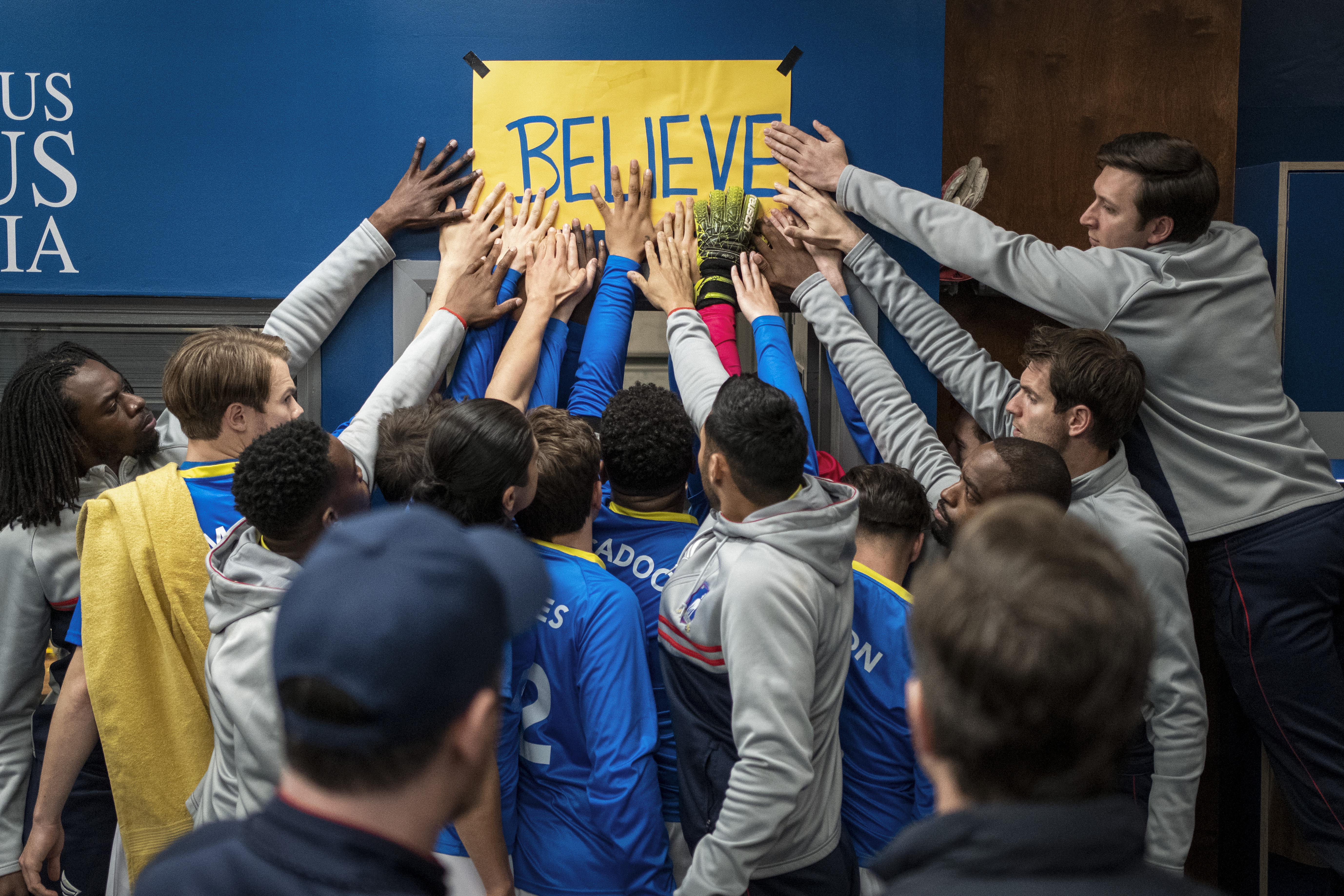
Believe…that people won’t think too much about Ted abandoning his kid.


Yes, they tried, and managed to distract us all with shiny things for the 1st two seasons, but Nate had brought it to the forefront at the end of season two: “go home to your son.”

In the penultimate episode of season three, Ted has it out with his mom, who finally gets around to telling him what everyone else should have been saying, go be with your son. Ted claims that he’s afraid to get close to Henry because Henry will eventually leave him, as children tend to do when they grow up. This is connected to the fact that Ted’s dad killed himself when Ted was 16, so he has abandonment issues.

As far as attempts to justify Ted’s choice, that was certainly an attempt to justify Ted’s choice.

Ted’s fear of connecting with Henry comes out of left field. It’s never hinted at on the show at any point. The fact that Henry is probably around 8 when his dad leaves makes it even harder to digest. Were there no problems for the first 8 years of Henry’s life?

Even if they’d had Ted say he was afraid to let Henry get close to him because he know that at some point he would die, it would have made more sense. It still wouldn’t have worked, but the connection would have been there.

It very much feels like the writers realized while the show was already on that they needed an explanation for Ted’s willingness to leave his kid, then struggled to fit a square peg into a round hole.

It becomes even more frustrating when you look at the show as a whole and realize that Ted didn’t need to be a father. Very little about the show would have changed had Ted just left behind his wife. In fact, it makes the show substantially better.

Yes, the show is heavy on fathers/sons, but it’s seldom applied to Ted and Henry, and Ted and Henry are never connected to the serious stories. Ted losing his father is pivotal to how he relates to the players on the team, but he doesn’t need to be a dad for that to work.

If anything, imagine if part of the reason his marriage fell apart is because he kept putting a wall up whenever Michelle talked about starting a family. Maybe that wall is what drove them apart. Being a surrogate father to his players was the safe way for Ted to be a dad.

They even tried to sell the importance of Ted and Henry thematically in the finale by showing us Jamie and his dad and Nate and his dad being all friendly with each other after Ted goes back to Henry. Ted’s relationship with Henry is nothing like those other two, but they’re all fathers and sons, right, so they must go to together?

“Ted Lasso” was always going to sputter out. The fact that it gave us two great seasons is a testament to everyone who worked on it. But this ending was inevitable and the signs were there from the start.

I don’t have strong enough words for this

Our friends’ 11 year old son passed away this morning. He had been fighting cancer for a long time. He and his family had been fighting so hard for so long that the fact that this is how that story ended fills me with unbearable rage.

We weren’t close to his family and most of our interactions happened via social media. They live in Los Angeles, which we left nine years ago.

But they are wonderful.

I know that people, conscious or not, put their best foot forward online, but they were genuine. They were one of the families that I looked to as inspiration. And the fight and resilience they have shown during this has only made me look up to them all the more.

I think I formed a connection with them because of how inspiring they are. And that got stronger after our children were born.

Their son had been moved to hospice a little while ago and after I read that I spent the night getting completely hammered and staying up too late. I laid in bed and all I could think about was him, an 11 year old kid that I have never met, whose parents I didn’t really know.

I think about what his moms are going through and it destroys me.

Then I think about his little sister and that’s it. There’s nothing left.

The idea that any adult would have the capacity to deal with something like this is absurd, but we put one foot in front of the other and we find reasons to keep going. But how does a child get through something like this?

I’m so angry and I’m so sad and I am, at best, tangentially connected.

My wife works at Pixar and we sent him a bunch of Pixar stuff. His mom sent us wrist bands they’d made and we all put them on and took a picture and sent it to her. Our older son asked me about it and I explained to him what it meant. He said he hoped that the other boy got better.

Today my wife and I tried to maintain some semblance of normalcy for our kids. The cracks showed a few times, though. And I know that our older son, at least, noticed. But I couldn’t explain it to him.

I don’t know.

Hug your children. Hug your partner. Think of this family in Southern California. Carry love and share it with everyone you can.

This world is wrong, but it’s the only one we have.

The New Legion Isn’t Working

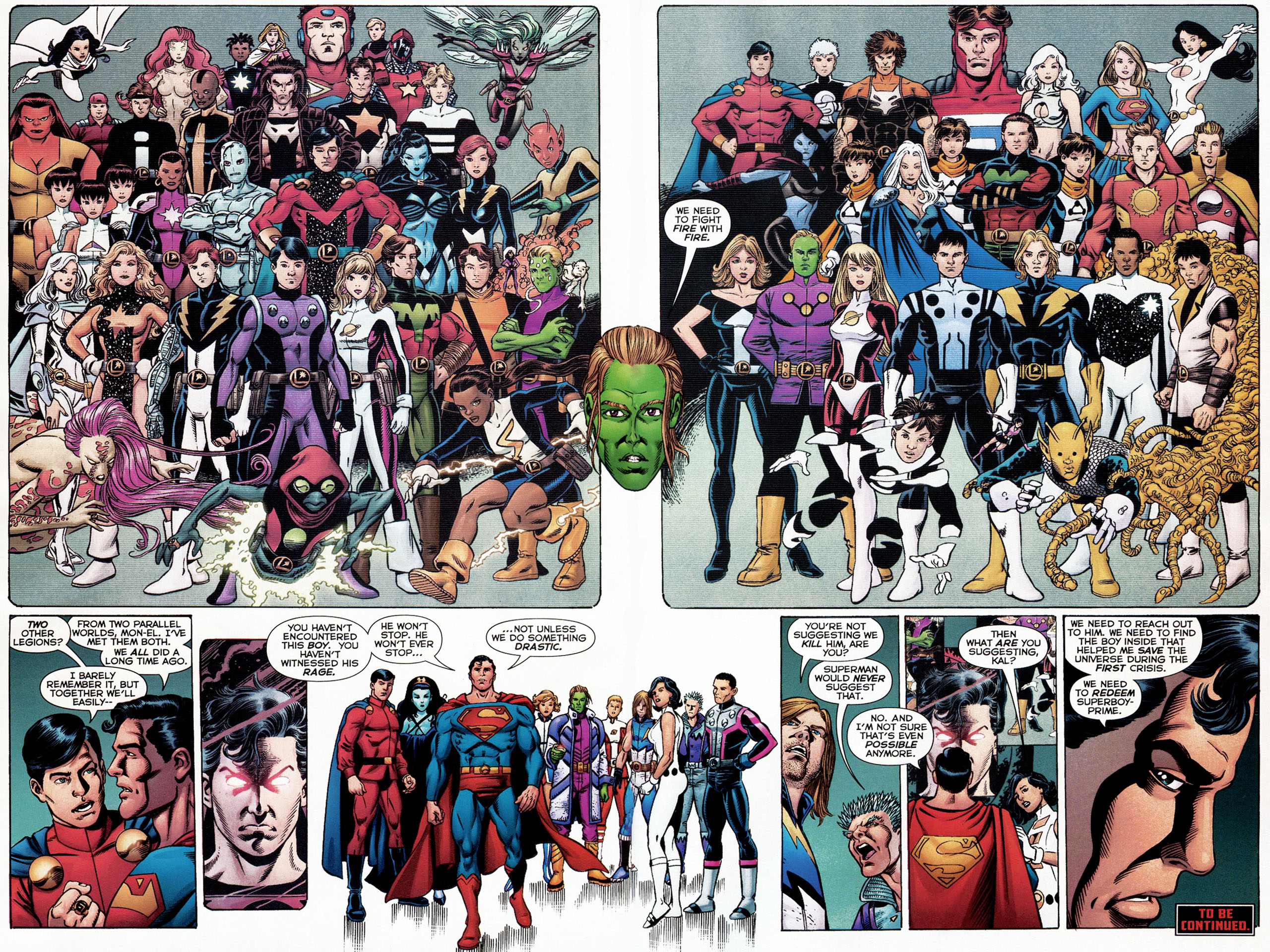
I love the Legion of Superheroes.

I could — and probably will — write endless posts about how much the Legion has meant to me over the years. I could write about how fascinated I was when I first read about them, how hunting down back issues was so much fun, how fan fic filled my head with the release of each new issue.

I can’t even begin to describe how much the Five Years Later era meant to me.

I read 5YL before I got around to The Dark Night Returns or Watchmen. The Legion was dense, mature storytelling to me. It was the standard.

I loved the years that led up to 5YL. I loved the Levitz era. For all his flaws, Levitz told complex. layered stories. Every issue featured an a, b, c, d, and e plot. He knew when to go big and he knew when to go small. He was able to write about the Legion in the scope that they deserved.

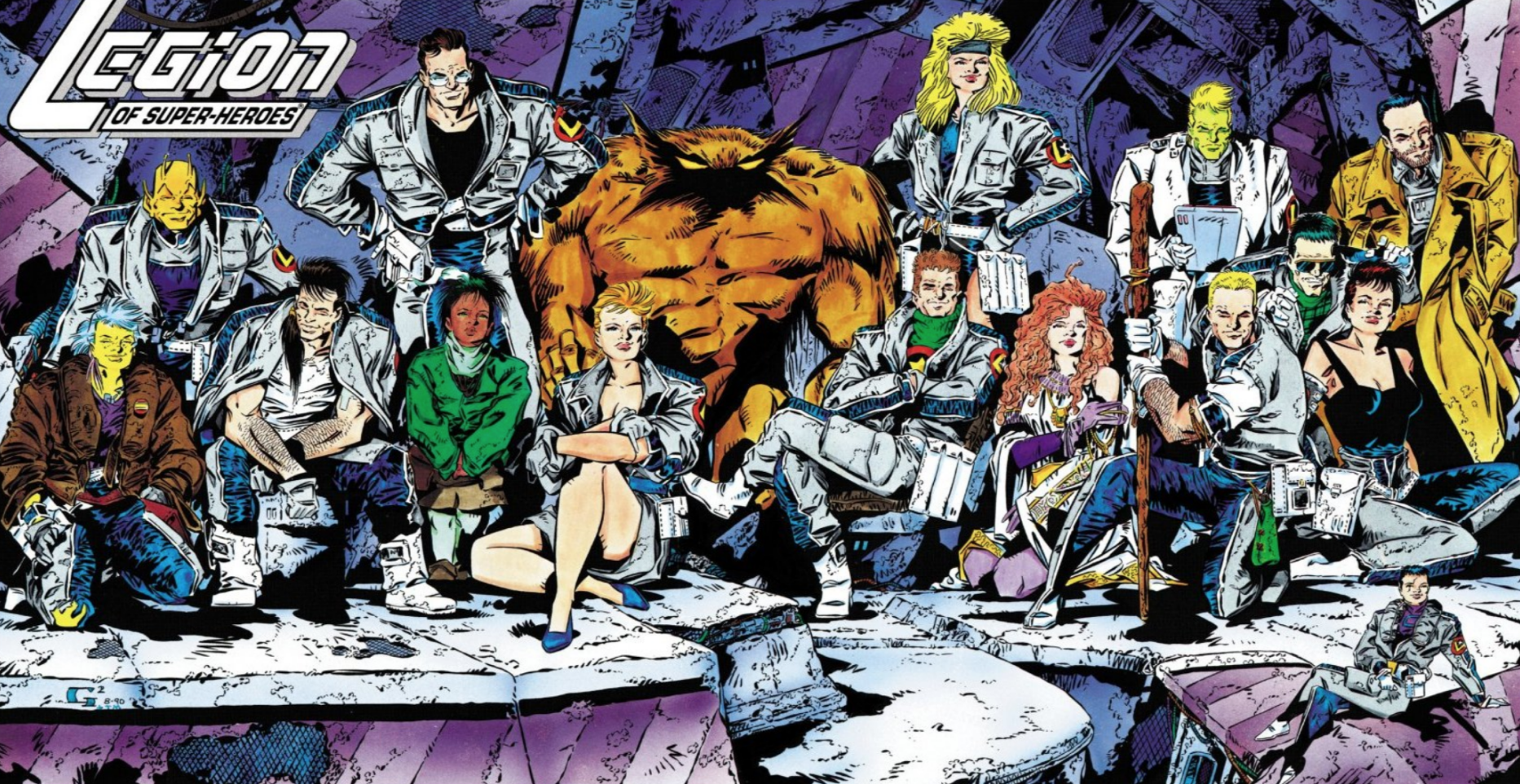
The Five Years Later team

Yes, like an episode of Pokemon, Levitz made sure every character in a scene said something, even if it wasn’t necessary. And yes, maybe of the characters remained rather two dimensional. But he fleshed out as many as he could, even if he had to use personality short hand for a few.

I was onboard for the first reboot, when the so-called Archie Legion was born. I loved it. I’ve never been the kind of fanboy  who holds on to his beloved characters so hard that he refuses to see them any other way.

Seriously, if you’re going to jump into the Legion, the reboot version is actually a great place to start. It’s like this amazing distillation of what made the Legion great. It was also planned out incredibly well, the kind of long term planning that you just don’t see in comics anymore.

The characters were fleshed out, although the creators used their previous incarnations as a kind of shortcut to make them fully formed characters in a hurry. And why not?

The Archie Legion

Look at it this way: any new iteration of the Legion is going to bring a fair amount of long time fans. One of the easiest ways to get them enthusiastic about a new version of a team they love is by at least keeping the broad strokes of the characters. The intricacies can change, but why completely bulldoze over something that was working?

Plus, given the Legion’s extensive history, it’s possible that new fans will go digging into the back issue bins and/or digital stores to learn more. Why would creators not take advantage of that if the characters weren’t horribly offensive?

I suppose if I were to make a checklist of what’s essential in a version of the Legion, it would look something like this:

  1. 3 dimensional characters
  2. a lot of them
  3. multiple story lines at one time
  4. complicated interpersonal relationships
  5. hope

That’s not a lot, is it? I don’t think I’m too demanding.

The New Legion

So far this new Legion series has accomplished exactly one of those things: there are definitely a lot of characters.

And as of yet, those characters are ill defined. Not a single one has displayed enough personality to stand out. Hell, even the current version of Jon Kent has been something of a generic teen superhero.

What makes this all the more baffling to me is that a fair number of the characters come with personality short cuts. They were so clearly defined in the past that it would be easy, with just a sentence or two, to establish who they are. There’s no need for years of exploration, you can cut right to the chase.

And yet, for some reason, these personalities have been thrown out the window. I don’t need Ultra Boy to be exactly like he was, but he should be similar. The character running around the new Legion series is not him — he’s wholly brand new, or at least that’s how he’s behaving.

And I have no idea why. Jo Nah was a great character. You could claim that a number of Legion characters were two dimensional and lacked complexity, but Ultra Boy wasn’t one of them. He had a background that was unique to the team and a personality that had been fully developed.

Jo’s not the only one gets the short shrift, but he’s the worst case.

I’ve been trying to figure out how to talk about the diversity issue with the Legion. They’ve never been the most diverse team, although there have been very minor in roads made over the year.

In particular, Fabian Nicieza and Pete Woods put together a great team for the New 52 Legion Lost series, which was sadly undone the way that most New 52 books were undone (if they were even good to begin with): editorial interference. Still, the line-up was probably the first great example we’ve seen of a Legion team that’s connected to original yet pointed at the future.

It wasn’t surprising when Bendis and Sook revealed their version of the Legion and some familiar characters had been changed to diversify the team.

It was hard, however, to not immediately think about this column on the trope of black superheroes and electric powers.

It’s also hard not to notice that the effort to diversify the Legion for some reason involved getting rid of all the (albeit few) diverse characters that had been Legionnaires in their history.

Why keep say, Matter Eater Lad but not include XS? Or Kid Quantum II, who was a stand out character from the Archie Legion. What about one of my favorite Legionnaires, Invisible Kid II?  Hell, Nicieza and Woods had already made Tyroc cool.

I am all for diversifying the Legion, but doing so at the the expensive of the actual non-white characters is a really weird choice. And it’s not an either or. Give me black Lightning Lad, yes, but give me XS, too.

The XS thing is particularly egregious given that, like every other writer, Bendis appears determined to connect the Legion to the 21st century DCU. XS is the perfect connection.

It’s also strange to me that this new iteration of the Legion doesn’t have any non-humanoid members. You would think, since this is no longer the 50’s, we’d see some creativity what a Legionnaire looks like.

Again, that’s not something the previous versions of the Legion were particularly good at, but there were a few strides. Gates, in particular, has a fair number of fans. I’ve always loved Quislet. And who didn’t love Tellus?

Who Are the Legion?

The concept of the Legion doesn’t fare particularly well in this reboot.

The beauty of the Legion’s origin is that three teenagers who have never met before suddenly step up and save someone from being assassinated. They weren’t called to service. They acted out of selflessness and responsibility. They acted as a team right from the start — three kids from very different planets acting as one to save someone they’d never met.

It’s simple and wonderful and where you go from there doesn’t really matter. How the team is officially formed and grows doesn’t need to be set in stone. But that initial origin story matters. It sets the tone for the entire idea of the Legion.

And for some reason that’s been discarded.

The other 2 reboot Legions

I guess you could make the argument that it’s to tie the team to the United Planets more closely than they were before, as the UP seem to be just as important to this series as the Legion. But that feels wrong, too.

Consider this: the last Legion reboot (the threeboot) was build on the premise that the Legion existed at odds with the UP. This new version was build on the premise that the Legion exists because of the UP. Neither interpretation is great. At least the Archie Legion, drafted and expanded by the UP, ultimately threw off those shackles. The original Legion didn’t really work for anyone but themselves.

Making the UP so important also takes some of the focus away from the Legion itself, as does including Rose, a character from the 21st century. We’re seven issues in and I couldn’t tell you how any member feels about any other member, but that makes sense given that I couldn’t tell you anything about any of them.

And everything so far seems to be funneled through the lens of the UP. Each story so far has been connected to the UP. I could say that it’s all one big story, but it’s not really that big. There are bad guys with Aquaman’s trident and the Legion are fighting them. Ultra Boy’s dad is mad.

There’s your 140 pages of story so far.

The Legion CAN’T Be Decompressed

To a certain extent, none of this should be surprising. Multiple stories and large casts aren’t really in Bendis’ wheelhouse. Perhaps interpersonal relationships are, but the cast is so large that I don’t know when he’s going to find the time to actually develop any of that. The fact that Bendis writes every character the same exact way is going to make it that much harder to make a number of different relationships seem unique.

I suppose the idea was that Bendis loves Superman and Superman conveys hope and Bendis wrote Ultimate Spider-man who was a teenager, so you combine those two and presto! You have the Legion of Super-heroes.

The problem is that there’s more to the Legion than that.

The problem is that DC has spent a long time now trying to figure out what the essence of the Legion is and it just isn’t what it was to begin with.

That’s not to say that the Legion no longer represents hope, because they do, at their core that is what they were and what they ever will be.

But hope doesn’t mean simple, and this Legion series so far has been as simple as they come. It’s not even shallow popcorn movie simple. There’s just nothing there. There’s no meat on that bone.

And it’s not even doing a good job of making the team and the book about hope, which is theoretically what it’s supposed to be doing. Nothing about the book so far would indicate that hope is in short supply somehow.

Is There Hope?

I’m honestly at a loss for how to turn this book around. The obvious answer would be to have a story that requires them to break into smaller teams and give each team its own dynamics and its own mission. Give us the Espionage Squad. Give us five pages an issue on two or three teams for an arc.

Have them struggle against something big with real stakes. Give us time to see how each of them reacts — how any of them reacts.

Stop using Superboy as the way into the Legion because this particularly Superboy has been around for like 10 minutes and no one is any more invested in him than any of the other characters.

Give us some idea of how the Legion is organized. Show us what they do every day. Show us the cliques in the team, the grudges. A throwaway line every now and again isn’t that.

Just do some of the things.

Because I love the Legion.

But what we’ve gotten so far is not living up to the name.