Fugazi, Part 1: 13 Songs

Fugazi was working class punk rock when so many other punk rock bands seemed like they were still living off their parents.

For as liberal as they were, Fugazi spoke to my blue collar surroundings and helped me to realize that those to things were not antithetical. You could sit at a crimping machine attaching truck parts together over and over again for eight hours a day, five days a week, and still believe that everyone should be treated equally, that social programs were important and should be funded, and that war was never the answer. Fugazi didn’t just talk a good game, they lived it, and that came through in their music.

Pearl Jam??

Pearl Jam doesn’t get enough credit. I think every generation has those bands who are immensely popular and are very open about their not so popular influences. Nirvana did the same thing, although they were, like most of Pearl Jam, more interested in promoting their fellow Seattle bands, the ones who had played big parts in their lives but weren’t getting the same attention.

Eddie Vedder, lead singer of Pearl Jam, was vocal about his favorite bands. He would go so far as to sing bits of their songs during concerts. Way back in my high school days, I got my first ever bootleg. It was a recording of Pearl Jam playing at a small club in Paard van Troje in the Netherlands. It was, appropriately enough, called Pearl Jam: Small Club.The 8th song of that show, after “Black” and before “Release,” was a song that Pearl Jam, to my knowledge, never actually recorded, which is for the best, as it’s not a particularly good song. On the bootleg, it’s titled “Saying No,” and it’s more or less about rape. It’s a four minute song and at the three minute mark, Eddie Vedder stops singing his own lyrics. Instead, he sings the outro of a song called “Suggestion.”

The Journey Begins

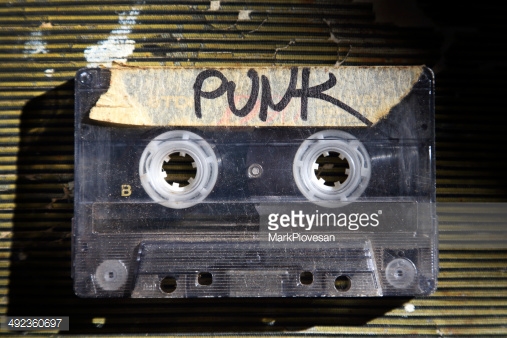
This was my introduction to Fugazi. In the winter of ’94, I had a CD player, but I didn’t use it much. I was still mostly listening to casettes, so that’s what I bought: “7 Songs” (sometimes known as “Fugazi”) by Fugazi which included not only the aforementioned “Suggestion,” but “Waiting Room,” which was, for whatever reason, Fugazi’s best known song. It was easily my favorite on that tape, although I loved “Bad Mouth” an awful lot, too.

Not long after that, I got “Margin Walker,” the cassette that made up the other half of Fugazi’s first EP, “13 Songs.” “Margin Walker” solidified my enjoyment of Fugazi, as the songs began to become more complicated. That opening to “Margin Walker” (the song), the bass line in “And the Same,” the vocals in “Burning, Too” – all great stuff. And that’s ignoring what was, I had been told, Fugazi’s real classic, “Promises.”

At this point in my life, I knew enough about guitar/bass/drums/vocals music to appreciate well crafted, creative songs when I heard them. The only hesitance I really had to fully embracing Fugazi was Ian McKaye’s voice. His were not the polished vocals that I was used to. Even the other non-mainstream bands I listened to (Jawbox, Sunny Day Real Estate, Velocity Girl) had, if not clear, than clean vocals. McKaye sounded like he was grunting out his lyrics, which took some time for me to get used to. Fortunately, I took to Guy Picciotto’s vocals right away.

But as much as I liked “13 Songs,” I hadn’t completely fallen for Fugazi. No, that would happen when I quickly moved to “Repeater.”

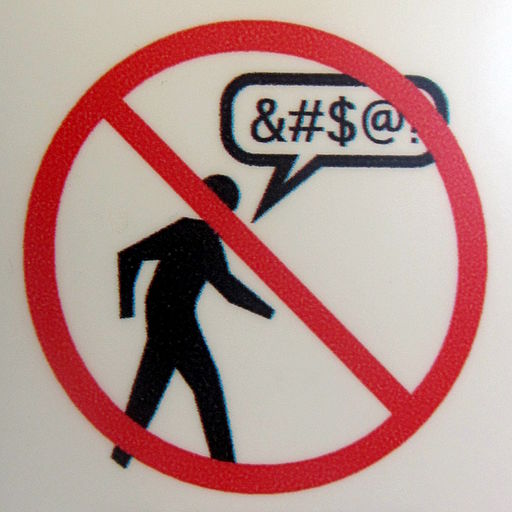
Potty, Swear, Curse: Why do we have bad words?

Our younger son is going through the “potty talk” phase. He adds “butt” and/or “poop” to any sentence. It’s almost a reflex at this point.

We let him do it, although we draw the line at name calling, but that applies beyond “potty talk.”

He is told at school that he can’t say those things.

Sometimes while driving around with our older son, I’ll listen to podcasts. My son doesn’t really notice unless I’m listening to Smartless. The hosts and guests on Smartless — co-host Will Arnett in particular — are very free with their swear words, and it’s usually some form of “fuck.”

My son points it out whenever they say these words. He does so along the lines of “why are they saying mean words?” or “they should stop saying those words.”

This comes from his school, of course. Swear words are a no-no at the elementary school and, really, at most schools, regardless of the grade level.

The fact that we have words that we’re not supposed to use, or that are considered inappropriate to use, has always struck me as bizarre.

Don’t get me wrong, while on the surface I believe a word is a collection of letters, I understand that there’s some context. Words that exist solely to oppress others aren’t words that should get thrown around. There are words for every minority group that have no place coming from the mouths of anyone outside that group, and what those within the group decide to do with those words is up to them.

But those aren’t even considered swear words because it’s common knowledge that they are hateful.

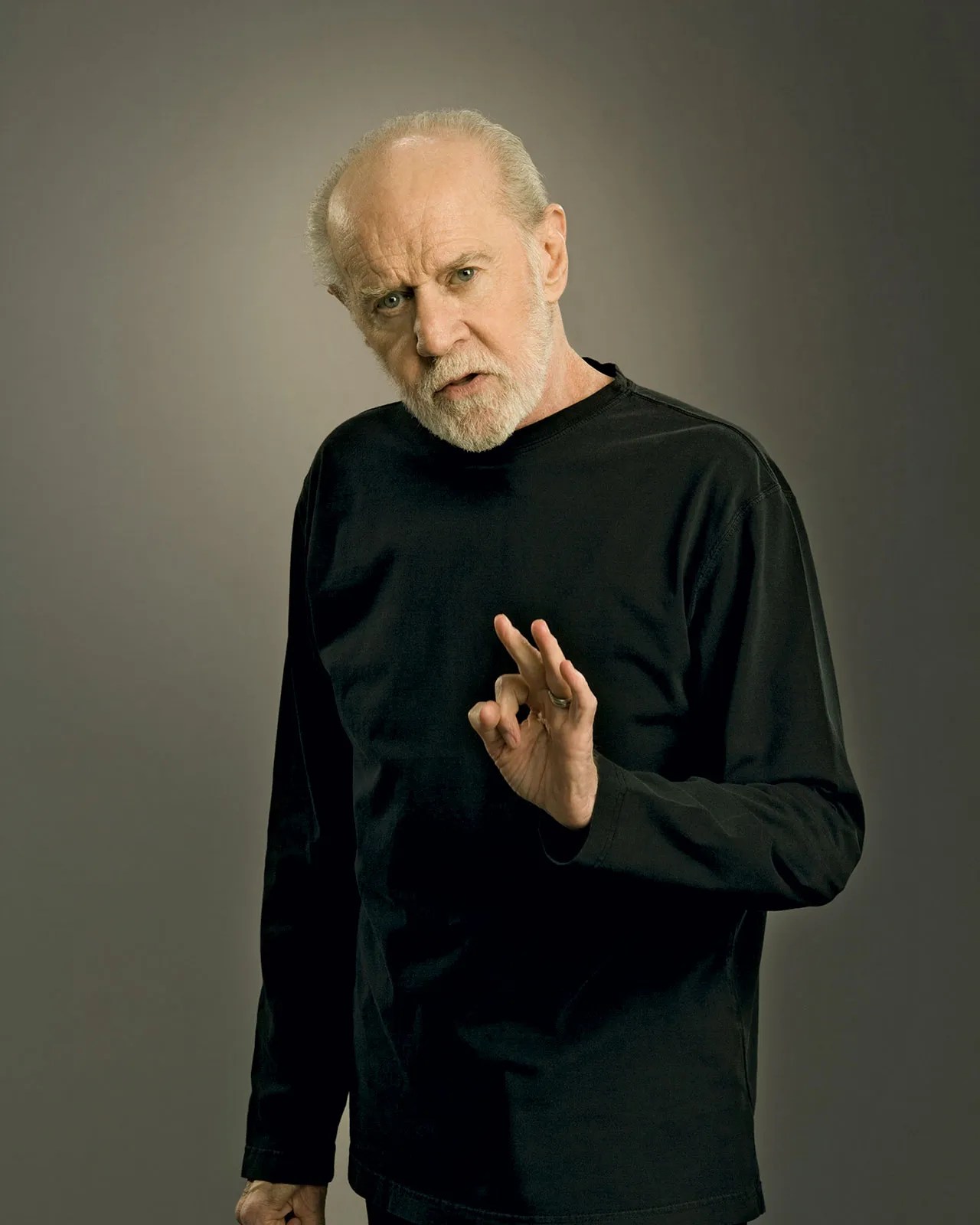
George Carlin did an entire bit on swear words, called “Seven Words You Can Never Say on Television.

This was his thinking, from an interview in 2004 with NPR:

On these other things, we get into the field of hypocrisy. Where you really cannot pin down what these rules they want to enforce are. It’s just impossible to say “this is a blanket rule”. You’ll see some newspapers print “f blank blank k”. Some print “f asterisk asterisk k”. Some put “f blank blank blank“. Some put the word “bleep”. Some put “expletive deleted”. So there’s no real consistent standard. It’s not a science. It’s a notion that they have and it’s superstitious. These words have no power. We give them this power by refusing to be free and easy with them. We give them great power over us. They really, in themselves, have no power. It’s the thrust of the sentence that makes them either good or bad.

I’d would actually got a step further and say that even the thrust of the sentence is irrelevant because there’s a non-swear word version of every swear word. You can say “poop” all you want (unless you’re in pre-school, apparently) but you can’t say “shit,” which is the exact same thing.

I believe that language is malleable and that being able to modify your speech for a specific topic or setting is great. I don’t swear around my grandparents; I swear like a sailor with my friends.

But I think that’s an aesthetic choice. We all pick and choose which words we use, even if its unconscious.

President Obama was often criticized for this, even though it’s something politicians have done for generations — even though it’s something everyone does.

But I come back to the main question: why are some words considered inherently bad, particularly words that have no historical connotations?

Some of the people who police these things also incorrectly site the first amendment whenever they get into trouble for saying horrible things. Your kids can’t say “fuck” but they think the first amendment means it’s okay for them to use the N-word. It’s baffling.

And it’s universal! This belief that certain words aren’t allowed to be said crosses demographic lines.

I have no idea why.

Why does it persist? Even as we see various other socially generated taboos fall, this one hangs on and is seldom questioned.

The more pressing question, is how do I address this with our kids?

As I said, we let the youngest use all the “potty” language he wants, the belief being that it will lose its novelty at some point. It worked that way with our older son. They key is making both of our kids aware that certain words are more appropriate than others depending upon the situation.

The other day at dinner the word “shit” came up. I don’t even remember why. But this was the A plot to the long running B plot in the background, our youngest saying “poop” over and over.

Our oldest mentioned that the s-word was a bad word. I asked him if he knew what shit was.

He did not.

“It’s poop.”

“Then why is it a bad word?”

“That’s a great question.”

Trying to be Superman

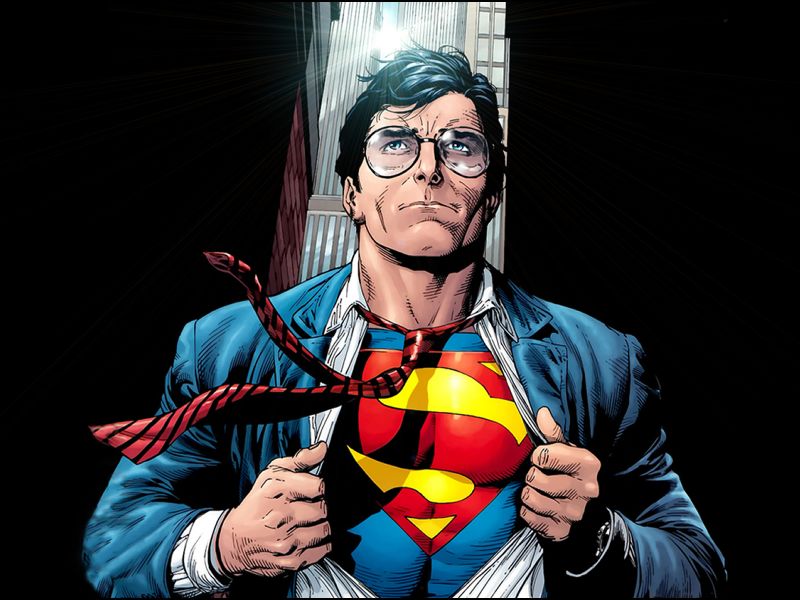
My son refers to all superheroes as Superman.

I’m not sure how he knows which characters are superheroes. The Spider-man action figure is Superman. The Batman book features Superman. But Woody from Toy Story is Woody. None of his Duplo figures are Superman. Only the two superheroes get named for the ultimate superhero.

How does he know? Spider-man doesn’t wear a cape. Maybe it’s the fact that they all have symbols on their chests.

I’ve been reading comic books for over thirty years and there’s a lot to be said about the depictions of masculinity in superhero comics, most of it not good. But growing up this was my example, at least on a subconscious level. I’ve noticed recently that there’s an evolution at work within superhero comics, epitomized by what are perhaps the three most iconic characters, who all happen to be male (and white and straight, for that matter): Spider-man, Batman, and Superman.

I realize that those three are not the traditional “trinity” of superhero comics, largely thought of to be the DC trinity of Batman, Superman, and Wonder Woman. And those three aren’t the current Marvel movie trinity of Captain America, Thor, and Iron Man. But I think the average person on the street with only a passing familiarity of comics would point to Spider-man, Batman, and Superman as the top of the hill with regards to superheroes.

Let’s consider 3 aspects of Spider-man, Batman, and Superman: family, violence, and sex.

The classic version of Spider-man (the one who will be gracing movie screens yet again next year) lives with his aunt. She’s a prominent figure in his life. He is still very much in need of parenting. Even today in the comics, he is the only one of these three characters who still has a mother figure in his life. Being someone’s child is still very much who Peter Parker is.

He might be older now, but the iconic Spider-man is a high school kid, so much so that Marvel regularly goes back to that well whenever they can, be it Untold Tales of Spider-man, Ultimate Spider-man, or Spidey.  And any time Peter Parker might start moving too far forward with his life like, say, getting married, Marvel has done whatever it takes to pull him as far back as they can. My favorite Spider-man stories are actually the ones that take place after he’s graduated from high school, but I understand the appeal. High school Spider-man is a way of life. But he’s not a paragon of maturity.

Batman, however, is clearly an adult. While Alfred may seem like a father figure, Bruce Wayne has taken it upon himself to be a father for a handful of characters who more often then not work with him as Robin. Part of what makes Batman more than just a two dimensional vigilante is the fact that he’s trying to build a family to replace the one he lost.

He is, it should be noted, a horrible father, though. It would be easy to make the case that he’s an abusive parent and should never be entrusted with minors.

Bruce Wayne is also over the death of his parents, no matter how many times it’s revisited in the comics. He’s not doing what he does to avenge them, not anymore. He has a mission and he’s devoted his life to it. Was the death of his parents the motivation for that choice? Of course, but it’s moved well past that.

Superman never really had to move past the death of his parents because he was a baby when Krypton was destroyed; he has no memory of them. As to whether Ma and Pa Kent are alive, I’m not entirely sure, as their status in the comics seems to change on a regular basis. The most common scenario seems to be Pa no longer with us, but Ma still alive. Regardless, by the time either or both of his parents die, he’s already been fighting for truth, justice, and the American way for some time; their deaths are not his motivator.

Because here’s the thing: Superman is selfless. Sure, perhaps you can make that claim about Spider-man and Batman, but those two characters regularly struggle with their own needs versus the needs of others. Most of Spider-man’s early stories deal him making the wrong choice in this regard, in part because every time he makes the right choice horrible things happen. And it would be easy to argue that Batman is the most selfish superhero in all of comics, in part because of his martyr complex.

Superman doesn’t really struggle with such things. Superman knows who he is and he’s comfortable in his own skin. He really is what we all aspire to.

The violence these characters take part in (these are superhero comics we’re talking about) reflect the characters perfectly: Spider-man makes jokes while he fights, Batman is painfully serious, and Superman, well, Superman usually tries to resolve conflict without violence if he can. There have been a number of writers over the years who have actually tried to write Superman as a pacifist, but even when he’s not taken to that extreme, violence is his last resort. To an extent, it has to be; he’s so powerful that his actions can have unforeseen consequences. But this is also a reflection of who he is, just as Spider-man’s jokes reflect his insecurity and Batman’s grim determination represent his lack of balance.

Their love interests are equally as telling. Regardless of what comic book lore would tell us, Spider-man has really only had two love interests: Gwen Stacy and Mary Jane. He met both of them while still in high school. Gwen was a two dimensional personification of the girl next door, while Mary Jane was the actual girl next door, who would be come the ultimate adolescent fantasy: a model.

Vicki Vale notwithstanding, Batman’s most notable romantic partners are either villains or those who walk the fine line between villainy and heroics. Batman has a bad girl fetish and it plays perfectly into the next step of maturity from Spider-man. These are women who need a strong man to get them to behave, emphasis on the man. But these aren’t real relationships.

Let’s just get this out of the way, then: Lois Lane is a singular character, unlike any other in all of comics.

Superman isn’t Superman without Lois Lane, so much so that creators in other mediums don’t even pretend it’s possible to separate the two. There was a TV show called Lois and Clark: The New Adventures of Superman that, as is clear from the title, was about the two of them, not just the guy with the S on his chest. Heck, technically she got top billing.

You can separate Batman and Catwoman or Spider-man and Mary Jane, but you can’t separate Superman and Lois Lane.

And she’s done this by being one of the few female characters in superhero comics known for her brains, her wit, and her ability. I honestly can’t remember any lengthy period of time in which Lois Lane was nothing more than a pin-up; the same cannot be said for the vast majority of other love interests.

And perhaps that’s why — Lois Lane has never simply been the love interest. That’s not to say that she was written particularly well in the early years, but her obsession with Superman ultimately translated to tenacity as a reporter that expanded beyond the Man of Steel. Once she found out who Clark Kent really was, nothing changed. She was still the same driven Lois Lane.

The fact that Lois Lane is who Superman falls in love with speaks volumes. And, of course, he marries her, and in current comics continuity, they have a son.

Lois Lane isn’t marrying Batman. She’s not dating Spider-man. She’s spending her life with someone who deserves her.

This is where I am, then: I was Spider-man, then I became Batman, now I’m desperately trying to be Superman.

That’s not to say I was actually any of those characters. But my growth as a straight white guy can be traced from character to character. I still think Batman is the best superhero character in comics, if only because of how he changes to reflect society from decade to decade. But Superman is the be all and end all. He’s who we should all want to grow up to be.

We reminisce about being Spider-man. We fantasize about being Batman. We try to be Superman.

A few months ago, DC Comics (home of Batman and Superman) had a soft relaunch of their comics. One of the biggest changes was replacing a young, single version of Superman with the aforementioned married with child version. Not much was changed about Batman.

The current crop of Batman books do nothing for me.

But Superman is probably my favorite superhero comic currently being published.


My Awkward Assocation with Punk Rock Part 3

I ostensibly moved to Atlanta because the drummer in my last band had moved there a year early.  He, however, had a job at CNN lined up, whereas I had nothing at all.

Not long after I moved, one of the bands from my hometown came to Atlanta to play a show.  I went to said show and got to see a few people I went to high school with that I’d now known for nearly a decade.  The band, Party of Helicopters, was pretty well known in the “scene,” if you will, so their show was a big deal.  It was at this show that I met the king of the scene.

I don’t know if such creatures exist anymore, now that we have the internet.  I mean, we had it then, too, but most people I knew were still on dial-up, so it wasn’t exactly the go to way of staying in touch or getting music.  I honestly don’t remember what the king of the scene in Atlanta’s name was.  For some reason, I want to say Matt.

Anyway, we met at that one show and he was nice enough and since I was new in town, it was cool to have someone to talk to that was into the same things as me (or, in this case, one thing that I was into).

Not long after that, another band from my hometown came to Atlanta to play.  This was a little bit different because I was not only friends with these guys from high school, they were also some of my best friends.  They came to my place before the show, we all hung out after the show, they stayed at my place while they were in town.

Their van ended up breaking down when they tried to leave, so they stayed a few days longer while it was getting fixed.  The king of the scene even managed to set them up with another show.  I think the Party of Helicopters was there again for that show, so afterwards it was this fairly big group of “indie” people hanging out.  At this point, the king of the scene seemed to assume that, since I knew all these bands from my hometown and I liked a lot of the same music, I was going to be a part of the “scene.”

I distinctly remember having a conversation with the king about some upcoming event.  Honestly, I remember it as being a phone conversation about an event that was either that night or the next.  I told him I was going to miss said event and I don’t believe I had a reason for missing aside from the fact that I just really didn’t care.

He told me that it was the type of thing that I “had” to go to.  I remember him saying that much.  I don’t remember how direct he was, but at the very least the implication was that if I wanted to be a member of the “scene,” then I had to go to “scene” based events.

Needless to say, that was my last experience in the “scene.”

There’s something to be said for the timing of that.  It happened the summer of 2000, and I was spending
more and more time online.  It was the heyday of Napster.  I didn’t need to go to shows to discover music.  Hell, I didn’t need to know anyone to discover music.

Two years later, I moved to Los Angeles.  The first few years were difficult for me with regards to music.  I met a lot of people and made some great friends, but none of them listened to the same things that I did.  I began going to shows by myself, which ultimately wasn’t nearly as pathetic as I thought it would be.

During those years, my tastes began to change, aligning with where I’m at now.  I still listen to the recorded in a basement, angst and anger punk rock, but it’s not my go to music.  It’s music of a mood.  It’s no longer my every day music.

These days, my music has softened.  I’m indie rock.  That’s probably the best way to put it, as much as that might pain me.  I listen to earnest rock music by bands that don’t have mainstream success.  The songs are more accessible, but still challenging, probably more so, even.  I listen to more singing than yelling, although I still enjoy some quality yelling.

Slowly but surely, I met people who were into at least some of the same bands I listened to.  Nicole quickly came on board with a lot of my music.  We started going to shows.  We started going to shows with friends.  The Troubadour was the greatest place on earth.

Even this started to tapper off after a while.  I got old.  A show that went until 1 AM on a week day was exhausting.  My feet hurt from standing.  I wasn’t the angry young man I was two decades ago.  And I’m fine with that.

These days, I listen to Pandora and Soma FM to hear new music.  My friends on Facebook talk about their favorite new bands.  I share with Nicole the bands I think she’ll like and keep the others to myself.  Every once in a while, if it’s a band we both really like a lot, we’ll make the drive into the city to see them.  We’ll stay up late.

I’m not punk rock.  I don’t know that I ever was.  But I had fun dabbling.  I had fun dabbling and it got me to where I am now.

It was worth it.

My Awkward Association with Punk Rock Part 2

My punk rock journey began in part 1.

On the Record

I mostly ordered records from Subpop and Dischord, since I knew I liked the Afghan Whigs and I knew I liked Jawbox (although I’d first heard both bands on major labels). Seven inch records cost between two and three dollars, which wasn’t much of an investment to try out a band I’d never heard of. I stuck some money in an envelope, stuck the envelope in the mail, and a few weeks later I had some vinyl goodness.

Once I discovered that Jawbox had their own label, DeSoto Records, I got a little crazy. I don’t think DeSoto released a 7 inch that I don’t own. Seriously, I’m looking at their web site right now and I’m pretty sure I own all of those.

From 7 inch records I went to compilations. I was in love with compilations. It was a great way for me to discover new bands, particularly if some of the tracks were by bands I already knew. There was the Simple Machines 7′ series compilation, the first Jabberjaw compilation, Dischord’s State of the Union comp, all those Kill Rock Stars compilations, and endless records put out by tiny labels in every town in America featuring bands their friends were in.

And then there were the ‘zines. Listen, I’m not much for “real” or “true” definitions of labels, like the whole fake geek business. But if you were actually involved in underground music at all back in the day, you read ‘zines. I mean, you just did. The internet wasn’t the place it was today, so you had to get all your information about upcoming shows, upcoming records, etc. from ‘zines. And some of the bigger ones would even release compilations of their own.

This was all going down during my sophomore year of college, my first year at Ohio University (after leaving a very small, very conservative school in the middle of the state). I’d been playing guitar for over a year by this point, so I was actively trying to find people to be in a band with. I actively sought out people by the music they listened to. It was all that mattered to me. It was horribly close minded, but I’m nothing if not committed. I dove in.

The Glory Days

I spent five years at Ohio University, three finishing my undergrad, two in grad school, and during that time I became a bizarrely active member of the “scene.”  I put that in quotes because I didn’t think such a thing existed, but often found myself in situations where I was planning shows that my band wasn’t even playing in.  The younger kids were really into creating a community, which was great, but I’ve always been a misanthrope, so going out of my way to organize social functions was very strange.

There weren’t a lot of “indie” rock bands at OU back then, and by default my first band, Middle Kittanning, became this strange kind of figure head.  A lot of that probably stemmed from the fact that we had a PA that other bands could borrow.  It also probably stemmed from my aforementioned involvement in the “scene,” as it were.  As if to firmly cement myself as part of this strange sub-culture, I got a job at a local record store.  Now I was that guy in that band who also worked at the music store.  I was defined by all of this.

I realize all of that sounds pretty arrogant and I don’t mean it to be.  We’re talking about a couple of dozen people in this so-called “scene,” at least at this point (it seemed to get larger as the years went on).  And Middle Kittanning really only filled a void left by the graduation of a band called Mr. Hand, who were a stark contrast to a lot of the garage rock that was going on at the time.  I was nothing special.  I’m just trying to make it clear at how completely submerged in this I was.

The kicker came in grad school when I moved into a house with other like minded individuals.  We had a basement full of musical equipment.  We were all in bands of one kind or another, if not multiple bands.  We had shows in our basement which bled out into parties in our house.  We became that house.  Every town has one of those houses, where the loud angry bands play through shitty PA systems and boys with patches and girls with pixie hair get drunk and awkwardly try to make out with each other.  We were that house.

The infamous 18 Oak St.

I remember a really nice kid from Memphis, new to OU, setting up a meeting with myself and another member of the house, to discuss the upcoming punk rock events.  I’d suddenly been roped on to the underground social committee.  A band once showed up at our house to play a show, but no one had told us (or anyone else).  They were on tour, so they just hung out.

Eventually, we even had recording equipment in our basement and a audio production major who could use it all (two, really).  Records were now being recorded there by bands from other towns.  It sounds arrogant to say that the house was a hub of some kind, but it really was.  I don’t remember there being a house like ours in the years previous.

A funny thing happened while my head was buried in all these things at OU: the music scene in my hometown of Kent, Ohio become a big deal.  Okay, that’s relative, but it seemed like every punk rocker’s eyes would light up when they learned where I was from.

I mention this because it became important when I finally left the nest, graduated from OU, and moved to Atlanta.

My Awkward Association with Punk Rock Part 1

Like most kids, I grew up listening to Top 40.  I listened to Casey Kasem’s (and later, Rick Dees’) countdown show every Sunday, if I could.  My parents listened to a lot of ABBA and Neil Diamond, so that was always in the peripheral.  That was pretty much how it was through the 5th grade, aside from one blip: some small time college band called R.E.M.

My brother introduced me to R.E.M. for one reason and one reason only: they had a song about Superman.  It would be years before I even realized the song was a cover.

For some reason, once I reached middle school, I started borrowing tapes from my brother (yes, tapes).  There was more R.E.M., of course.  The B-52s.  Depeche Mode.  The Sundays.  They Might Be Giants.  Nine Inch Nails.  Jane’s Addiction.  Mostly “progressive” music that would either become or lead to “alternative” music.

I remember my friends at the time thought everything I listened to was weird.

I entered high school in the fall of 1990.  That first year I mostly continued listening to my weird progressive music.  I was an angsty kid, and at the time it was as close to angsty as I could find (aside from metal, but I didn’t know any metal kids, so it was a complete mystery to me.  My metal phase would come much later).

In the fall of ’92, things changed.  I was still angsty, and suddenly there was music for exactly that emotion: grunge.  For about two years, it was the majority of what I listened to.  I know it sounds stupid, but it spoke to me.  It said the same things I was saying.

In the winter of ’93, I joined a band.  We called ourselves oral groove (yes, lower case).  Our biggest influence was probably Ned’s Atomic Dustbin, although I was clearly trying to be Eddie Vedder, at least for the first year.

Being in a band exposed me to more music (like the aforementioned Ned’s).  Aside from the flavor of the day, we each liked different rock music, from metal to hair bands to hippie jam bands.  None of us really listened to anything that might have been called punk rock, not really, not then.  But we did seem to push each other to find new bands outside the growing alternative mainstream.  The Afghan Whigs and Quicksand were two notable finds.

Grunge was the first cultural phenomenon I got on board with early on, and the first one I watched expand like crazy and ultimately become co-opted.  I’m not saying I wasn’t part of that, but it was strange to watch.  As grunge became alternative, it was watered down, and very quickly third and fourth generation bands were mimicking the same sound.

Alternative music also lacked the angst that grunge had.  It veered into hippie territory.  I was far too disgruntled for that.  I had to look elsewhere.

I can still remember sitting in my parents living room watching the video for “Unsung” on MTV.  Helmet were four dorky guys with short hair playing heavy music and I broke my cassette of their second album, “Meantime” I played it so much.  The last part of my senior year, Helmet had unseated many of the grunge bands.

And then I graduated.

Musically, I took Pearl Jam, Ned’s Atomic Dustbin, R.E.M., Weezer, Helmet, and the Afghan Whigs with me.  Say what you want about Pearl Jam, but they were always the grunge band that got me.  I didn’t have the refined pallet to appreciate Nirvana the way I do now.

I had a good mix going.  Weezer hadn’t really taken off yet, but I bought their first album as soon as I heard “Undone.”  The Afghan Whigs was a band that my friends and I absolutely loved, and that no one else we knew seemed to care about.  It was the same way with Ned’s, although they were more of a pure alternative band.

Two bands happened to me the fall of my freshman year of college that completely changed the way that I thought about music.  Those bands were Jawbox and Sunny Day Real Estate.

Oh, and I also started playing guitar.  Suddenly I was much more involved in creating music, and if mainstream music had turned me off before, it was even worse now.  The lack of integrity in mainstream music became very apparent when I started creating my own.

The final element of my musical awakening, if you will, came from a discovery that was, funny enough, facilitated by the internet.  Back then the internet was, for me, mostly about BBS forums and record label web sites; there were no such things as MP3s.  But internet gave me the information I needed for something very important: mail order records.

Armed with catalogs I’d printed out from web sites, addresses from the same, and a record player I’d had for at least a decade, I began my submersion into the world of underground music.
 

End of the Line: Marvel Edge

Is there a more universally reviled moment in Marvel’s history that the debut (and subsequent crash) of “Marvelution?”

For the uneducated, back when Marvel was pumping out a ton of comics and involved in all sorts of corporate level shenanigans, the powers that be decided the best way to monetize the line would be to break it into five groups.

I suppose it makes some sense in a corporate lizard type of way: why have just one interconnected, money making line of comics when you can have five, interconnected, money making lines of comics?

The groups were:

Marvel Heroes (Fantastic Four, Avengers, and Avengers related books

Spider-man (all Spider-books)

X-Men (all the X-books)

Marvel Edge (see below)

Non-Marvel Comics (Licensed books, Epic Comics, etc.)

You can see some of the problems right off the bat. Aside from the fact that expanding to five universes would expand Marvel’s line even beyond what it already was, there’s the fact that part of the appeal of Marvel is that their books are interconnected, not divided into lines.

Then there’s the matter of all those books that don’t fall neatly into any of these five groups. The New Warriors, for example, got stuck in the Spider-man group and were then forced to take in the Scarlet Spider as a member to more closely associate themselves with the other titles.

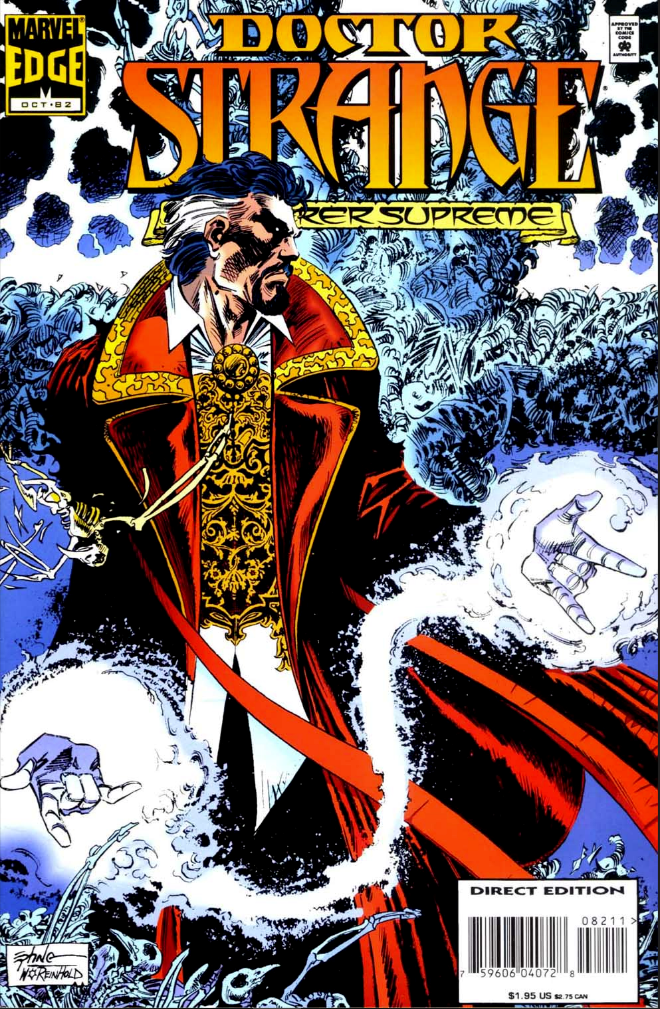
What about the Hulk? This was before the Marvel movies, before people started thinking about him as an Avenger again. Or what about Dr. Strange? He wasn’t an Avenger. He wasn’t a mutant. He had little association with Spider-man.

Marvel Edge became the catch all for titles that couldn’t be shoehorned into the other groups.

The ongoing books:

Daredevil
Dr. Strange
Ghost Rider
The Punisher
The Hulk

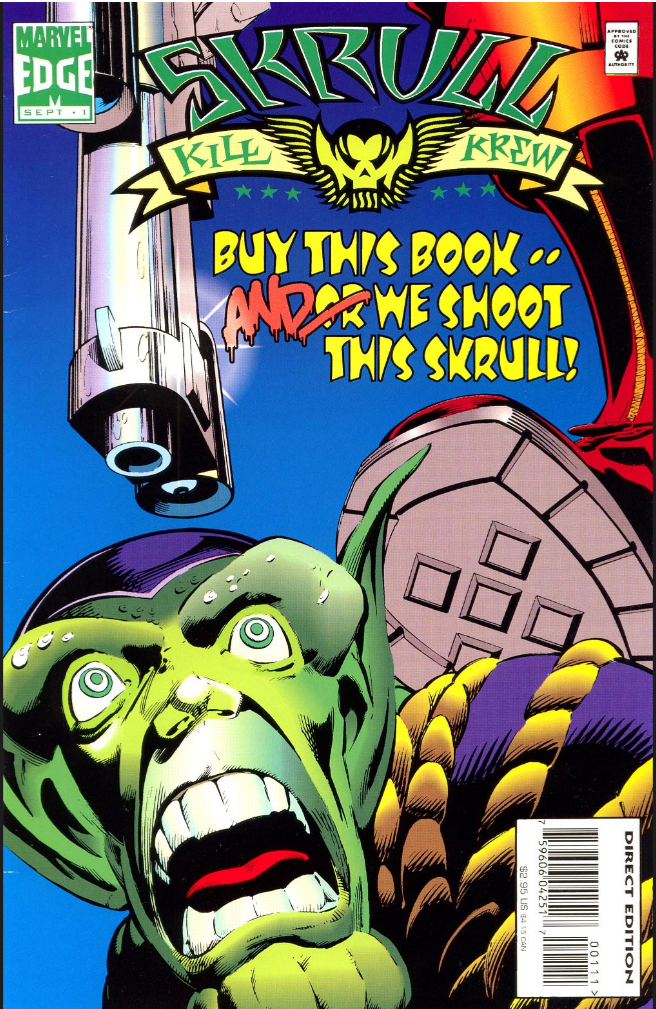
There were also a handful of limited series spinning out of those titles, including the first Skrull Kill Krew series. There as also a monthly book called “Over the Edge” that rotated characters each month. It was part of Marvel’s 99 cents line made to attract new readers and offer something for those who had been priced out of regularly Marvel titles.

You might be able to connect the dots on the first four titles in that list above — you’ve got the street level characters in Daredevil, the Punisher, and Ghost Rider. And Dr. Strange regularly operates in the same space as Ghost Rider. But how does the Hulk end up in that group?

Since Marvel Edge is a new line entirely and not just a clear definition for a group of books (ala the X-books or Spider-books), it started the way you would expect: with a crossover event.

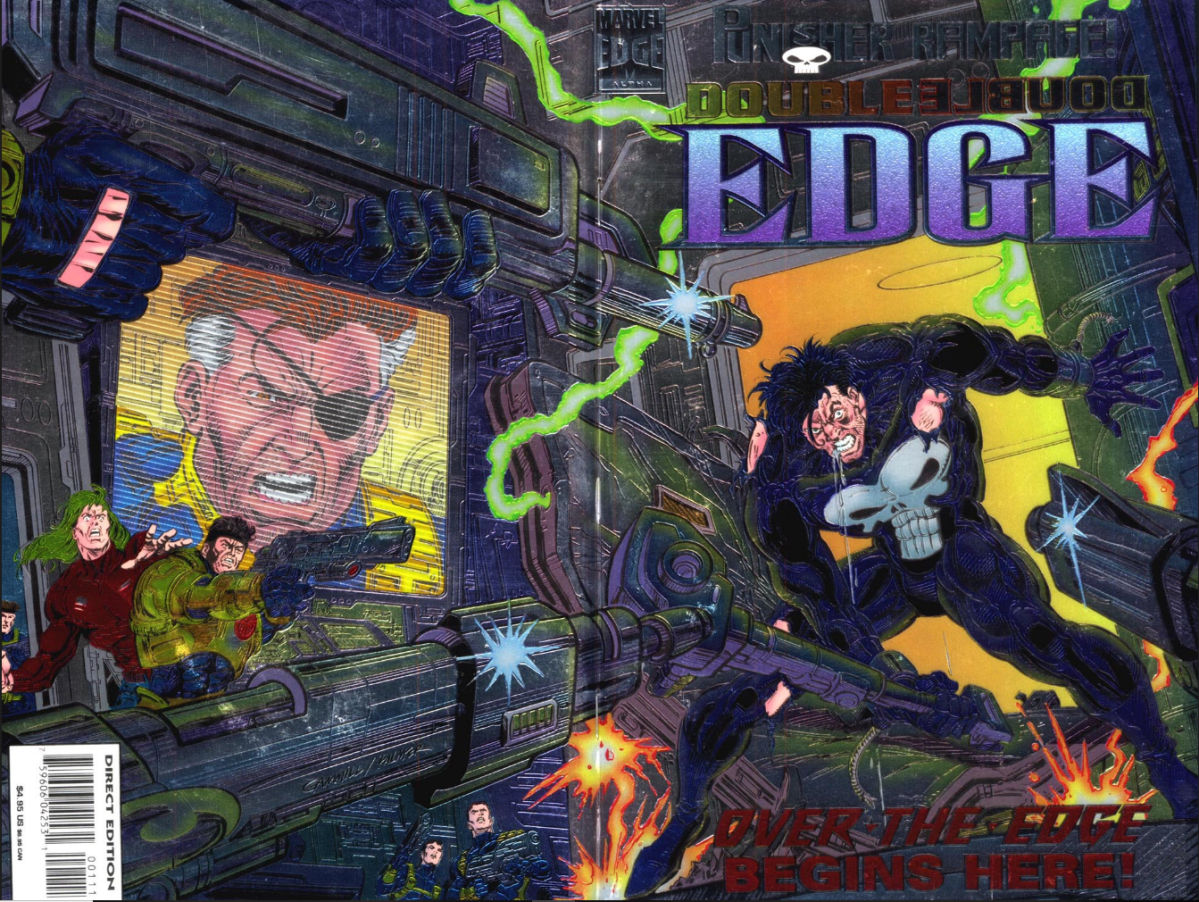
It’s called “Over the Edge” and it starts exactly how you would expect, with a double sized, chromium cover special called “Double Edge Alpha.” It would then continue in an issue of the other main books (not including The Punisher, as his series had ended, but he would get a new one stemming from this event) and finally ending in, you guessed it, “Double Edge Omega.”

If you judged the line simply by this crossover (which, to be honest, I did) you would think Marvel Edge is horrible. Many of these issues barely connect with the story in part because these characters just don’t operate in the same space. Not only that, but the story itself is too thin to support this many issues.

Basically, SHIELD captures The Punisher, who is then brainwashed by a rogue agent to be believe that his family was killed by Nick Fury. The Punisher breaks free and begins hunting down Fury and anyone close to him.

Using SHIELD as the framing device for this crossover is a strange move given that none of these characters have much of a connection with that organization. There had to have been a better thread to weave throughout these books, but maybe this was a testing ground for a future SHIELD series.

Regardless, the event ends with The Punisher killing Fury and being sentenced to death.

Dedicating the first month of the line to a crossover seems like a good idea until you realize that the line only lasts 8 months. Any connective tissue formed in that initial story didn’t last very long.

The fact that Marvel Edge only covers 8 months does, however, make it easy to go back and read every issue with the Edge logo on it.

Some highlights from the line:

  • Salvador Larocca’s art on Ghost Rider is great. He’d really started to develop his own style on this run.
  • Ron Garney’s art on Daredevil is also great. Garney is one of the most underappreciated artists working. He’s assisted by some nice stories from JM DeMatties, although I will admit that DeMatties goes a little overboard on the captions.
  • Mark Buckingham on Dr. Strange is great, too. But he’s saddled with some uninspiring stories by a number of different writers.
  • The new Punisher series is pretty fantastic. The gist of the story is that Frank’s execution was faked by a mob boss who wants him to take over his crime family. Seeing Frank compromise his rather ridiculous black and white view of the world is a lot of fun, even if he does resort to wearing his costume way, way too much. It’s written by John Ostrander, so no surprise as to the quality. It’s mostly drawn by Tom Lyle.
  • Angel Medina takes over on art on the Hulk and I’ve always enjoyed his work. He’s a great fit for the Hulk.

There are, of course, some low lights, too.

  • The Hulk series is treading water. It seems like Peter David is just trying to come up with new variations on the traditional Hulk, which worked for the first bunch of years he was on the book, but at this point feels like grasping at straws.
  • Dr. Strange and Ghost Rider are fairly boring, art notwithstanding.
  • The Typhoid Mary limited series is bad. It’s really bad.
  • The Skull Kill Krew limited series does not hold up at all and, if anything, is borderline offensive. The idea that a race of creatures are considered universally evil and deserving of the death penalty is a horrible, horrible take, and the characters are incredibly unlikable.

In the end, having a shared corner of the universe for the “street level” and supernatural characters in the Marvel universe is a solid idea, but the characters chosen were hard to connect. With stronger creative teams and a more focused reason for the books to be connecting, this is something that could actually be pretty good.


Here’s the actual problem with the Marvel movies – and it came from the comics

Just like with the comics, the Marvel movies thrive on being connected, and they wither without it

At a certain point, comic book readers became obsessed with stories that “count.” Basically, these are stories that impact continuity in some way, stories that are important to the larger connected universe.

Comics that weren’t an active part of the shared reality died on the vine and self-contained stories went the way of the dodo. Readers bought books specifically because they believed there were connections to other books. This has gone on for decades in comics, but had never really been done in movies.

This is why the Marvel movies took off like they did.

The idea of a bigger, expansive narrative existed from the start.

Perhaps more importantly, the objectives of these larger narratives were made very clear from the start.

The initial narrative was the formation of the Avengers, a through line that included every phase one movie. In phase two, it was Thanos and the Infinity Stones. Phase three was bringing everything together.

Marvel also made sure any new characters that weren’t directly connected to the overreaching arcs were introduced in movies the audience already knew, or at least incorporated characters they already knew.

Ultimately, it made every movie seem like it mattered in the grand scheme.

I’m not sure anyone knows what the current grand scheme of the Marvel movies is.

Is it the multiverse? Or Kang? Because the Black Widow, Eternals, and Shang-Chi didn’t appear to have any connection to either of those things. Neither, really, did Thor: Love and Thunder, or Black Panther: Wakanda Forever.

It’s not surprising that the two movies in phase four that deal with the multiverse (Spider-man and Doctor Strange) also featured the most connections with the larger MCU. But that’s just 2 movies out of 7 that featured what has become the essence of Marvel movies.

The main motivation to see these movies in theater has disappeared, and with the advent of Disney+, an awful lot of people are perfectly happy to wait a few months to see Marvel movies from the comfort of their homes.

It hasn’t gotten much better in phase five. While Ant-man and Wasp prominently featured Kang, it wasn’t the Kang who will supposedly be the big bad of the current overarching story. In fact, nothing about the movie set Kang (any version of him) up as a reoccurring character that the audience should be excited about.

Thanos’ impact was felt well before he properly appeared in a movie. The attack on New York that brought the Avengers together was caused by Thanos. Ronan the Accuser worked with Thanos.

What has Kang done? Why would anyone consider him to be an epic threat, let alone a reason to go to the movies?

Guardians of the Galaxy had the strength of its franchise on its side and it was also dealing with the fallout from phase three; even taking place in its own space, the movie was still connected to the large universe.

The Marvels’ connections are strongest with the Disney+ shows. If the goal is to get people to go to the theaters instead of waiting for the release on Disney+, maybe strongly connecting it to two shows on Disney+ wasn’t the best idea.

The upcoming slate of movies doesn’t look much better. Deadpool should do well because it’s long stood on its own, even if it didn’t feature Wolverine. But Captain America: Brave New World? Did anything about the Winter Soldier/Falcon show suggest that the multiverse or Kang would be part of Cap’s world? The same goes for Thunderbolts and Blade.

Thunderbolts is particularly strange because it suggests an entirely separate overarching story running through Black Widow and some of the Disney+ shows — possibly Captain America. But, again, will people think those movies count if they’re not dealing with the big story?

And does anyone actually know what that is yet?

Just as with the comics, it’s a shame to see it come to this. It’s unfortunate that people aren’t interested in stand alone stories, but in their defense they’ve been trained to expect as much from Marvel movies, so not getting it is a disappointment.

If Marvel wants to continue to expand their cinematic universe, they need to determine whether or not they can maintain separate lines within the larger structure. The existence of the Thunderbolts movie would suggest that are going to give that a try, but, again, we’re 10 movies post-Infinity Wars and it’s still not clear what the plan is.

I suppose the upside of movies is that they’re limited by real people, so we don’t have to worry about Marvel releasing a dozen X-men movies every year.

They’re totally going to do that now, aren’t they?

Review: Wonder Woman Earth One is the essence of the character

I was prepared to hate Wonder Woman: Earth One.

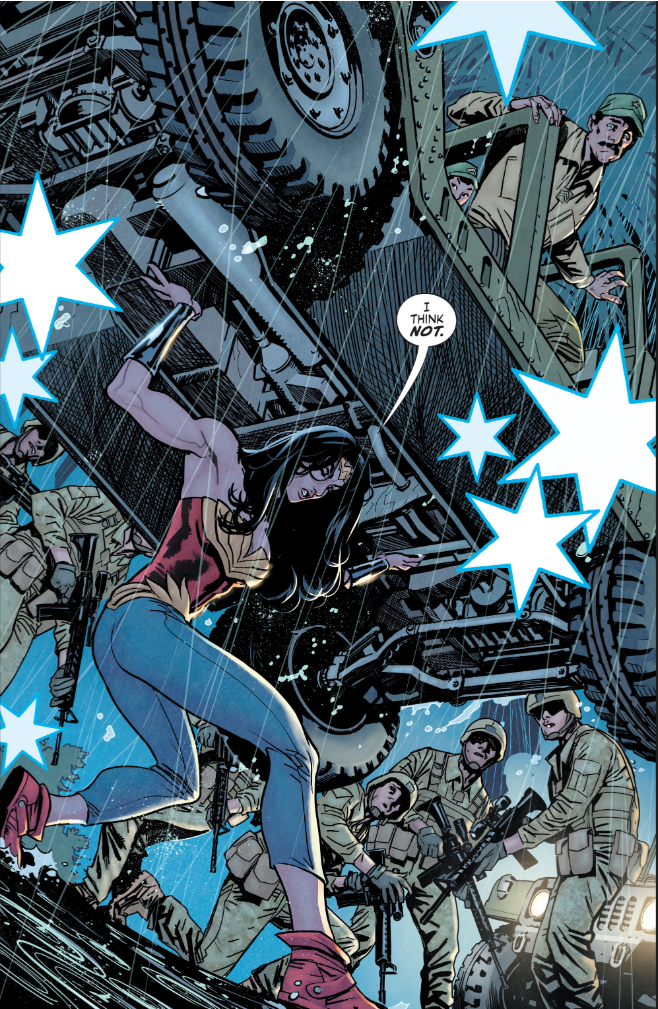
The early commentary online wasn’t kind. Grant Morrison seemed to be setting the bar awfully high for himself in his interviews, and Yanick Paquette is an artist whose work has always had a cheesecake element to it. How would they avoid the pitfalls of two men writing about an island full of beautiful lesbians? How does this not turn into a male fantasy when Morrison has been very clear about embracing Wonder Woman’s bondage past? I can’t imagine even attempting such a thing, particularly given how scrutinized it’s sure to be. We’re talking about two men attempting to tell a story of empowerment featuring the most famous female superhero in existence.

Early copies slipped into the world and we saw images of chains and women captured by men and an overweight character seemingly mocked for her appearance. It had all the makings of not just a train wreck, but an offensive train wreck.

Instead I read the best origin of Wonder Woman that I have ever seen.

First, a caveat of sorts: there are a few moments in this graphic novel that aren’t as clear as perhaps they could or should be, which then lend themselves to being what I would consider misread. I think there is textual support for my reading and I’ll get to that as I go through the book, but these moments are there and should be acknowledged.

But let’s start with a high level look, because I have a feeling that’s going to trip up a fair number of readers.

Traditional storytelling structure is based on the male orgasm: there’s the build-up, the climax, and the denouement. This is a simplified version of Freytag’s pyramid, which features five storytelling beats: exposition, rising action, climax, falling action, denouement. It’s perhaps easier to view as set up, action, climax, fallout, ending. Freytag’s theory was meant to be applied to Greek and Shakespearean drama more so than modern drama, which has simplified it to three parts, ala the three act play. The vast majority of stories follow this pattern, even if it’s modified a bit. It is the standard by which stories are judged by publishers, agents, movie studios, etc. In many cases, a lack of a three part structure automatically disqualifies a book or script.

This is a Wonder Woman story, and a story about the Amazons, so Morrison smartly denies the traditional structure. There is no real single climax to be found here. The focus isn’t on a specific, determined path from point A to point B. Instead, we have several moments that all seem equally as important. It makes for a completely different kind of reading experience, but one which carried me quickly through the book. This was less a single big story and more a series of connected events with one, overarching theme. It could be the most important decision Morrison made when writing Earth One, as it sets the tone of the entire book. It’s composition is at odds with traditional, patriarchal stories.

Along those same lines, there’s very little violence in Earth One. There are roughly ten pages of actual violence in this entire, 144 page comic, all of which happen at the beginning. Not surprisingly, that violence is the result of the actions of men. The fact that less than 10% of this comic features violence is staggering given the content you’ll find in a traditional superhero comic. But this is a Wonder Woman comic and she’s an ambassador of peace. That is her goal, even if she also happens to be the ultimate warrior. That’s part of what makes her so interesting: she’s a highly trained, very powerful warrior who is trying to inspire peace.

The structure of the story and the lack of violence are essential because they reflect the main character. Instead of trying to force the ultimate female hero through the prism of the male adventure story, we get something that is true to Wonder Woman, true to the environment that created her.

That male lens would also dictate that this story be filled with scantily clad supermodels in suggestive poses with other scantily clad supermodels. And it’s not unreasonable to expect at least some level of cheesecake given that Paquette draws attractive women. I think part of this reputation comes from his work on a books like Codename: Knockout, but that book featured both cheese and beef cake, and was specifically created to feature titilating poses of men and women. The ability to draw attractive people shouldn’t be an issue here, really, so much as whether or not they’re being drawn in way that seems unnatural for the sake of appeasing the male gaze.

But Paquette avoids that. Yes, his Amazons are beautiful, but they’re also Amazons: it’s part of the initial concept, that they’re subjectively perfect in every way. But at no point are they placed into positions or drawn from angles that would serve to exploit their attractiveness. There are no typical comic book panels of just the posterior and no one wears a skirt that happens to be a bit too short. Yes, Diana’s anatomical proportions seem to defy nature, but she and the Amazons wear clothes you would expect a group of active, trained warriors to wear. Their outfits aren’t just practical, they’re clearly informed by their Greco-Roman roots.

Paquette embraces those roots. He incorporates that cultural aesthetic into all aspects of the Amazons, going so far as to intersperse the initial scene with the types of images you’d find on the walls or on pottery in ancient Greece. The suggestion here is that the Amazons are, from the very start, immortalized in Greco-Roman history, something that would come up again later in this book.

Paquette also makes every single character in this book look unique. It’s a stunning accomplishment, really, if you just consider the overwhelming number of Amazons he has to draw. But all of them, from their faces to their hair to their attire, are distinct from each other. I can’t even fathom the amount of time that had to have been spent on even background characters in order to pull this off; it’s unbelievable. It makes Themyscira seem like a place where everyone is free to express herself however she may choose. It emphasizes the fact that this culture is far more advanced than our own.

For all the credit that Morrison is going to get for this book, it’s just as much Paquette’s. This is career elevating work for him; it might be for Morrison, too, if that’s possible.

If Morrison owes much of the success of this story to Paquette, then Paquette owes much of the success of the art to colorist Nathan Fairbairn.

There’s a very clear, very obvious trap lurking in WW: Earth One with regards to the colors: the book is split between two worlds, that of the utopia of Themyscira and that of our modern day real world. This is a trap because it would be very easy for any colorist to simply portray the former in bright, positive colors and the latter in dark, dreary colors. But Fairbairn has made a career on telling stories with his colors. Neither world is as simple as being all light and all dark. There are degrees at work, degrees which make these worlds fully realized, even beyond the words and the line art.

While Themyscira contains darkness, there’s a subtle difference. The colors are softer and more distinct; even the hunt that takes place at night has a playfulness and calmness that underscores the Amazonian society. This is a place where everyone is treated fairly, a virtual utopia, where the night is dark, but not scary. The colors during the day are bold and bright, but complimentary, both creating a sense of individual freedom while embracing unity. There’s a thematic cohesion to Paquette’s designs and Fairbairn takes that to the next level with his colors.

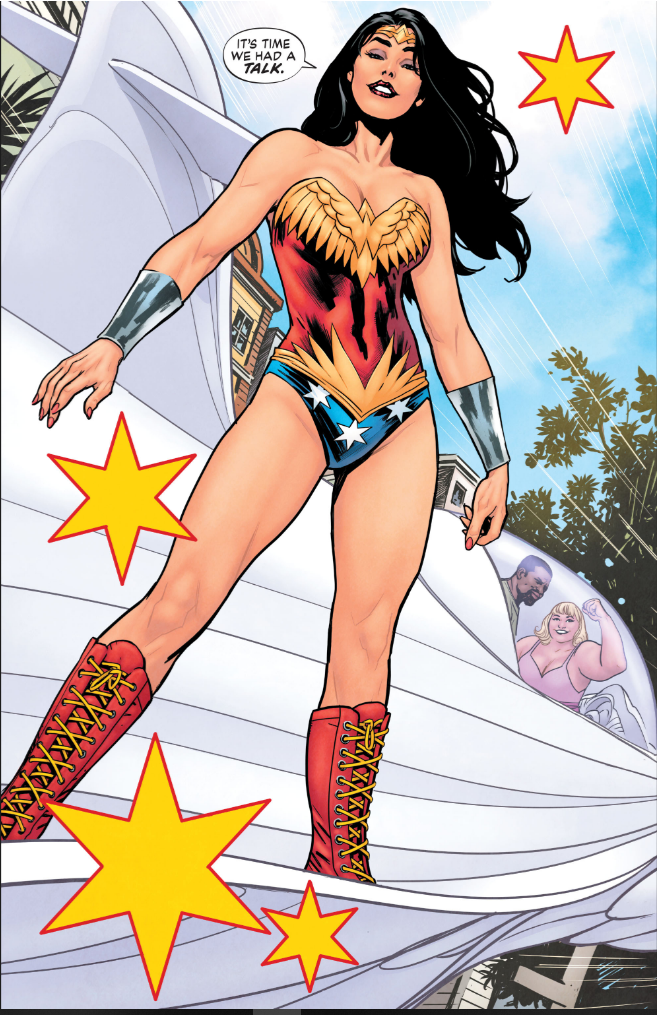
On the other hand, our modern day world isn’t just starkly dark and depressing. Yes, it’s not as bright as the world of the Amazons, but this isn’t the Sin City movie, for example. Man’s world has variation, but unified by a roughness, as if it hasn’t completely fallen into darkness. And that, of course, is the point: man’s world can be saved, it just needs someone to save it. And while Wonder Woman is painted in relatively muted tones when she initially arrives, when she returns at the end of the book she is as bright and bold as we would expect. She’s here to save the day.

That isn’t to say that WW:E1 is perfect. There are two problems in particular that, to their credit, stem from an overreach on the part of Morrison and Paquette.

The first is Steve Trevor. While changing his ethnicity raised many eyebrows, there’s a very clear reason for it within the story. Wonder Woman goes to America and finds a country that has marginalized all but the straight, white men. To prevent Trevor from being a part of the very institution that WW would be facing off against, he could no longer be white. His gender and orientation are somewhat essential to is role (as he is a man setting foot on Themyscira and he is attracted to Wonder Woman), but his race makes no difference. This new iteration changes that and to good effect.

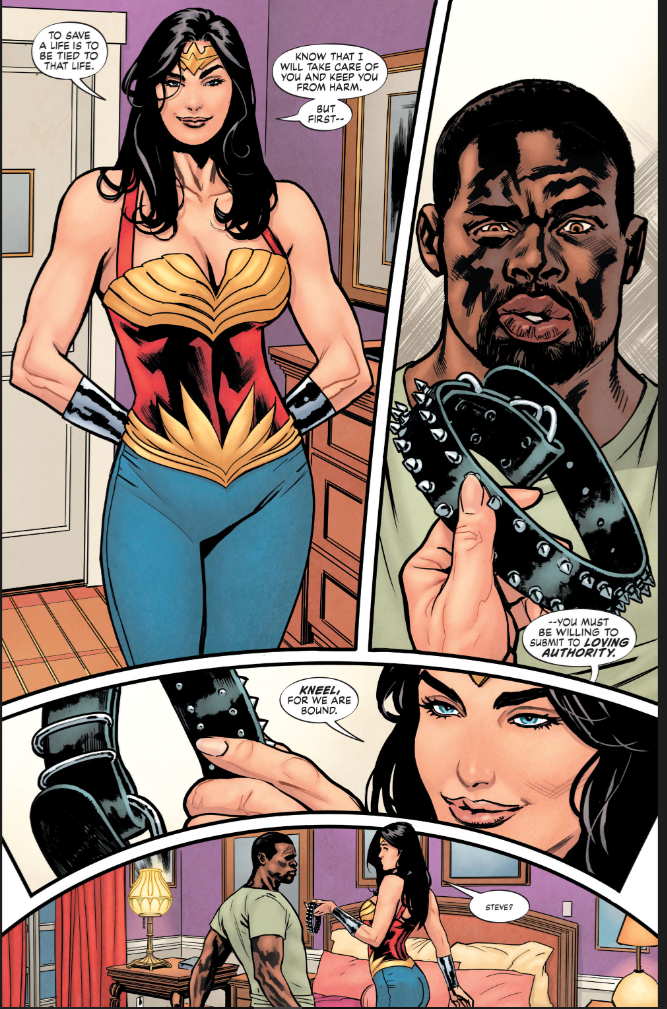
The problem, then, is in making Trevor African American. The only goal is to make him something other than white. The choice to make him black is loaded with problems, if only due to the imagery involved. On Themyscira, submission to another is considered a form of trust, of love, but to ask the sole black character in this book to wear bondage gear seems tone deaf. I wouldn’t go so far as to call it offensive, but the idea is never really addressed or fleshed out, so we simply have Diana trying to convince Steve to wear clothing meant to evoke images of slavery. On one hand it speaks to Diana’s ignorance of this new world and Steve’s place in it, but that’s as far as it goes. And given that Steve could be any ethnicity other than white for his new role to work, it’s hard to understand why Morrison decided he should be black.

At the very least, it kicks you out of the narrative, just like the introduction of Etta.

Etta is, compared to every other female in this book, overweight. And while her introduction to the story is when she gives her testimony at the trial of Wonder Woman, chronologically her first appearance comes on a bus ride with her sorority sisters to South Beach for spring break. It comes with one of her sisters suggesting that she ate the food they had gathered to feed the less fortunate. In other words, it feels like she’s being body shamed.

Fortunately, Morrison quickly undercuts this. Etta isn’t fat, not in her eyes, and those are the eyes that matter. In fact, she isn’t shy about how perfect she thinks her appearance is; she is full of self-confidence, even when one of her sorority sisters is insulting her. It doesn’t matter to her. Etta is above it. She knows herself and she’s happy with who she is. This initial introduction wasn’t an indictment on her, but on the other women, on how they treat those who don’t conform to society’s ridiculous notions of beauty.

Even Wonder Woman herself gets in on the act: “Oh, what has man’s world done to your bodies…” But in the panel before that we don’t just see Etta, we see the typical comic book (typical magazine) female form: beyond petite and not at all healthy. Wonder Woman isn’t commenting on Etta alone, but all of the sorority girls.

But commenting on female beauty standards is going to be a tricky situation even when not written and drawn by men. There’s just too much to unpack to adequately address in a entire graphic novel, let alone a few pages. The fact that Morrison and Paquette don’t shy away from the issue is commendable, but they were never going to really be able to do it justice. On the other hand, ignoring the issue would have been equally as problematic, so they were painted into a bit of a corner no matter what. This is the price you pay for deciding to tell a story about the most recognizable female super hero in the world.

Ultimately, though, Wonder Woman: Earth One is an ambitious retelling of the origin of one of the world’s greatest superheroes. It succeeds far more than it fails, and even when it does falter, you can appreciate the attempt. I appreciate the fact that Morrison and Paquette took chances on this book and it’s clear from the work that those chance energized them.

Let’s hope we get a second volume so they can do more.

Parents: Use your phone as much as you want

As much as it pains me to use the current hip vernacular, I’m going to: parent shaming.

At one point, I think the focus for parent shaming was screen time, as in how much time your child can spend staring at a screen of some kind. But there’s a lot of grey area in the studies on the impact screens have on children. The general consensus is that too much screen time is bad, yes, but different types of screens have different impact. What’s on said screen is also a consideration.

So screens are not as cut and dry as other parent shaming options.

Diet? Sugar is the heroin of toddlers, after all.

Education? The best time to learn a second (or third!) language is at the age of two, you know.

Culture? Listening to an opera would be so much more stimulating than listening to the Cars soundtrack (again).

But, no, those options are somewhat narrowly targeted and, for many parents, easily avoidable. What, then? What is something that every parent does that can be ridiculed by those who wish to feel superior?

Cell phones.

Boom.

You use your cell phone when your child is with you? That is shocking — shocking, I say! Your child is going to think you care more about your cell phone than you do about your own precious little angel!

It is impressive how many parents take to the internet to rail away against the evils of using your cell phone when your child is present, pretending as if they’re doing it to somehow help other parents. I can’t imagine a single parent reads these articles and suddenly changes their ways. No, they’re written so the writer can feel superior.

I know full well how tempting it is to use a device as a baby sitter. I also know that there are other toys which can do roughly the same thing while allowing your child to control the creativity. That said, I don’t begrudge anyone who’s in a position where a device is their best option. I know too many single parents to think that a tablet can’t be a life saver.

But let’s get back to parents using cell phones.

I understand the basic concept behind the complaint, the idea that kids will think that they are less deserving of your attention because you are looking at your phone all the time. But consider that thought. Think about how much the average parent has to do with their child over the course of any given day. It would be physically impossible to spend more time on your device than interacting with your child. They are tiny tyrants who need you to survive. A cell phone isn’t going to dress them or take them to school or get them to bed. A cell phone isn’t going to comfort them when they get hurt or help them through some strong emotions. We have few moments that aren’t controlled by these kids and very, very few of those moments can be solved by cell phones.

So if your kid is playing and you decide to check Facebook, where, exactly, is the harm? If your child needs you, you’re there. But your child doesn’t always need you and, honestly, it’s probably good for them to realize that. “Hey, child of mine, you’re doing fine on your own and I trust that you can scoop sand into a bucket without me watching you like a hawk, so you do your thing, I’ll be right over here if you need me.”

The crazy thing about it is that if there’s another parent shaming method out there, it’s the “helicopter parent” who is always hovering around their child, never letting the kid do things on their own.

So if it’s bad for us to follow our kids around and obsess over them and it’s bad for us to do other things while we’re with our kids, then what, exactly, are we supposed to do?

I am overly sensitive about my son knowing how much he means to me. I tell him constantly. It’s a whole thing. So at some point early on in his life I decided that if I’m going to use my smart phone around him, I’m going to tell him why I’m doing it. I want him to understand why looking at this tiny screen would be something I would want to do while he’s eating dinner or or watching cartoons.

So I say things like “let’s see if mama has left work yet” or “let’s see what the weather is going to be like” or “grandma sent me a message.” I try to explain what social media is, but he does’t seem to care. In fact, he doesn’t really care about any of that, but I feel like telling him what I’m doing at least helps him realize that there’s a purpose, that I’m not just looking at my phone for no reason.

I explained this to a therapist who works with children and she told me it was genius, so I’m running with it.

Here’s the thing: being a parent is hard. I realize that’s like complaining that your diamond shoes are too tight, but it is what it is. And sometimes you can only take so much Paw Patrol or so much doing funny voices before you need a break, and in today’s day and age, a break is looking at your phone. And I don’t think there’s anything wrong with that.

So for those who are thinking about telling other parents they need to stop using their phones so much around their children: don’t. Get off your high horse and just let a fellow parent be. We are all stumbling through this together and the last thing any of us needs is someone giving us shit for looking at Facebook while our kid is crashing cars into each other.

Go to town, parents. Use your phones as much as you want. I don’t have the answers for that and I’m not stupid enough to think that I do.