TMS is working for me

I’d drop the kids off at school and get back home a little after 8AM. There were no events or appointments on the calendar for the day. I had nearly six and half hours until I had to pick the kids up from school.

I would sit down on the couch and do nothing.

I couldn’t even convince myself to watch TV, because it didn’t bring me any joy. I couldn’t read, couldn’t write, could play guitar, or even clean.

At a certain point, I’d lie down on the couch and close my eyes. I wouldn’t really sleep. Lying down with my eyes closed just felt less bad than sitting up with my eyes open.

Nothing mattered, not even things I wanted to do. There was no point to any of it.

There was only one thing that seemed impervious to my depression: being with our kids. Even as stuck as I was, I knew, as I always have and always will, that taking care of our kids is meaningful. But when they weren’t around, I was stuck.

Time for Serious Science

I’d been on various anti-depressants for a while, but none seemed to be doing the trick.

I was, with my wife’s blessing, a stay-at-home dad. A regular day job had provided structure and purpose, but were now gone. But it also brought a whole host of problems, which is why I’d stopped working to begin with. It also, I realized, served as a distraction from my problems.

My wife and I talked about ketamine therapy TMS, or Transcranial Magnetic Stimulation. In terms of nature vs nurture, it seemsed like ketamine therapy addressed the nurture and TMS the nature.

I’d been in talk therapy for years working through the nurture part of it, and I suppose the medications I’d been on were for the nature part of it. It was hard to tell which treatment would be better for me.

The big difference? TMS for depression is covered by insurance.

So that’s what I did.

As I write this, I’ve been through 30 sessions of TMS. I’ve gone through all the stages they told me I’d go through: “Is this working?” “It feels like it’s working, but maybe it’s something else?” “Wow, it’s definitely working!”

I’m absolutely floored that people feel like this normally.

TMS is Amazing

One of the most amazing things about this has been the fact that I don’t wonder what the point of my actions is anymore. I thought maybe I would still think that something had no value, but then I’d be able to convince myself otherwise. Nope, it never even comes up now. I don’t even question it.

TMS has an 80% remission rate, but I can always go back when if I need it. I still have 6 sessions left, which is amazing to me. The idea that I haven’t reached my end goal yet is crazy.

None of this is to say that I don’t still have negative emotions sometimes. But they don’t last. They don’t upend my day. And most of the time they don’t come out of nowhere, blindsiding me.

I’m also still the same person I’ve always been. It’s just that now every little thing doesn’t seem so hard.

It’s almost impossible to fully describe what’s happened to me. Unless you’ve ever had debilitating depression, there’s no way you can really imagine it. You can try and there are certainly similarities between being depressed and having depression.

There’s a level of helplessness that comes with depression that is completely unknowable for those who don’t have it.

But, at least right now, I don’t feel helpless anymore, and that is unbelievable.

The Sound of Music

I did not anticipate TMS changing the way I hear music.

Like a lot of people, music can put me in a place and time removed from my present. It’s both amazing and painful.

In high school, I was big into grunge. I couldn’t help it. The timing was perfect. It was music by angsty white guys and I was an angsty white guy.

Years later, when grunge was no longer the staple of my musical diet, I realized something: I couldn’t even listen to any of those bands without feeling a little dark and depressed. Grunge was so great at amplifying a feeling of self-loathing, which I had in excess. Even decades removed, I still felt bad when I listened to it.

But the other day I put some grunge on (I honestly don’t know why) and…I just enjoyed it. It didn’t make me sad. It didn’t make me feel like I was a miserable piece of trash.

That’s not to say that I still didn’t feel some sadness during certain songs, but it wasn’t a present feeling, it was past.

Now I’m hearing the songs in a new way, catching aspects of it that I never noticed before.

Which I guess is a pretty good metaphor for how TMS has affected my entire life.

The Quest for an “Outsider” President

In the run up to the 2008 Presidential election, one thing was clear: people were tired of politicians. After 4 years of Bush, 8 years of Clinton, and 8 years of W., it seemed like America wasn’t going to change (be it for better or worse) by turning to the same people over and over again.

It’s why John McCain ran as a “maverick” who regularly bucked the system. It’s why he chose Sarah Palin as his running mate. She had been governor of Alaska for less than 2 years when she was picked. While she had a habit of saying nonsensical things, she also didn’t talk like the traditional politician.

McCain had to hammer home the idea that wasn’t just business as usual, because even while pushing the “maverick” narrative and choosing a dark horse running mate, there was the simple fact that he’d been in the Senate for 35 years. He was part of the establishment.

On the other side of the aisle was Barack Obama, who easily stepped into the role of the outsider. The fact that Obama was black put him squarely outside the typical presidential race. He was also a single term Senator, and he had been vocal against the war in Iraq, at a time when nearly everyone seemed to be on board with it.

Obama tempered his outsider status by picking Joe Biden as his running mate. Biden was also a long time member of the Senate, but this didn’t dull the shine on the anti-establishment candidate.

It’s oversimplifying, but you could make the case that the 2008 Presidential election was about one issue: Americans wanted someone who would upend politics as usual.

Americans have been trying to find an “outsider” for decades.

Gerald Ford only became president when Richard Nixon resigned. Ford had spent nearly three decades in office, and his role as a dyed in the wool member of the establishment was only solidified when he pardoned Nixon. Then there was also the simple fact that Ford had been named Vice President to Nixon because Spiro Agnew had resigned…and became President when Nixon resigned.

He clearly benefited from being part of the establishment.

Ford was such a company man that even members of his own, incumbent party were looking for an outsider to oppose him. Ronald Reagan was an actor who’d spent 30 years in the entertainment industry, after which he spent 8 as governor of California. He wasn’t just an outsider, he also had the aesthetic appeal that hadn’t been seen since JFK.

But incumbency meant a lot and Ford narrowly won the nomination. But the Democrats had chosen their own outsider in Jimmy Carter.

Not many people outside of Georgia knew who Carter was, which made him the perfect anti-Washington politicians. With the Republicans reeling from scandals, the Democrats could roll the dice.

The problem, four years later, is that the GOP still had that outsider from the primaries, who also happened to seem cooler than Carter.

Since JFK first debated Nixon on television, look mattered. How someone looked, how they carried themselves, became a huge factor is how Americans voted.

Reagan dominated during his eight years, to the point that when his time was up, America decided they wanted to keep going, so they elected his VP, George HW Bush.

The first Bush wasn’t remotely cool and he’d been working in Washington for over two decades. But he rode Reagan’s coattails into office.

He also continued what Reagan had unknowingly started: political dynasties.

What the Republicans hadn’t counted on, though, was a relatively young, saxophone playing Southern Democrat who had no problems going on MTV. Bill Clinton was very much in the mold of Reagan in that he’d never served in Washington and had that “cool” factor.

Presidential elections were no longer (if they’d ever been) about qualifications and experience so much as America wanting the coolest person in charge.

There would finally be a label for this imaginary cool factor when electing Presidents. In 2000, Americans had a choice between continuing the Clinton era with his VP, Al Gore, or sending a legacy, George W. Bush, to office.

The second Bush won and would win again in 2004. It was during his re-election that a new qualification for President emerged: someone I’d like to have a beer with.

This eventually led us to Obama.

Regardless of his actions in office, Obama fell victim to two things: he was a pragmatist and he embraced Hillary Clinton.

The former meant that he was never liberal enough for liberals or conservative enough for conservatives. His pragmatism meant he wasn’t looking to drastically change the system.

His embrace of Clinton only served to connect him to that political dynasty. Obama was not shy towards the end of his administration that he thought (practically knew) that Hillary Clinton would be President after him. In fact, a lot of Democrats acts as if it were a done deal.

There were a lot of reasons why Clinton lost (misogyny being a big one), but the fact that so many acted like her winning was a foregone conclusion, and the fact that she was the continuation of a dynasty, did not help.

And this is, in part, how we got Trump.

He was certainly an outsider and a certain delusional population of America seem to think he’s cool.

Consider that 9% of the people who voted for Obama in 2012 voted for Trump in 2016. They were responsible for getting Trump elected. It would be easy to say that those people voted for Obama because he was an outsider, so they were actually being consistent in how they voted.

Trump’s 1st term was disastrous, and the election of 2020 came so close to the worst of the pandemic that America wanted a reset, which is what they voted for in Joe Biden. They wanted a lifer again, someone who was certainly a part of the establishment, but that was okay, because he needed to fix things. America wanted to return to normal.

Biden did his job, which meant that the old paradigm returned: America wanted anti-establishment again, and Biden’s VP, Kamala Harris, wasn’t going to cut it.

Americans chalked up Trumps’ first term to COVID, which they considered an act of god that had nothing to do with Trump, and suddenly his presidency didn’t seem that bad (it was).

America is desperate for systemic change

The system has been broken for some time, Americans want change, and they don’t particularly care who it is that does it. This is obviously a problem, given how horrible Trump and the MAGA are. Anyone not a straight, white, cis male is a target now. And even those white dudes aren’t entirely safe unless they make a certain amount of money and only have specific political views.

Democrats need to lean into empathy, but they also need to start admitting that the system doesn’t work.

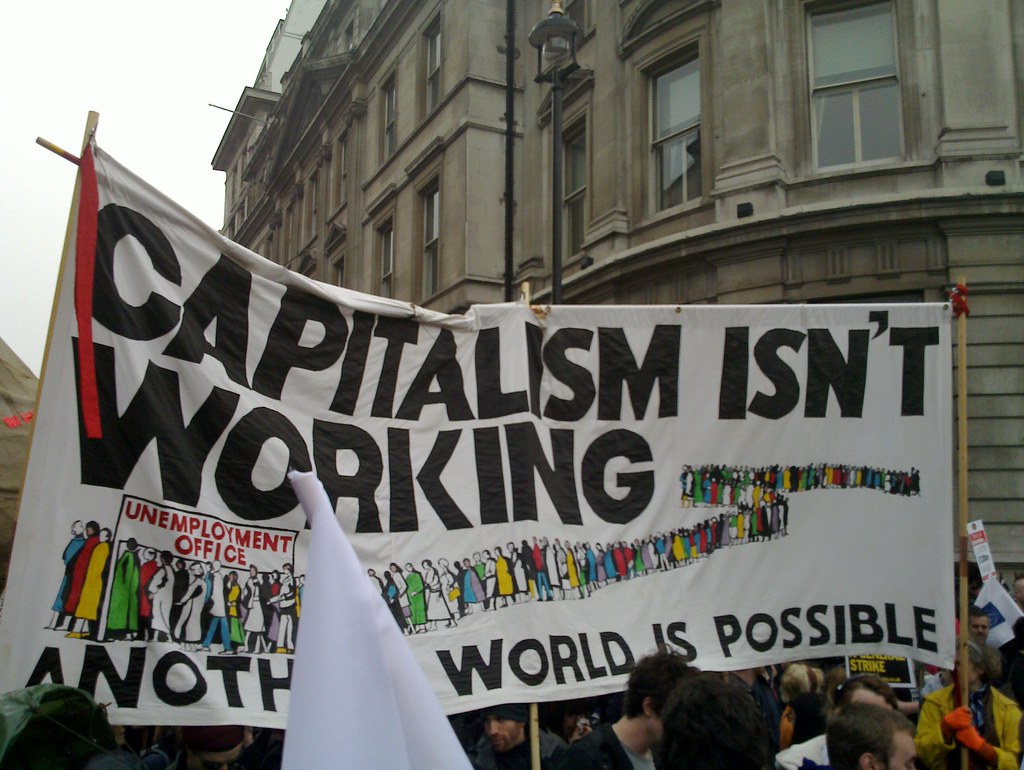
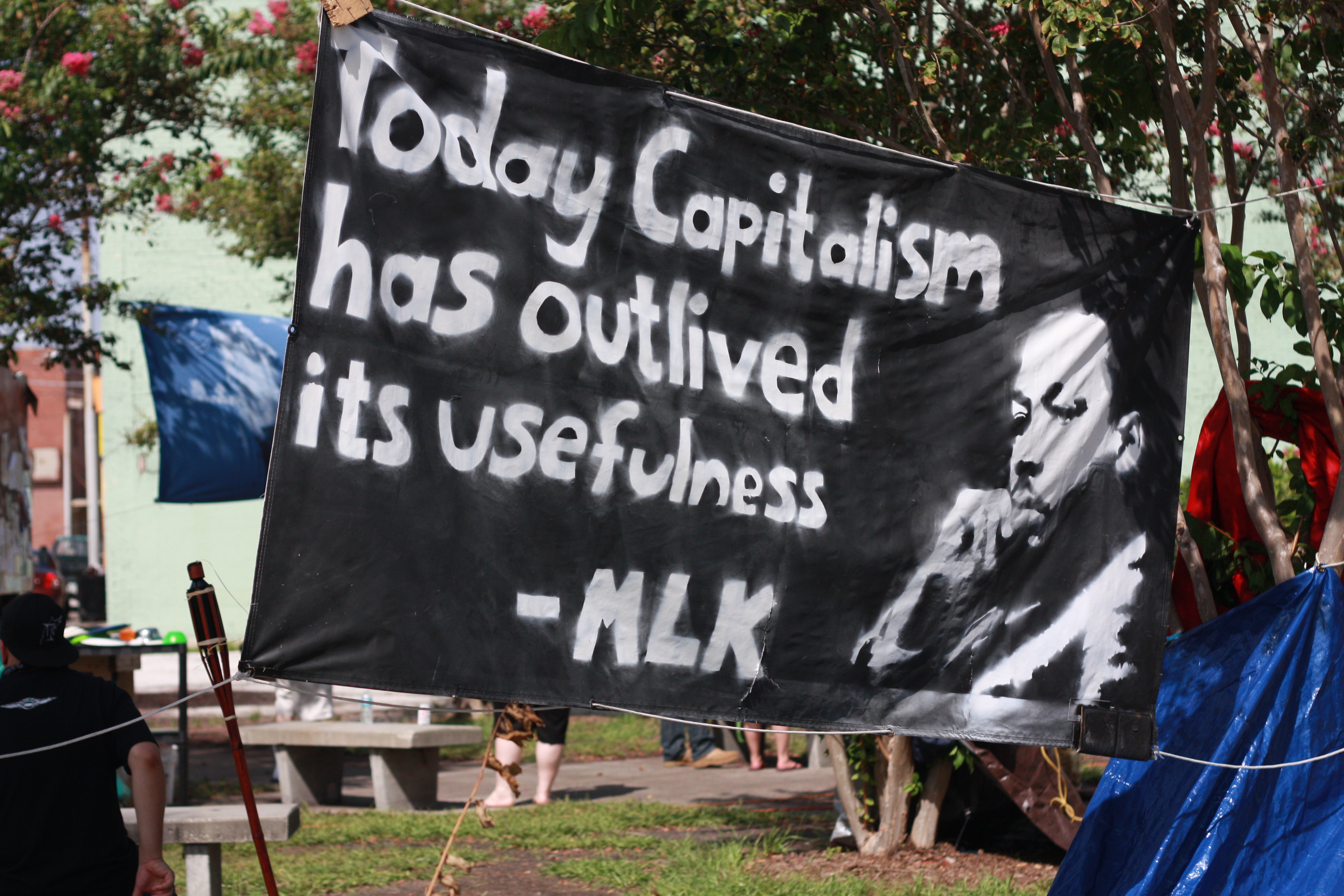
Capitalism is killing us

A few years ago, a man overdosed in my parents’ upper middle class neighborhood. He was the adult son of people who lived there, watching their house while they were out of town. He was another victim of the opioid epidemic that has ravaged my home state of Ohio.

When my mom told me about this, she expressed her confusion as to why so many people were taking drugs, particularly drugs that were well known to lead to a specific, final end.

There are obviously genetic and chemical components to drug use and drug addiction. But in a lot of cases, something triggers these predispositions, there’s some kind of inciting event.

An older friend once said, while referring to me and my peers, that we were the first generation that wouldn’t do better than the generation before us. On the surface, I understood that and even agreed with it, because the middle class had exploded and my generation, Generation X, was a result of that. Even if the middle class hadn’t begun to shrink and fade away, there was no way we could expect the kind of growth that had happened for the previous generation.

What struck me, thinking about it now, is how “do better than the generation before us” was defined, how even I defined it back then.


It’s simplistic, but consider this: you’re taught that money, material things, and status define how “well” you’ve done in life. You get a very clear picture of what “well” is in this country. You will never attain it because it’s nigh impossible. The middle class will start to disappear and you’ll never get to where your parents are, let alone surpass them.

Everyone knows this, and those that are able to break through make sure that they will never go back. Greed runs rampant as the bar for “doing well” gets higher and higher for those already doing well. The goal posts continue to move and that fuels a need to make more money and have more things.

Greed runs rampant because it’s almost become a psychological necessity.

Then there’s everyone else, who are faced with the fact that none of the things the grew up associating with happiness are attainable. Imagine being told all your life that coffee is the one thing that will make you happy, the one thing that will get you respect from others, that will make you feel safe and warm. Now imagine if coffee disappeared. There’s no way for you to be happy through traditional means.

At this point, you face a crossroads. You can figure out that happiness comes from somewhere else and then go find that something else. You can make yourself miserable trying to attain that version of happiness. Or you can resign yourself to never being happy and try to find a way to make existence enjoyable.

Look at these options.

You realize that everything is pointless, that you’ll never get to where the previous generation was, you’ll never make enough money to be happy, so you find an alternative. You don’t want to feel miserable all the time. That’s where the drugs come in. Even if it’s for just a few hours a day, even if it takes more and more control of your life, those moments when you are high are the few moments when anything feels good.

You can work yourself to the bone trying to achieve this supposed secret to happiness. You can stick with it despite the odds because you don’t know what else you’d do with yourself. You were raised to be productive, to earn money and buy things. You know there are people your age who have “made it,” so you kill yourself going after something rare and, ultimately, not real.

And then there’s the big revelation, the one that is so hard for most of us to come to, the one that is regularly hammered down by our society: happiness comes from elsewhere.

One of the hardest things to do is accept that happiness and money don’t necessarily go hand in hand. That’s not to say that, on rare occasions they can’t, but that’s not usually the case.

But we’re taught that doing something because it makes us happy is wrong, that’s it’s a selfish waste of time if it’s not somehow contributing to the beast that is capitalism.

Fugazi, Part 8: The Argument

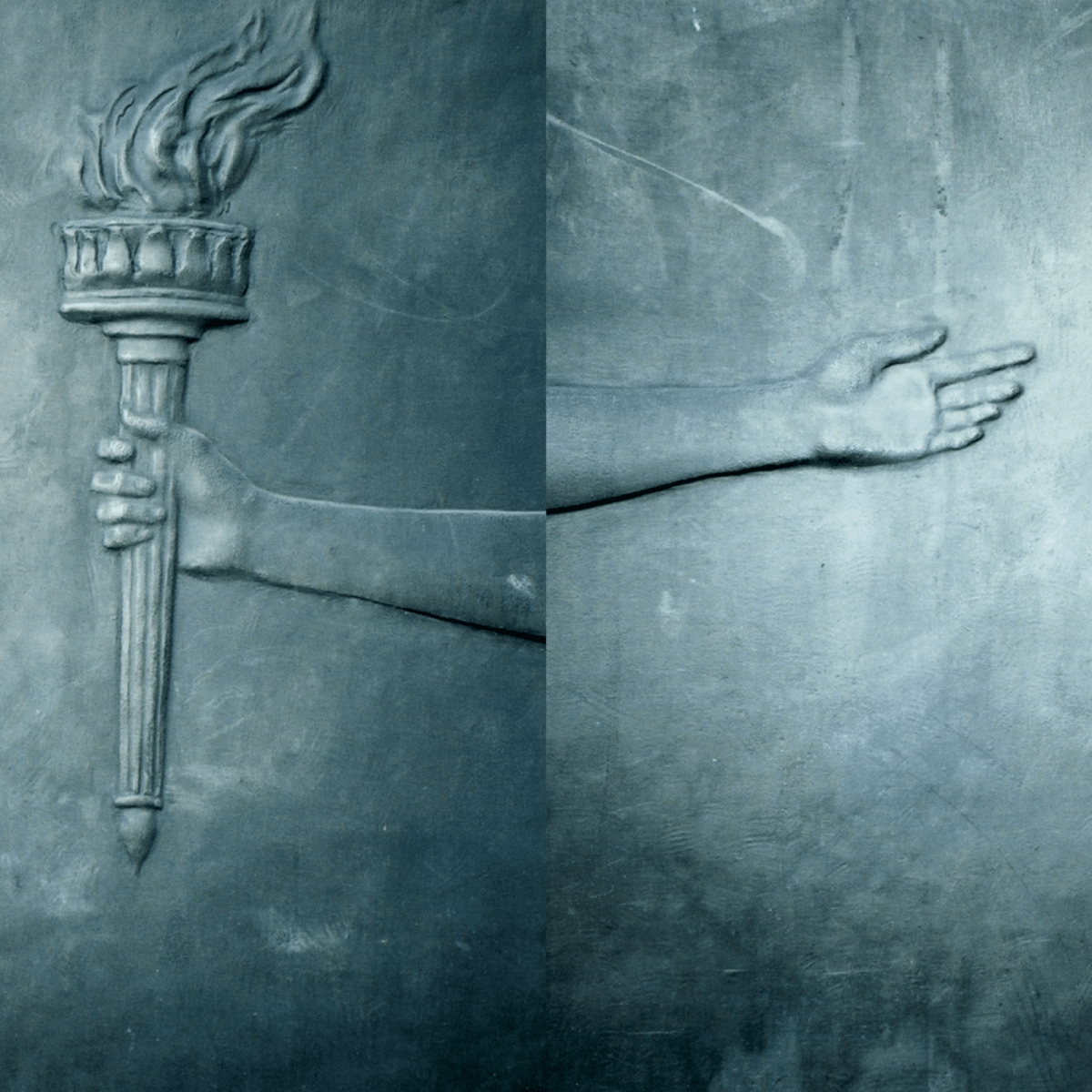
Twenty, thirty years from now, when the story of Fugazi is written by smarter people than me, they will probably point at “The Argument” as their crowning achievement, the culmination of their evolution as a band and the pinnacle of what they could do.  That would be hard to argue with.

I point to this: I had a friend who absolutely hated Fugazi, but loved this album.  This was Fugazi at a different level.  This was a band that produced “Red Medicine” and came through “End Hits” and ended up here.

This was a focused band.  The opening lets you know that this is going to be a journey.  “Cashout” is all about the vocals and a noise rock chorus that would make no sense coming from anyone else.

The verse on “Full Disclosure” has so much urgency you have no choice but to get swept up in it as it pulls you into a surprisingly poppy chorus, the likes of which would feel right at home on the alternative top 40.  Even crazier is the outro that follows the last chorus, like something ripped from 90s radio, as if Fugazi are finally acknowledging all their contemporaries.  Of course, they follow that section up with some good old fashion punk rock noise, a reminder that they cannot be pigeonholed.

“Epic Problem” is Ian McKaye’s vocal stylings at their best.  The beauty is that he makes the lyrics a part of the song, a part of the actual structure of the music.  It helps that the music is great, with yet another 90s inspired section in the middle (I should probably point out that this album came out in 2001).  And then we get the outro, which is something right off of “13 Songs” with a little “Repeater” thrown in to finish it off. It’s a little bit sing song, a little bit head bopping, and more upbeat than you would have expected given the beginning of the song.

Remember those things I said before about Guy’s guitar style?  Welcome to “Life and Limb.”  It’s already a great song, but then you get to the center with this wonderful, quirky guitar solo over straight up pop music.  We come back to the moody stuff, of course, but that center section makes the rest even better.

You may have noticed a trend developing. There’s an awful lot of pop music on this record, but it very often undercut, either by wedging it into more jagged parts or by layering it with discordant guitars. It’s the perfect give and take for Fugazi, something that took them 7 albums to get to. These songs have the straight forward core of the best “In on the Killtaker” tracks with all the experimentation of the strangest “End Hits” songs.

When Joe Lally is singing you have an idea of the type of song you’re going to get. “The Kill” fits right in.  It’s ethereal, as most Lally sung songs are.  The song never explodes, never builds to anything, but it’s a constant, mellow groove with a nice change from the verse to the chorus.

Let’s just get right to it with “Strangelight” — as interesting as the song is, it’s what happens at the 4 minute mark that truly makes it great.  I don’t even know what that note-y part is being played on (guitar doubled with keyboards? With a violin?) and the changing piano chords make it sound ominous.  It’s wonderfully dissonant, yet darkly triumphant.

This could be the Fugazi album with the most mood changing moments in songs.  In this case, I’m talking about McKaye’s vocals in “Oh,” which is mostly sung by Guy.  But read back over my comments on the other songs on this album and the shift in tone is a regular theme.  Interestingly enough, the shift seems to frequently come at the end, a fitting microcosm of Fugazi’s library of work.

“Ex-Spectator” has a wonderful, double drum opening.  The verse is sparse and the chorus is full and powerful, driven by McKaye’s vocals.  What’s really interesting about this song is how it almost seems like an answer to “Public Witness Program” from “In on the Killtaker.”  Both songs seem to be about the dangers of not getting involved, but this song pulls the character forward.  The public witness can’t stand on the sidelines any longer.

“Nightshop” is probably the clearest use of keyboards we’ve seen from Fugazi (at the two and a half minute mark), and they’re used to excellent effect. We also treated to some acoustic guitars, as if the band decided they were going to jam all their non-traditional (for them) instruments into one song. This song makes me long for a new Fugazi record because it suggests that they were just beginning to experiment.

And now for “The Argument,” theoretically the last song on the last Fugazi album.  It’s everything you could hope for from a final song.  McKaye has said that the song is about how he will always be against war.  But he frames it as being a bigger argument that’s generally not made.  The song itself would suggest that McKaye is calling out those who get bogged down in the small debates, who never see the forest from the trees: “that some punk could argue some moral abc’s/when people are catching what bombers release.”  It’s an argument against the myopic.

It’s also the perfect example of the evolution of the band.  The vocals are perhaps the pinnacle of what McKaye has managed to do over the years.  The song is fairly quiet and pretty, with a quixotic keyboard break.  And then it explodes.  It explodes in exactly the way you would want a Fugazi song to end, with heavy guitars from McKaye and a dynamic, catchy note-y part from Guy.  It’s damn near perfect.

And then it’s over.

If this is the last we ever hear from Fugazi….well, I’ll still be sad about that, but they went out on a high note.

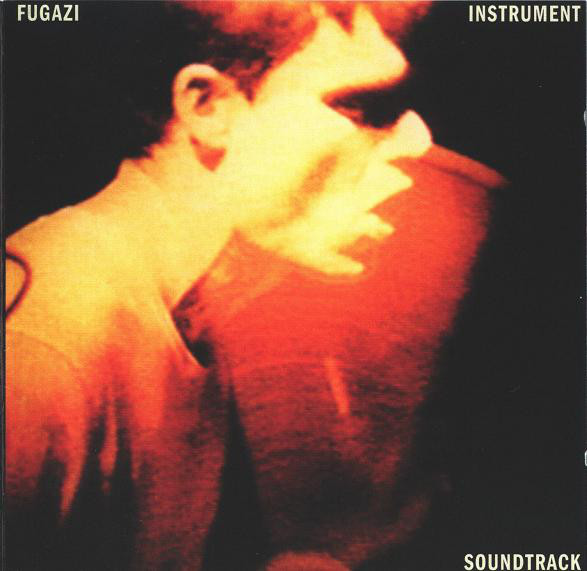
Fugazi, Part 7: Instrument

It became fitting that Fugazi released an album of outtakes (and a documentary) when they did.  The band had already gone their separate ways and were making music together less and less frequently.  The writing should have been on the wall.

It’s hard to call “Instrument” an actual album, as it’s not.  It is exactly what it sold itself as: a collection of outtakes.  Sadly, most of those outtakes aren’t particularly interesting.  It actually goes a long way to confirming that the band is the bunch of lo-fi, regular guys that everyone thought they were.  “Instrument” is filled with the type of junk that is being recorded in every basement in America.  This is Fugazi showing us that they’re no different.  They record every single thing they think sounds good, too, even if they realize after the fact that it’s crap.

In their defense, there are some gems on this record, some bits and pieces that I would have loved to have seen as complete songs.

The “Apreggiator” demo is interesting given how much they increased the speed for the recorded version, which was a smart decision.

“Afterthought” introduces us to Fugazi using keyboards and it become apparent over the course of this album that they could have done great things with keyboards. Why they never did more, I don’t know, but between this song and “Little Debbie” it was clear they could have produced something great incorporating keyboards.

“Trio’s” is darkly atmospheric, more so than anything else the band has recorded, which is probably part of the reason it never materialized on an album.  “Turkish Disco” is the first track that sounds like a relatively complete song, so much so that I wonder why it didn’t end up on another record.

The question about keyboards is also applicable to piano, an instrument Fugazi used as window dressing in the past, but never as the focus for a song. “I’m So Tired” suggests that they should have placed it front and center for at least a few tracks.

The demos for “Rend It,” “Closed Caption,” and “Guilford Fall” are interesting enough for big Fugazi fans. The “Rend It” demo is great given how drastically the song changed over time.

“Swingset” has a fantastic verse, but the attempt at a chorus makes it clear why it’s an outtake.

“Shaken All Over” is basically just a recording of Joe playing a bass line.

“Slow Crostic” is exactly what it says: a slower version of “Caustic Acrostic.” This particular track is noteworthy because it’s the basis for a song on the Wugazi album, a mash-up of Fugazi and the Wu-Tang Clan.

In the end, “Instrument” is a collection of songs for only the biggest of Fugazi fans.  It’s great as a glimpse inside the creative process, but doesn’t offer much beyond that. It is, to be honest, an odd duck of a release. Nothing about this record suggests that it needed to see the light of day, yet here we are.

It really just kind of mucks up the Fugazi library.

Fugazi, Part 6: End Hits

“End Hits” deserves the shit that it’s gotten from Fugazi fans, but that doesn’t stop it from being a great album.

If “Red Medicine” was the beginning of a new era for the band, “End Hits” is them pushing the envelope of that era, seeing what the limits are.  It’s as if they were pleasantly surprised by the music they discovered they could make on the last album and now they were cautiously seeing if it actually suited them.

“Break” is the perfect first song for this album.  It’s got a classic Fugazi groove layered underneath this relaxed, almost jazzy clean guitar part — and is that piano I hear?  It sure is, this time used as an instrument and not as a vehicle for noise (as with the last album).  McKaye’s vocals in the center, when it’s just him and a single guitar, are strange, but still fit the song perfectly.

Follow that up with classic Guy rocker, “Place Position” and you’ve got the makings of a fantastic new school Fugazi record, albeit one that seems definable.  But you’d be getting ahead of yourself.

Joe Lally always seems to sing on the more atmospheric songs and “Recap Modotti” is no exception.  We’re venturing into stoner rock territory here, which is shocking, given that none of them are stoners.  Even the teases of a build up ultimately don’t pay off.  Not that there’s anything wrong with that, it’s just not something you’d expect from Fugazi…which is something you should get used to over the course of this album.

And while we’re on the subject of weird song arrangements, here comes “No Surprises.”

But then, like the parting of rain clouds, we get “Five Corporations,” a fantastic example of how new Fugazi can still rock out like old Fugazi, but with more complex music.  And we’ve even got that trademark Fugazi anti-establishment going on.  Seriously, that tempo change for the chorus is unbelievable, particularly when it’s followed by just bass, drums, and vocals for the verse.

“Caustic Acrostic” is a great song, a modern day Guy-style Fugazi song.  You could tell, since Red Medicine, that Guy had gotten away from playing chords.  I have to think that was a response to Ian McKaye’s style of guitar, whose riffs and palm muting were more often a hammer than a scalpel. Guy’s style evolved out of necessity and it made them a better band.

Things get weird again after “Caustic Acrostic.”  “Close Caption” and “Floating Boy” are spacey, atmospheric jams that push the boundaries of traditional song structure.  They’re glorious little oddities amongst the larger Fugazi library, wonderful experiments by a band that is no longer bound by a static sound. Most Fugazi fans I know hate these songs.

We bounce back with “Foreman’s Dog,” which is surprisingly straight forward for this album.  It kind of reminds me of something to be found on “Steady Diet,” yet with a better sound.  And speaking of straight forward, then we get “Arpeggiator” which is ostensibly just a scale, but somehow Fugazi makes it great.

“Guilford Falls” feels like another new school Guy song, with an initial hook that is made up of picking each string rather than strumming chords.  It’s also got the classic Fugazi “introduce a new part by having just one guitar play it, then everyone eventually kicks in.”  Again, it’s a complex song with layered guitars and an interesting structure, but it still has some classic Fugazi qualities.

 And then we hit “Pink Frosty.”  It is possible there’s no more maligned Fugazi song in their catalog than “Pink Frosty.”  It’s understandable: it’s barely a song.  It sounds like someone took some drugs and mixed an outtake for the album.  It’s completely insubstantial, which would be much less of a problem if it weren’t more than four minutes long.

It’s hard to figure out what Fugazi is doing here. They obviously liked “Pink Frosty” enough to put it on the album, but does it have a thematic purpose? Is it meant as a palate cleanser before the big finale? The album is 13 tracks long so it’s not like this needed to be on there to fill it out. Or was this an attempt at creating a balance with their first record, just in case this ended up being their last?

The last song on “End Hits,” “F/D” is bizarre, but it’s only bizarre because it appears to be two completely different songs smashed on to the same track.  What’s really interesting about it is that it’s a clear breakdown between an Ian song and a Guy song.  The very quiet opening features a straightforward chord progression with McKaye’s rhyme-y punk rock vocals and an up tempo drum beat.  But there’s a break and then the Guy song comes crashing down, full of dramatic guitar and vocals.  Yet for the twangy, high end guitar part, buried underneath it is a simple, driving guitar part that is, again, classic McKaye.

After a few seconds of silence when the song ends, we get outtakes from “No Surprises,” like a reminder that this album was all about experimentation.

“Red Medicine” was a much more together album, but “End Hits” was a clear bridge to where Fugazi was headed. This record felt like Fugazi preparing for the end, but not quite there yet.

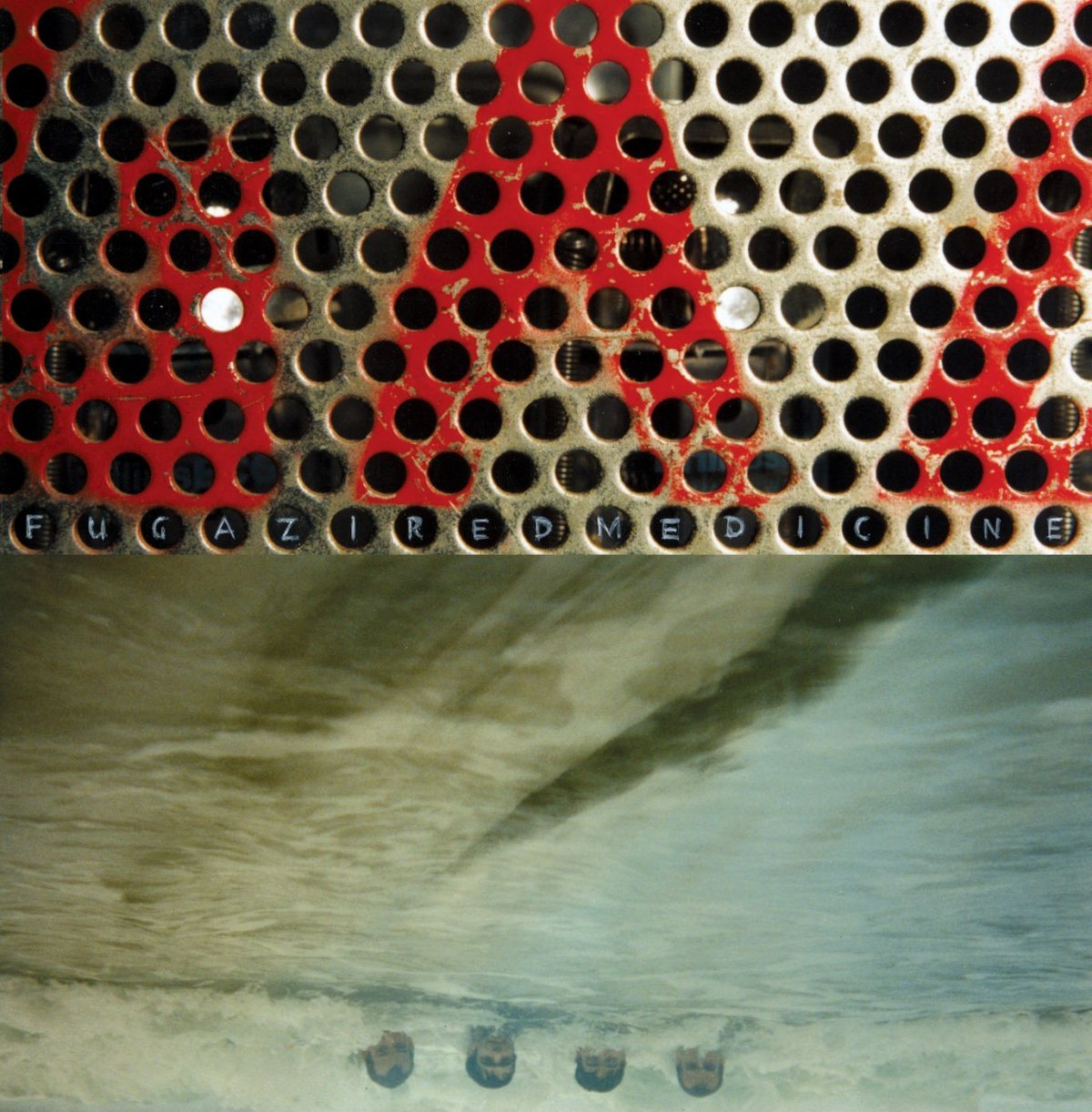
Fugazi, Part 5: Red Medicine

“Red Medicine” was the first Fugazi album I ever bought when it was released.  Up until this point, I’d been playing catch up.

There’s a decent argument to be made that this is their best album.  It’s certainly the first salvo of the band taking their songwriting to the next level.

Right from the start, something is different.  There’s the energy we’re used to.  It opens with some crazy noise, but that’s not too surprising.  But are those…clean guitars?  And it’s an up tempo song?  And is that a guitar solo (loosely defined, sure)?

And it’s like Fugazi knows this might seem strange to you and they challenge you right in the song.  “I’ve got a question/how/do you like me?”

We are Fugazi and we’ve taken it to the next level!

“Bed for the Scraping” is classic Fugazi with a new Fugazi twist.  Groovestastic bass/drums, Ian McKaye grunting, but the guitar work is sharper and more layered than what we’ve seen before.  This is a new kind of punk rock anthem, but still has all the old school energy.

“Latest Disgrace” says “remember those weird noises at the beginning of this album?  That was just a taste.”  The first half of the song is bizarre, as if the guitars have been tuned differently, and everything besides Guy’s voice is muted, particularly the barely there drums by Canty.  Oh, and Guy goes falsetto at one point.  But then it all collapses into the kind of straight forward rocking we expect of Fugazi, it just has more power now, because it’s got new context.

“Birthday Pony” seems like it should sound like an old Fugazi song, but the production has changed it.  The palm muting, the big chorus — this should be “13 Songs” era Fugazi.  But the big chorus isn’t just big this time around, it’s full.  There’s a texture there that we haven’t seen before.  And you’re beginning to realize that Ian and Guy are pushing each other when it comes to vocals.  They’re going into uncharted territory.

“Forensic Scene” is an instant classic.

And then we hit the weird stuff.

“Combination Lock” is probably the most “jam” feeling instrumental Fugazi has ever released.  It feels like a song they’re just jamming on one day.  “Fell, Destroyed” could be a June of ’44 song.  “By You” is a crazy wall of sound with these mellow vocals by Joe Lally.  “Version” is yet another instrumental, but this one features a clarinet…oh, and the bass line from another song on the album (which we haven’t gotten to yet).  It’s almost like an undecipherable remix of a song that comes later on the record.

We return to more straight forward, yet no less creative, Fugazi rock with “Target.”  Yet again, though, there are guitars that are strikingly not distorted, and yet the urgency of the music hasn’t lessened at all.  There’s even the classic Fugazi palm mute a part by itself, then play it full blown with the rest of the band, yet it all feels much bigger.  Just listen to the guitars on “Back to Base.”  We’ve never heard anything like that on a Fugazi record.  It’s epic.  And “Downed City” is much the same, just more frenetic.  It’s wonderful.

I love “Long Distance Runner.”  In a lot of ways, it epitomizes “new” Fugazi.  We’ve got this full, kind of notey, two guitar bit, then some bass/drums action (with appropriate level of guitar noise), and a spectacular level of loud quiet loud.  It’s also works as the perfect metaphor for the band: they are long distance runners.  They are constantly moving forward.  They have yet to get stuck because they can’t stop.  “And if I stop to catch my breath/might catch a piece of death.”  No two Fugazi albums have sounded the same.  No two Fugazi albums will ever sound the same, because they are still running.

I’m convinced that one of the members of Fugazi has synesthesia, because I have synesthesia and the majority of these songs are red to me (“Birthday Pony” and “Do You Like Me” are yellow).  I think one of them saw the same thing when it came time to name this album.

At this point, “Red Medicine” became my second favorite Fugazi record. I don’t know that anything could dethrone “Repeater” from the top spot. “Red Medicine” would ultimately fall to #3 on my list, though, when it was all said in done. But which of the remaining records knocked it down?

Fugazi, Part 4: In on the Killtaker

If there was a darkness about “Steady Diet of Nothing,” “In on the Killtaker” was Fugazi exorcising it.

“Killtaker” alternately features the most aggressive and, up until that point, the most beautiful songs Fugazi had recorded.

If you were unsure what you were going to get after “Steady Diet of Nothing,” you knew from the first song, “Facet Squared.”  Open with some playful guitar noises, lay down a nice bass/drums groove, then explode into a driving, closed fist punch of a song, complete with McKaye’s forceful, grunting vocals.  This is a Fugazi that will not be ignored, something that was easy to do on the last album.  They’re not holding back this time around.

Still unsure?  Welcome to “Public Witness Program.”  They’re in full on attack mode now, yet the vocals are only getting more and more catchy.  The guitar interplay at around the 1:15 mark lets you know that this energy isn’t for show; you’re going to get Fugazi’s all on this record, and nothing less.

Then we get the first wild card: “Returning the Screw.”  It’s quiet and sparse, but McKaye’s vocals tell you that there’s something boiling underneath the surface.  And when it explodes — and does it ever — you realize that the energy from the first two songs is still here, just less frantic and more powerful.

I could go on and on about “Smallpox Champion,” but it would just be sad because I love the hell out of that song.  When they move into the second half of the song, I get goosebumps.

And that’s just the first four songs!  I haven’t even gotten to “Rend It,” “Sweet and Low,” “Walken’s Syndrome,” or, perhaps the best song on the album and the best “slow” song Fugazi has ever recorded, “Last Chance for a Slow Dance.”  This was clearly a band on a mission.

From what I remember, “In on the Killtaker” was a point of contention with Fugazi fans. There was a very clear divide between those who loved it and those who hated it. But I don’t think I’ve ever heard a cogent argument from those who hated it beyond “It’s not Fugazi,” which makes no sense.

Is this record a change of pace for the band? I guess. But it’s clearly a part of their evolution. You don’t get to “In on the Killtaker” without the three albums that came before it.

I think this was the Rubicon for Fugazi. This was the record where they discovered their sound. That’s not to say they didn’t move forward on future records because they most certainly did, but this is the album that got them to that very Fugazi place, a combination of dynamics, intricate song writing, that incredible rhythm section, a phenomenal duel guitar attack, and some next level vocals from both singers.

Stylistically, this could be called the “outro” album, as this is when Fugazi really found their “outro” game. This would become a calling card for the band: a brand new part to a song that only comes at the end. The aforementioned “Smallpox Champion” is a great example of this, but a lot of the songs on this record have them.

This is perhaps the first Fugazi record that fully embraced the “loud quiet loud” style, although it’s admittedly modified to better suit the band. Still, the dynamics on this record are certainly amplified. If you really wanted to reduce this album, you could call it “emo,” although it’s really not.

“Last Chance for a Slow Dance” was probably the song that created the divide among Fugazi fans, although I don’t know that for certain. Every Fugazi album has a “slow” song, so to speak, from “Promises” to “Shut the Door” to “Long Division.” All three of those are fairly unconventional as far as “slow” songs are concerned. “Last Chance” is much more produced and, yes, Guy Picciotto’s vocals do, indeed, make it sound more “emo.” Those Fugazi fans who didn’t like it were not going to find much joy going forward, either.

It’s interesting to note the titles of the four albums I’ve talked about so far.  “13 Songs” is almost tongue in cheek, like a refusal to actually name the collection of songs from two EPs.  In Fugazi’s mind, it wasn’t even an album at all, but a compilation.

Apparently, “Repeater” wasn’t just named after the song, but was a play on the Beatles “Revolver,” since a revolver is both a type of gun and a recorder — the same as a repeater.  What better sign is there of a band embracing their creative energies than by dropping an allusion like that?

But the playfulness of the first two albums disappears and we get “Steady Diet of Nothing.”  Not exactly a shiny, happy album name.  And then what comes after that?  “In on the Killtaker.”  It’s like depression and aggression, back to back.

This was all a part of the evolution of Fugazi, and evolution that would grow by leaps in bounds on the next two records.

Fugazi, Part 3: Steady Diet of Nothing

I hadn’t realized until this moment that I associate most Fugazi records with specific seasons. “13 Songs” was a winter album. “Repeater” was a summer album. “Steady Diet of Nothing” took me back to winter.

That’s appropriate, given that winters where I grew up were long and boorish, a seemingly infinite slog of depression. “Steady Diet” is kind of like that.

“Steady Diet of Nothing” is my least favorite Fugazi album, mostly because there’s so little variation to it.  The songs all have the same basic feel to them.  The dynamics that were building on “Repeater” seemed to take a back seat on this album. It felt like a much less adventurous album, as if the band had discovered a sound that they weren’t quite sure about, but were willing to play over and over and over again in hopes of getting it right.  

Fugazi didn’t evolve like I’d expected them to.

I would only discover years later that Fugazi themselves produced this album, something they’d never done before (and, I don’t think ever did again). This was obviously not the best idea, as the production is a major cause of the flatness of the album. These recordings are just not as dynamic as the songs.

Don’t get me wrong, “No Exit” has a nice climax, although it’s so insubstantial up until that point that almost anything would have felt climatic.  “Reclamation” is a stand out, and more of the type of thing I was expecting from them given the songs on “Repeater.”  But “Nice New Outfit” introduces a rhythmic guitar part that seems to show up in some form or another on multiple songs.  Coupled with the similar structure of a lot of the songs, the whole album feels monotone.

The songs aren’t as dynamic as they were on the first two albums. Fugazi was always a band that could make the most out of one or two parts for an entire song, but there was never a lack of depth or complexity. Long Division” is a great song, but it’s ostensibly one part over and over again, much the way “No Exit” was just two parts.  Everything’s at the same tempo, all the songs are fairly simple.

“Nice New Outfit” to “Stacks” to “Latin Roots” could be the most redundant section of the record. The famous start/stop dueling guitars of Fugazi are on display, but it seems like they don’t know how to use them yet.

There’s also a darkness to this album.  There was a certain amount of punk rock joy on “13 Songs,” and you could actually feel the creative excitement on “Repeater.”  That seems to have been sapped for “Steady Diet of Nothing.”

The successful songs on this record are the ones that have a hook of some kind. “Reclamation” is a classic, built around a singular guitar sound and a wonderful bass line. “Polish” is the culmination of what every other song on this record was trying to do. “KYEO” could have been on “Repeater.” The duel vocals push the song forward and the alternate chorus elevates the song and the final few “we will not be beaten down” resonate in a way that nothing else on the album does.

Looking at this record as a piece of the entire Fugazi catalog, this might be the most transitional record they produced. You can see the germs of what would become the next record already beginning to form. The Fugazi sound was starting to materialize.

Let’s face facts: a mediocre Fugazi record is still better than the majority of music out there, so this is by no means a bad album. But I was expecting something more.

I would get it in a big way with “In on the Killtaker.”

Fugazi, Part 2: Repeater

If I had any doubts about how great Fugazi was, those were removed when I heard the title track on “Repeater.”  The chorus is not remotely something you’d expect from anything resembling a punk band.  And that rhythm section?  Holy cow.  This was a band that clearly knew what they had in Joe Lally and Brendan Canty, and they knew enough to stay out of their way.

“Merchandise” and “Blueprint” could be the best back-to-back tracks on any Fugazi album. 

I got “Repeater” the summer of 1995, much of which I spent working two jobs. My mornings and afternoons were spent at a grocery store, my evenings were spent at a pizza place. While the pizza place was kind of cool and filled with other late teen/early 20s employees just looking to stay afloat and maybe afford some cheap beer, the grocery was one of a chain and felt very corporate.

I drove the delivery van for that grocery store. We had a bakery and there was a convenient store not far away that ordered fresh doughnuts every morning. Delivery was scheduled for 5:45AM (15 minutes before they opened). I woke up at 4:30AM for that job. There were days when I would work at that job until 2PM and then go to the job at the pizza place at 4PM, getting off work well after midnight. Thankfully, I managed to schedule shifts so that I never worked at the pizza place the night before I worked at the grocery store, although that certainly wasn’t the case at the start.

I listened to a lot of Fugazi that summer.

“Merchandise” became an anthem for me, the last song I would listen to before arriving at the grocery store. 

For as much as I love “Merchandise,” though, “Blueprint” quickly became my favorite song on the album. Yet another song with an anti-capitalism theme, “Blueprint” was less raging against the system and more feeling beaten down by the system. To this day, the ending gives me goosebumps.

And let’s not forget the driving “Greed,” which is ostensibly just two parts, yet still works, or the triumphant “Styrofoam.”  Is “Reprovisional” cheating a little bit?  Maybe, but it’s a great example of how the band had evolved in just two albums.  “Shut the Door” is a great follow-up to “Promises” from “13 Songs,” and is another step in the dynamic intensity Fugazi was quickly excelling at.

“Repeater” (the album) is also noteworthy because it’s the beginning of the duel guitar formation that would stick with them over the rest of their career.  Guy Picciotto quickly become an excellent song writer, and I think his influence on Ian McKaye pushed them both forward as guitarists.

“Repeater” was a big step forward from “13 Songs.” As much as enjoyed that first album, it had a specific sound, a lot of palm muting and guttural vocals. But “Repeater” was Fugazi’s statement record. “13 Songs” felt like a demo. “Repeater” was Fugazi making themselves known.

After two albums, I was hooked and I was prepared for “Steady Diet of Nothing” to move Fugazi even further forward.